English
EN


Gold and silver have fallen below their opening prices of January 1, 2026 in recent days. The immediate trigger for the decline in gold and silver prices? Surprising economic data from the US that pave the way for an interest rate hike by the newly appointed Fed Chair Kevin Warsh. This is also affecting stock markets, particularly AI-related shares. The Korean Kospi, for example, is down 12% since last Friday. Meanwhile, investors are looking ahead to new inflation figures from the US, which will be published later today.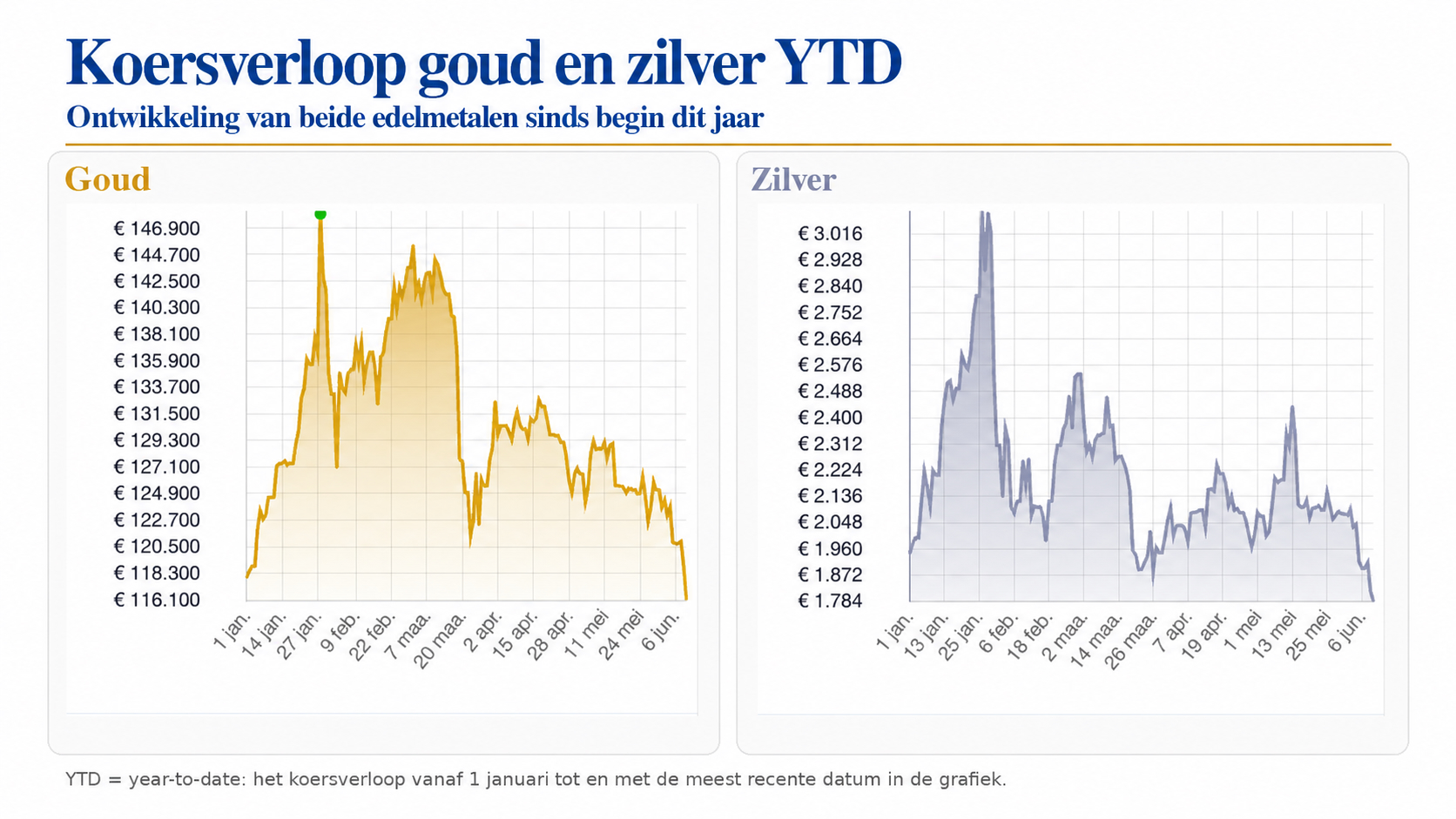
Gold is down almost 7% since Friday, June 5, while silver has fallen nearly 13%. With this sell-off, the gains the precious metals had made so far this year have been wiped out.
Gold and silver prices have fallen sharply since Friday, as stronger-than-expected economic data give the Fed, the US central bank, room to raise its policy rate. This makes interest-bearing bonds more attractive as a safe haven than precious metals. Whereas markets had previously still been pricing in a possible rate cut, a report by news agency Reuters shows that economists now expect rates to remain unchanged, while futures markets are pricing in at least one rate hike by the end of 2026.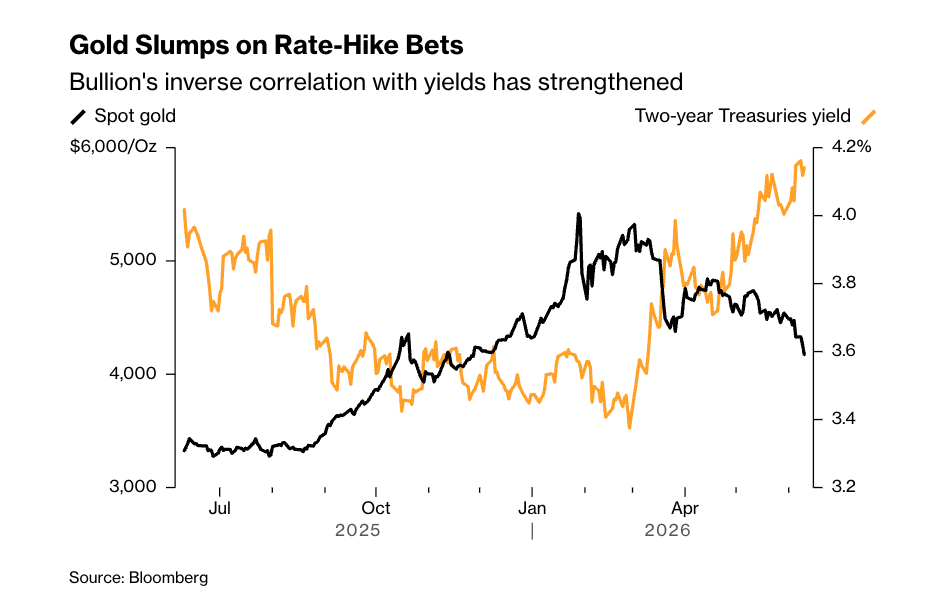
The gold price (black line) moves inversely to the US two-year Treasury yield (yellow line). (Source: Bloomberg)
Rate hikes by the Fed are generally intended to curb inflation. After all, raising interest rates slows the economy, because investing becomes more expensive and saving more attractive, which limits demand and thereby puts downward pressure on prices. Inflation is currently surging due to rising energy prices, as a result of the closure of the Strait of Hormuz and the war with Iran.
The Fed has a dual mandate: on the one hand, to keep inflation under control, and on the other, to ensure a strong US labor market. The employment figures for May were published last Friday and far exceeded analysts’ expectations. Now that the labor market is strong enough to absorb a slowdown in economic growth, the Fed has more room to focus on inflation and raise interest rates.
This does not mean that the Fed will necessarily raise rates, only that it has become more likely. The Fed could just as well decide to keep rates unchanged, as rate cuts had previously still been considered possible this year. Until an actual decision is made, however, traders and investors will continue to price in expectations.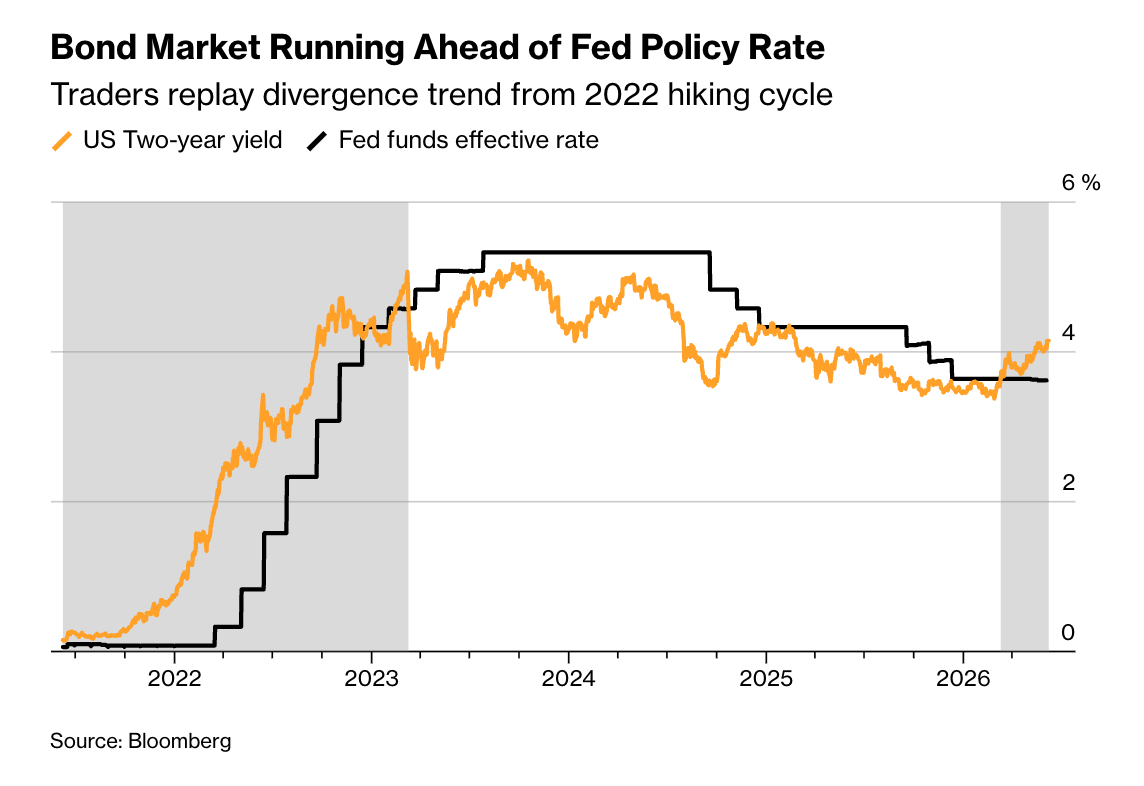
The yield on two-year US Treasuries (yellow line) often anticipates the policy rate (black line) set by the Fed. (Source: Bloomberg).
The key developments of recent days surrounding the decline in gold and silver are briefly listed below:
Stock markets turned sharply lower on Friday in response to the positive employment figures and the new interest rate expectations. Due to concerns about the elevated valuations of technology stocks, the news led to very sharp price declines in the AI sector and among producers of semiconductors and chips, such as TSMC, ASML and Nvidia. Despite the 30% month-on-month revenue growth at TSMC announced today, many tech stocks remain in the red.
The KOSPI, South Korea’s stock index, consists largely of technology companies and is therefore a useful indicator. The KOSPI has fallen a spectacular 12.16% since Friday. Looking at the Philadelphia Semiconductor Index (SOX), which tracks the share prices of 19 major chipmakers, we saw a decline of 7.87%.
This puts the decline in precious metals into perspective.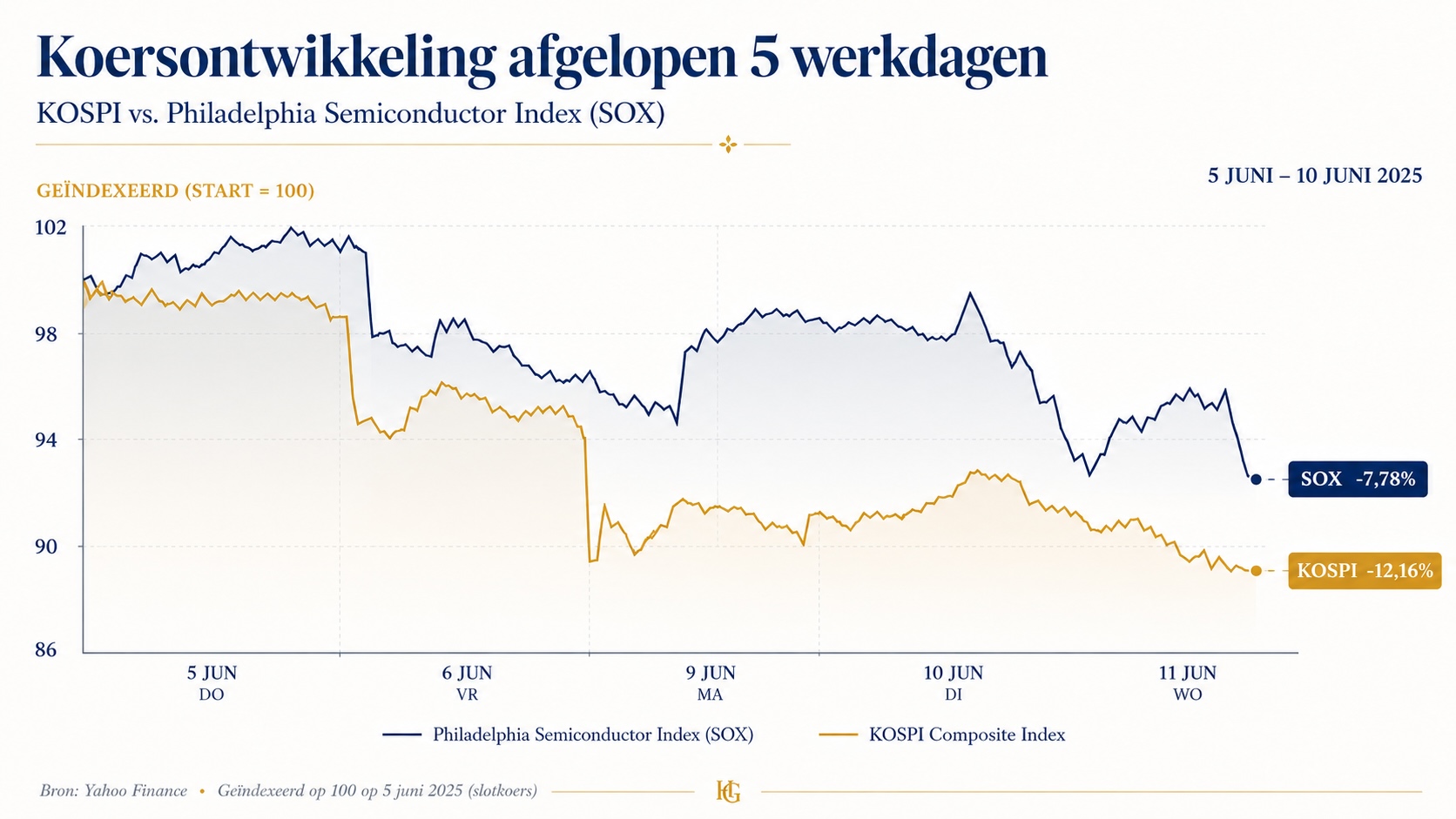
Price development of the KOSPI and SOX over the past week, indexed to 100 from the start of Friday. (Source: Yahoo Finance; edited by Holland Gold. PHLX Semiconductor (^SOX) and KOSPI Composite Index (^KS11)).
Fed interest rate policy
In the short term, investors in gold and silver are looking ahead to new information about the Fed’s interest rate policy. Key data points include the new US inflation figures (CPI), which will be released later today (Wednesday, June 10), and the upcoming Fed meeting on June 16 and 17, the first under the leadership of Kevin Warsh. If inflation does indeed come in substantially higher, this increases the likelihood of a rate hike. In addition, the question is how the new Chair Warsh will handle this challenge and whether, as a Trump loyalist, he may put pressure on the independence of the Fed.
Technical risks
A second challenge for the gold price is technical risk. When the gold price falls below a certain level, this can force traders to sell. “We expect price action to become more vulnerable in the short term,” wrote Suki Cooper, global head of commodities research at Standard Chartered Plc. More and more positions in gold-backed ETFs will become loss-making if gold falls further in value, which will “expose gold to further downside risks,” according to Cooper.
Middle East
Developments in the Middle East remain an important factor for the gold price. At the same time, this is also one of the most uncertain factors. Any signal that the Strait of Hormuz may be reopened, such as positive developments in peace negotiations between Iran and the US, is likely to push the gold price higher again.
Long term: debt burden
Still, this is not a straightforward relationship, because when push comes to shove, gold is a safe haven. A further escalation with Iran could also lead to a larger oil crisis and economic malaise. This could force governments to increase spending and prompt the Fed to stimulate the economy through quantitative easing. In addition, US government debt could rise further as a result of the military costs of the conflict. In the long term, concerns about unsustainable US government debt could in fact lead to a renewed flight into gold.
Also take a look at our YouTube channel
On behalf of Holland Gold, Paul Buitink and Yael Potjer interview various economists and experts in the field of macroeconomics. The aim of the podcast is to give viewers a better understanding of, and guidance in, an increasingly fast-changing macroeconomic and monetary landscape. Click here to subscribe.