English
EN


With gold and silver trading at record levels and interest rising once again, many investors are asking themselves the same question: am I too late? The risk of entering at a peak and then being underwater for years is real. At the same time, waiting endlessly can mean missing out on further upside. There is a strategy that reduces this timing risk without having to predict the market perfectly: Dollar Cost Averaging. But what exactly is DCA, and how does it work?
What is Dollar Cost Averaging?
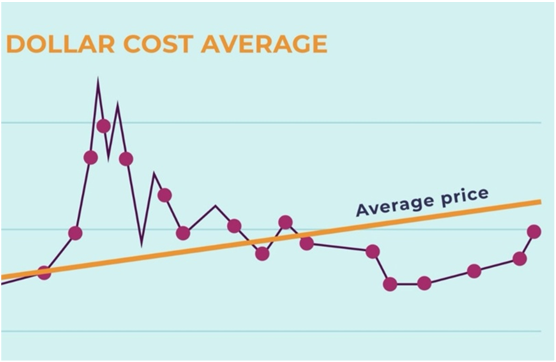
Dollar Cost Averaging is the practice of investing a fixed amount at regular intervals. For example, investing €500 every month. By investing the same amount each month, you buy when prices are both high and low. Because you invest regularly, you do not need to worry about the exact entry point, only about the value of the investment itself.
Gold and silver: high returns, high volatility
Throughout history, gold and silver have proven their ability to preserve value, but that does not mean prices are always stable. Between 2008 and 2011, the gold price rose by 180%. Impressive, but anyone who entered just after that peak had to wait nine years to break even. The timing of a purchase can have a major impact on the final return. DCA reduces this dependence by spreading purchases over time. Periodic buying shifts the importance of the entry moment. Instead of focusing on when you buy, attention shifts to what you buy. For investors who view gold and silver as long-term investments, the focus therefore moves from timing to consistent growth.
Lump Sum or DCA: which works better?
Historically, investing all your capital at once—the lump-sum method—has generally delivered higher returns, according to Morgan Stanley. The money is invested in the market for a longer period and therefore has more time to grow, especially when prices are irrationally low, which is when this method pays off. That said, they also emphasize that DCA can offer significant value to investors.
In addition to reducing timing risk through staggered purchases, DCA allows investors to benefit more from price declines: when prices fall, you automatically buy more units, and fewer when prices are high. When the market subsequently recovers, the investor benefits from this effect.
Psychology also plays an important role. Those considering investing everything at once often struggle with doubts about the right moment to enter. DCA removes that pressure by entering the market gradually over time. If prices fall sharply after an initial purchase, this is not a reason to panic, but rather an opportunity to buy more.
Conclusion
Historically, the lump-sum method delivers a higher average return, while DCA primarily adds value by reducing timing risk. Both strategies have advantages and disadvantages, but consistently investing—regardless of the chosen method—has proven more effective than waiting for the perfect entry point.
Those who want to apply Dollar Cost Averaging with gold or silver can do so via the Holland Gold Savings Plan. Through the app or website, a fixed amount is invested periodically, automatically spreading purchases over time. This allows you to build a position in precious metals step by step, without being dependent on a single entry moment.