English
EN


By: Frank Knopers
In March, inflation in the Netherlands rose to 9,7%, the highest level since April 1976. According to the European Consumer Price Index, prices in March were even 11,9% higher than a year ago. The causes of this unprecedented increase are high energy prices, logistical problems and an increase in the price of raw materials. These are partly temporary factors, but they are likely to have a structural effect on prices. The way we measure inflation can be misleading. In this article, we answer three questions about inflation.
When we talk about inflation, it is usually the increase in the price of a basket of goods and services compared to the same month of last year. The idea is that these numbers are the most comparable year-over-year, as they filter out all the seasonal effects. And then there are also various measurement methods, such as the European harmonised price index and the Dutch consumer price index. For the differences between these two figures, please refer to This article.
A distinction is also generally made between a normal inflation rate and core inflation. The first figure is calculated on the basis of a basket of goods and services, while the second figure omits all expenditure on food and energy. These prices tend to fluctuate more and can greatly affect the inflation rate. This is also the case now, because the war in Ukraine has caused the prices of fuel, electricity and gas to skyrocket. In March, for example, energy was 157% more expensive than one year previously.
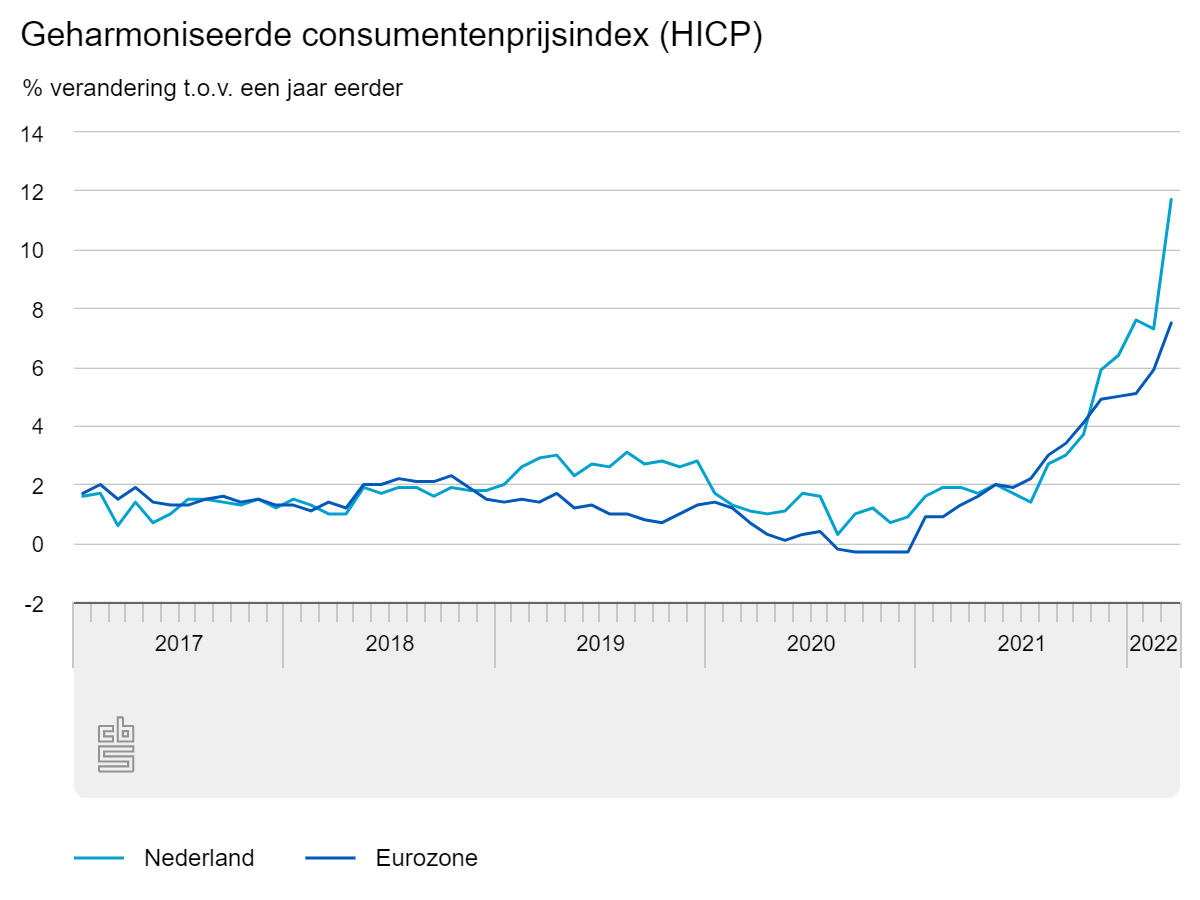
Inflation has risen sharply since the corona crisis (Source: CBS)
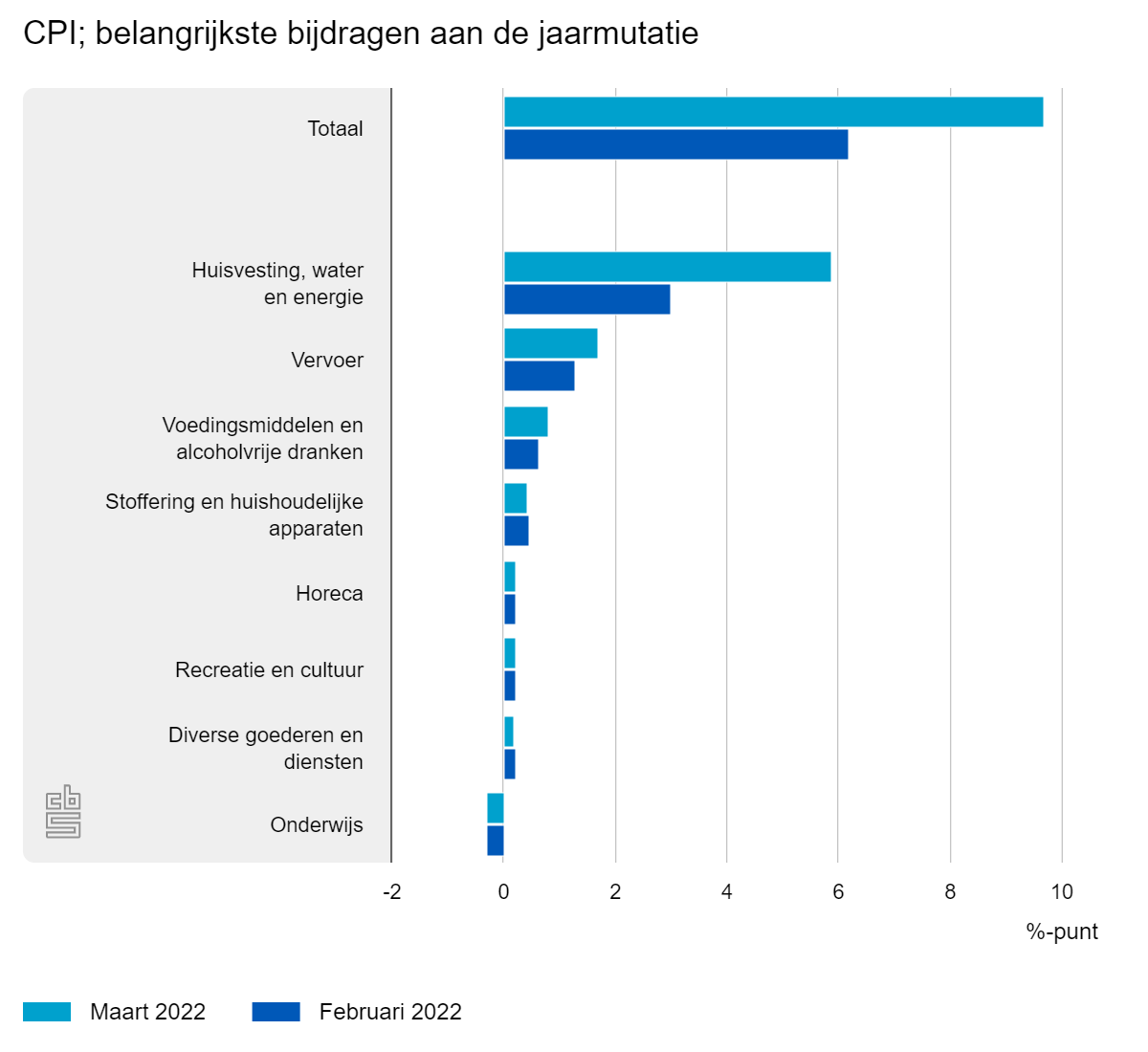
Without rising energy prices, inflation was around 4% (Source: CBS)
This extreme inflation is therefore mainly the result of high energy prices. For example, the price of gas for consumers has more than doubled in a year. Electricity also doubled, because three-quarters of electricity in the Netherlands is still generated from fossil sources. Of these, gas is the most important component. Due to the high price of gas, we have started to use more coal, but because the rest of the world is doing the same, the price of coal has also increased in recent months. Sharp increase.
Whereas a cubic metre of natural gas cost €0.81 (excluding fixed costs) a year ago, it is now €2.39 on average for a new energy contract. For electricity, the purchasing power picture is not much better. Last year you received a kilowatt hour for €0.23 (excluding fixed costs), at the moment you pay €0.56 for it with a new contract.
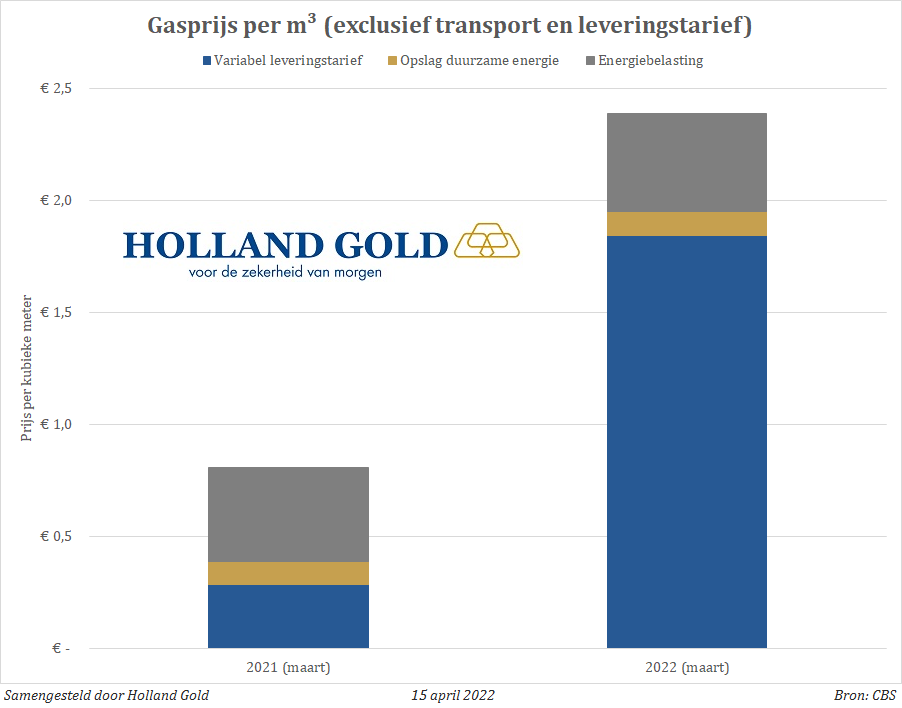
The price of gas has more than doubled in a year (Source: CBS)
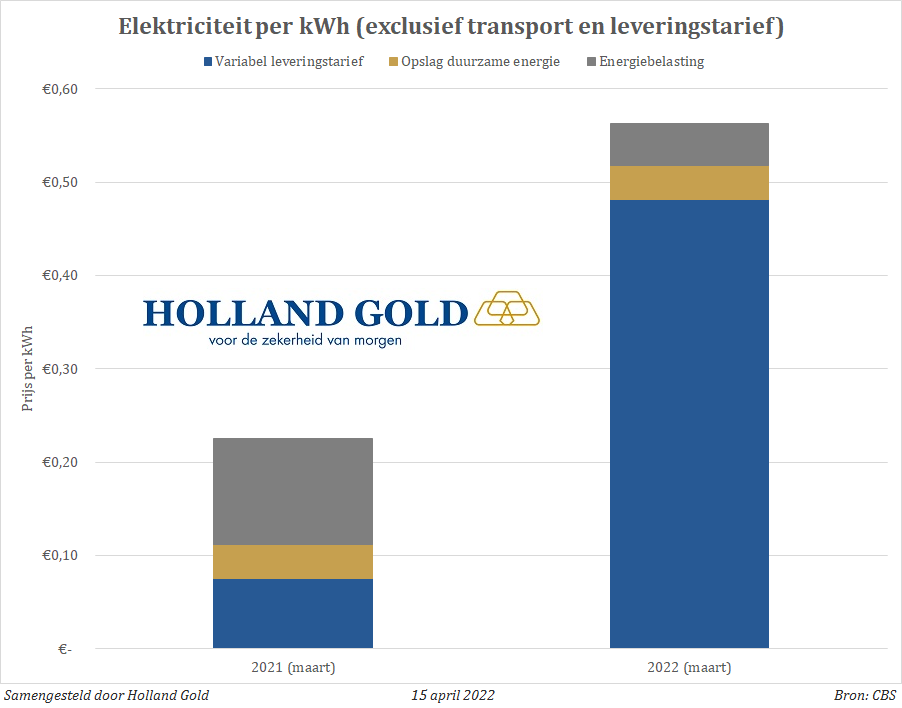
Electricity became twice as expensive in one year (Source: CBS)
Until recently, central banks insisted that high inflation was a temporary phenomenon. But that position became untenable when the war in Ukraine began. This war is not only affecting energy prices, but also the prices of other commodities. Think of wheat, sunflower oil, grain, wood and even steel.
On top of that, there are additional logistical problems, directly as a result of the war and indirectly as a result of the sanctions against Russia. The sanctions have disrupted normal supply routes, taking longer for raw materials to arrive. This means not only additional transport costs, but sometimes also higher costs for transport. insure of the cargo. Waiting times at the ports are also increasing due to the Accumulation Russian containers that have yet to be checked.
As long as the war in Ukraine continues, these problems will have an effect on inflation. We are already feeling the shock of high energy prices, but the indirect effects have yet to become visible. Higher energy and raw material prices will also filter through to the prices of other products over time. For example, producer prices in many European countries have already risen by 15 to 20 percent compared to a year ago. 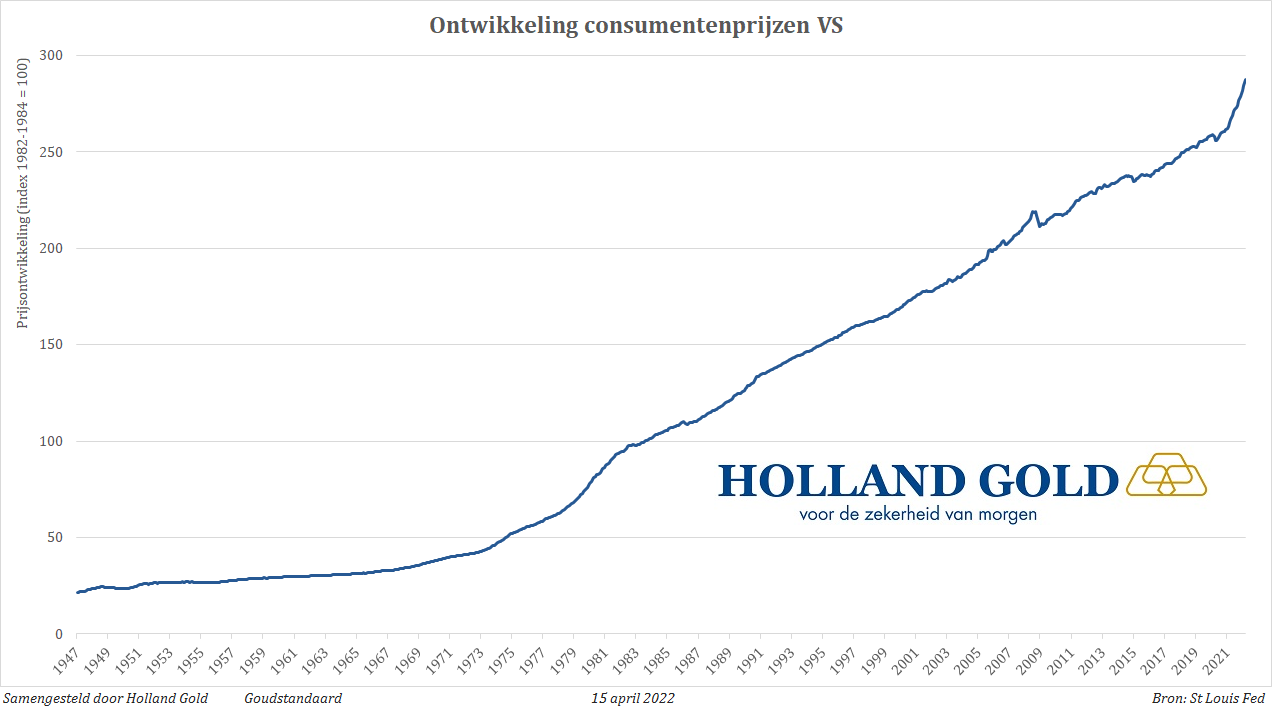
The long-term effect of a few percent inflation
Although this price shock from high energy prices will no longer be visible in the inflation rate in a year's time, the effect on our purchasing power is permanent. Even if inflation falls to, say, 1% in a year's time, prices will still be at that high level. See also the graph above of the cumulative price development in the United States. To return to the prices of a year ago, we do not need inflation of 0%, but a deflation of about 8%. That seems very unrealistic given the current circumstances. For most people, this energy crisis therefore means a structural decline in purchasing power.
This contribution comes from Geotrendlines
 Have a look at us YouTube channel
On behalf of Holland Gold, Paul Buitink and Joris Beemsterboer interview various economists and experts in the field of macroeconomics. The aim of the podcast is to provide the viewer with a better picture and guidance in an increasingly rapidly changing macroeconomic and monetary landscape. Click here to subscribe.