English
EN


Gold and silver appear to be caught in a tug-of-war, with fears of higher inflation and consequently higher interest rates on one side, and geopolitical tensions and the debasement trade on the other. Which side will prevail? Or, as Ole Hansen of Saxo Bank puts it: "Is gold beginning to look beyond inflation?"
Since the outbreak of the war between Iran and the United States, gold has surrendered its gains for the year. Initially, this surprised many investors. Should gold, as a safe haven, not have risen amid mounting geopolitical tensions? The widely accepted explanation is now as follows: higher oil prices resulting from the conflict will push up inflation, increasing the likelihood that the US central bank, the Federal Reserve, will raise interest rates. When interest rates rise, gold becomes relatively less attractive than other safe havens, such as interest-bearing bonds.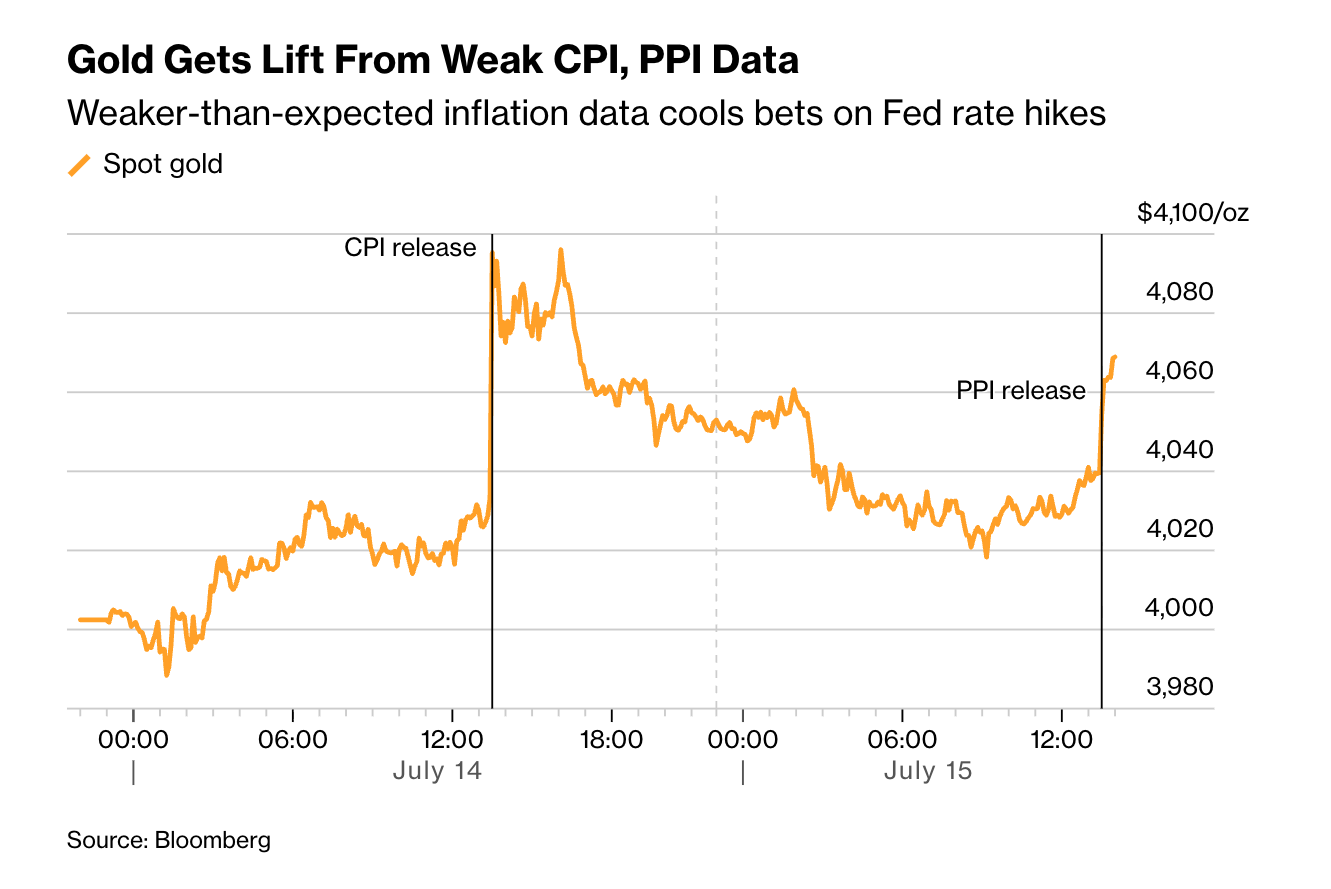
Gold price in dollars per troy ounce (31.1 grams) in response to the release of new inflation data, including the Consumer Price Index (CPI) and Producer Price Index (PPI). (Source: Bloomberg).
For this reason, inflation figures are being closely monitored. It is crucial for the Fed to see how higher oil prices are feeding through into the economy. Better-than-expected inflation data released on July 14 and 15 pushed gold higher again. The lower Consumer Price Index (CPI) reading for June immediately triggered a price increase, with gold briefly trading 2.2% higher than the previous day.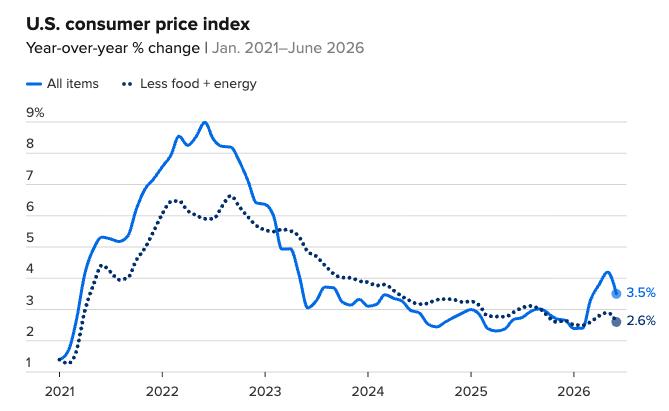
Consumer Price Index since 2021 (source: CNBC)
Annual US inflation declined sharply. While inflation still stood at 4.2% in May, it fell to 3.5% in June. Core inflation declined from 2.9% to 2.6%. This was the largest drop in inflation in years, driven in part by a 5.7% decline in energy prices. Inflation fell in June partly because oil prices declined in response to the ceasefire and the memorandum of understanding between Iran and the US. Oil prices have risen sharply again in recent days as the conflict has escalated once more.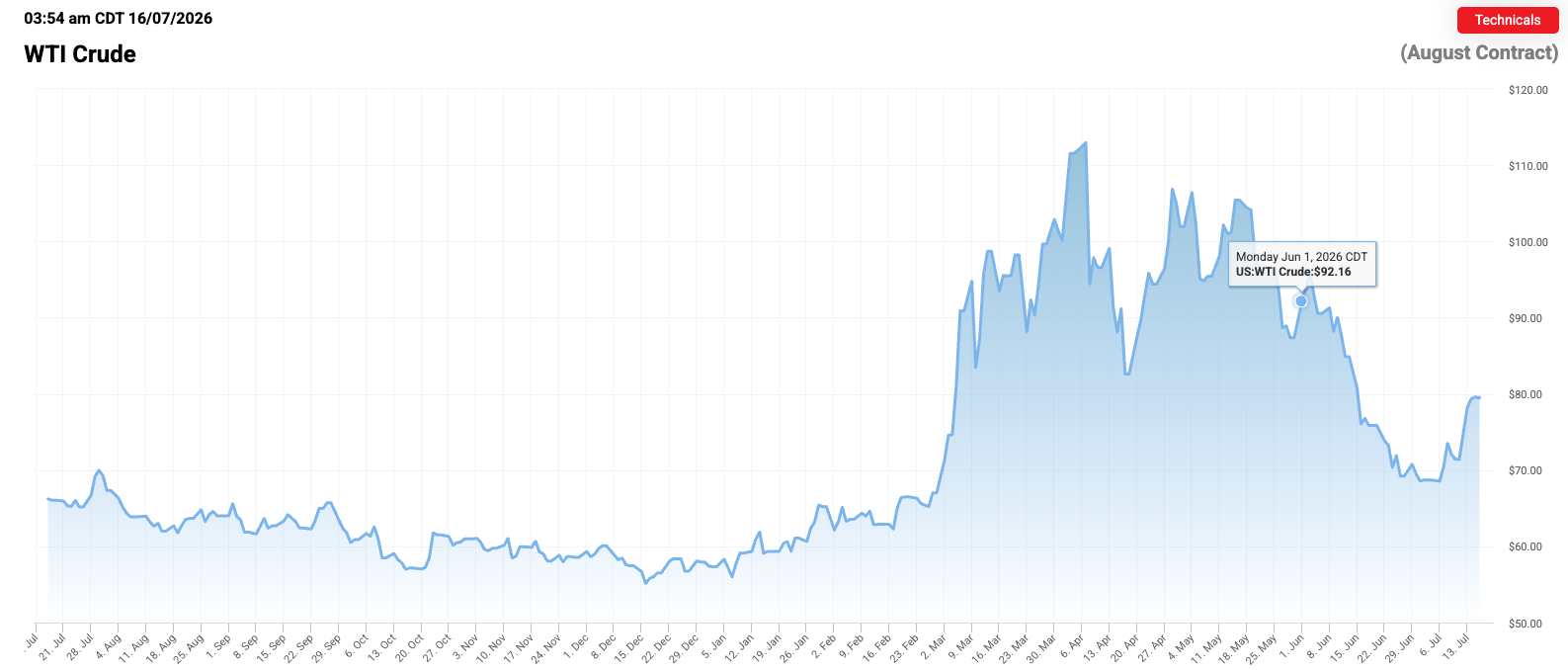
West Texas Intermediate oil price over the past year (source: Oilprice).
BNR commentator and economist Han de Jong therefore does not expect inflation to decline further next month. Despite the uncertainty surrounding the inflation data, he does not foresee a change in interest rates. CME Group’s FedWatch Tool shows that the market estimates the probability of the Fed leaving interest rates unchanged in July at 89.8%.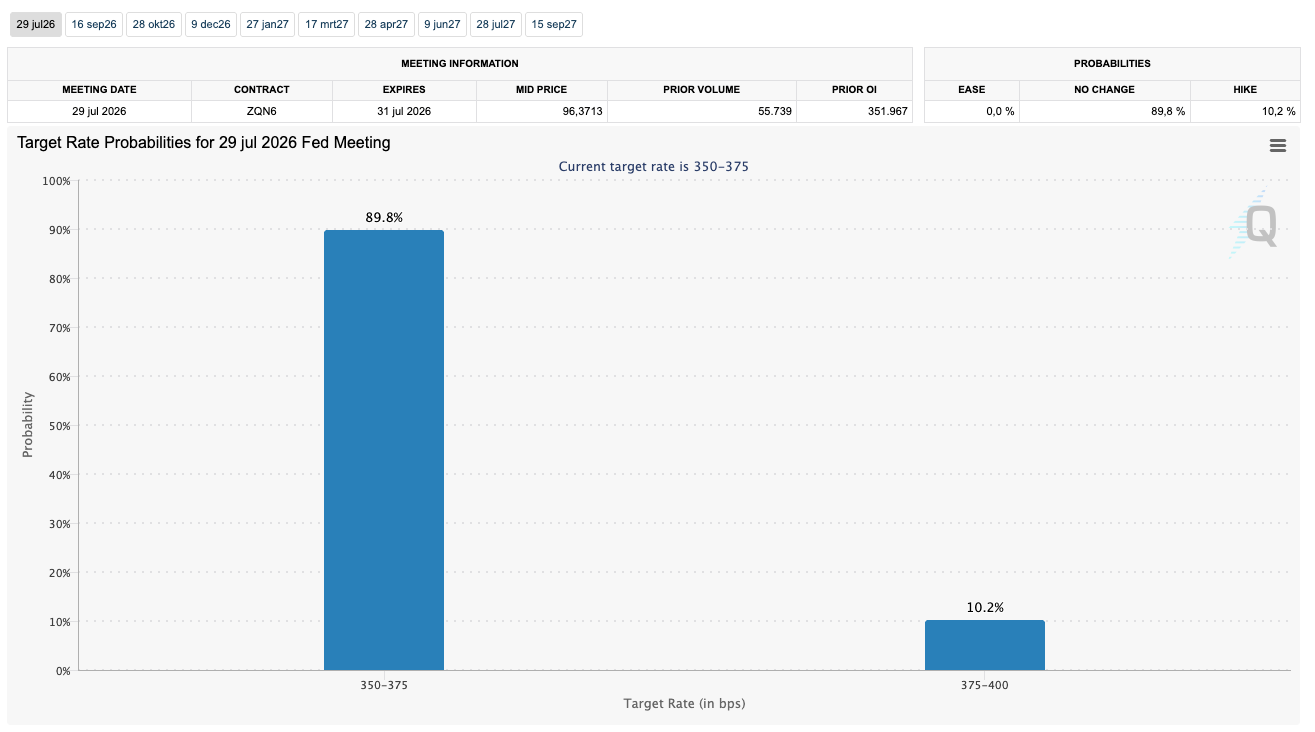
CME Group’s FedWatch Tool tracks federal funds futures. These are financial contracts that allow traders to speculate on the average level of the federal funds rate. This makes the tool a useful indicator of what ‘the markets’ expect the Fed to decide. According to the FedWatch Tool, the probability that the Fed will keep interest rates within the 3.50% to 3.75% range is 89.8%. (Source: FedWatch).
On the same days that the new figures were released, Federal Reserve Chair Kevin Warsh appeared before the US Congress, which is comparable to the Dutch Senate and House of Representatives. During questioning by members of Congress, Warsh made several notable statements. The better-than-expected inflation data did not yet represent a sign of “mission accomplished” for the Fed, which is targeting inflation of 2%. He also left open the possibility of an interest-rate increase.
Earlier in his term, Trump exerted considerable pressure on the Fed to lower interest rates. This threatened to seriously undermine the Fed’s independence, prompting a nervous reaction from the markets. Warsh’s tone now appears entirely different. "I will tell you what I have repeatedly told the president and the Treasury secretary: they chose an independent man to perform an independent role, and that is exactly what I intend to do," Warsh said before Congress.
Gold is still searching for direction, according to Ole Hansen, Head of Commodity Strategy at Saxo Bank. The yellow metal remains trapped in a sideways range between $3,950 and $4,200 per troy ounce. This reflects how difficult it is for ‘the markets’ to determine what the second half of 2026 will look like. Will the inflation narrative continue to weigh on the gold price , as described above? Or will macroeconomic pressure push the gold price higher? This could result from a prolonged conflict with Iran, which would slow the economy, increase government debt and further erode the value of fiat currencies.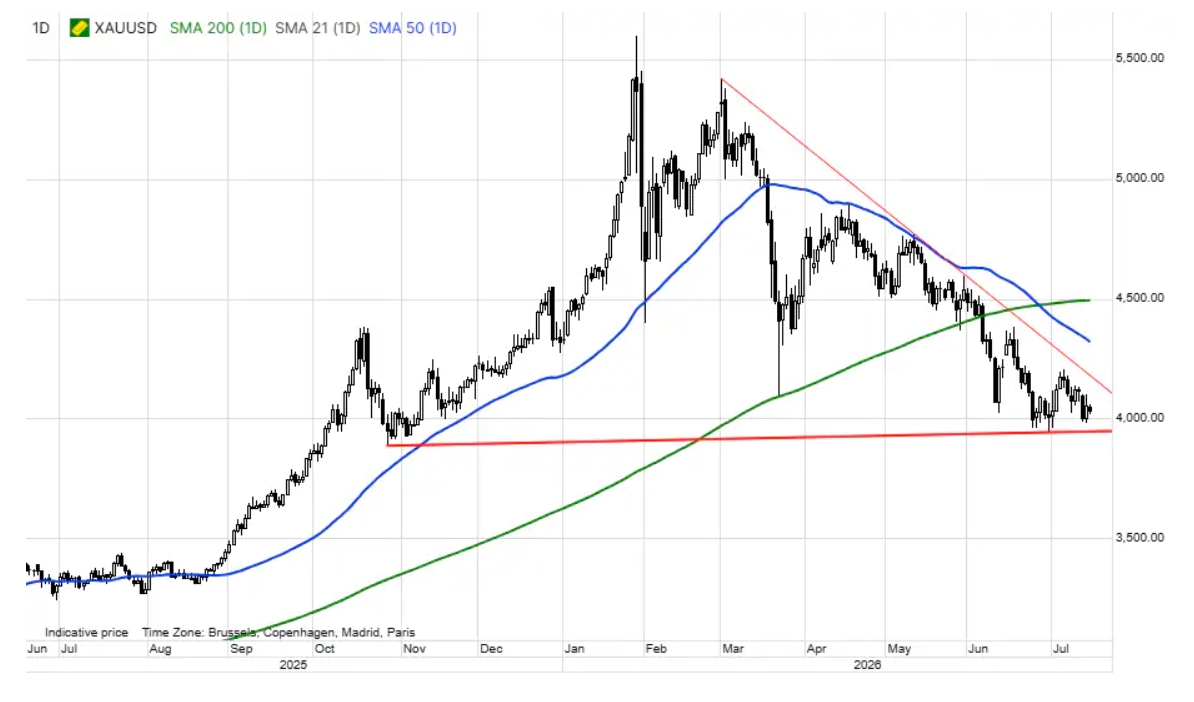
The black line shows the gold price in dollars per troy ounce. The blue line shows the 50-day moving average. The green line shows the 200-day moving average. The red line shows the support level at around $4,000 per troy ounce. (Source: Saxo).
If the gold price falls substantially below $3,950, Hansen expects further declines. However, if the price rises above $4,200, a new upward trend could emerge. The chart shows the 50-day moving average falling below the 200-day moving average, creating what is known as a ‘death cross’ because it can signal the beginning of a bear market. However, this supposed ‘rule’ is challenged by ING analyst Van den Akker, who shows that in two-thirds of cases, the S&P 500 is an average of 6.3% higher one year after passing through a death cross.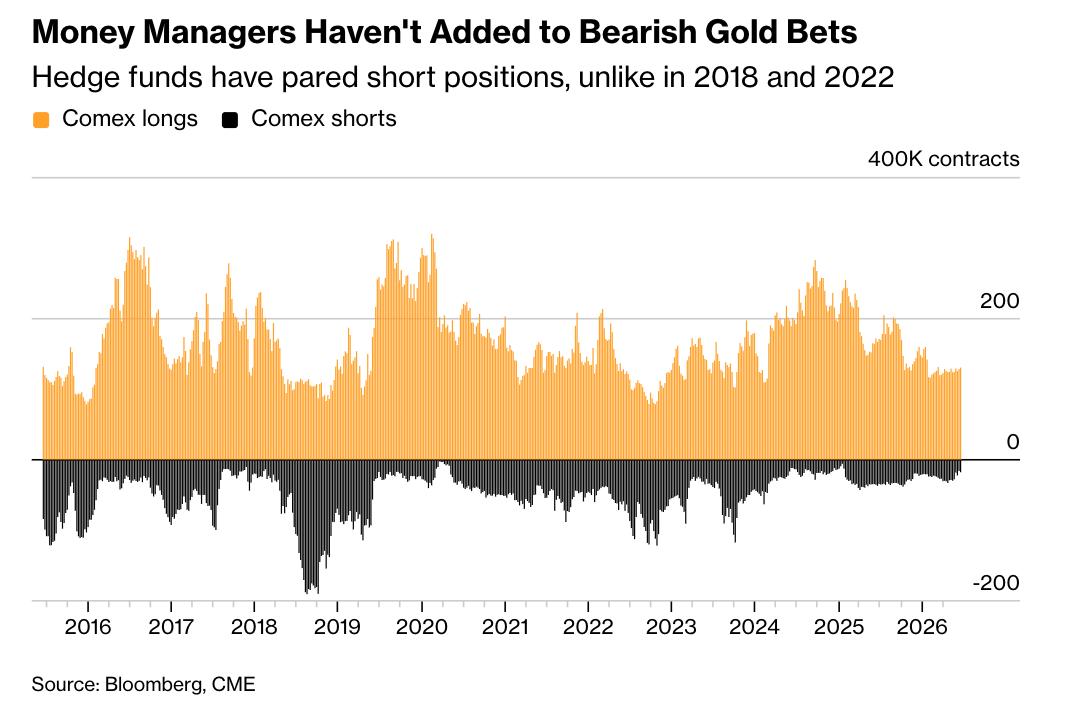
Hedge fund managers report their short positions (in black) and long positions (in yellow) on Comex, part of CME Group. Bearish short positions held by fund managers remain close to historic lows. (Source: Bloomberg).
Perhaps more importantly, Hansen identifies three trends that are maintaining the support level at around $4,000:
The fact that investors are neither expanding nor reducing their positions in gold ETFs shows that everyone is watching the tug-of-war unfold. Will inflation nevertheless prompt the Fed to raise interest rates? The market appears cautiously to assume that it will not. Will a prolonged war with Iran slow the economy and revive the debasement trade? Investors appear to be preparing to re-enter gold rather than exit the market en masse.
Take a look at our YouTube channel
On behalf of Holland Gold, Paul Buitink and Yael Potjer interview various economists and macroeconomic experts. The aim of the podcast is to provide viewers with greater insight and guidance in an increasingly rapidly changing macroeconomic and monetary landscape. Click here to subscribe.