English
EN


In the first quarter of this year, investors again sought refuge in gold en masse, according to New figures of the World Gold Council. Due to the combination of exceptionally high inflation and geopolitical turmoil, the gold price rose by 8% in the first quarter. This was the best result since the second quarter of 2020, when the global economy was locked down due to the coronavirus pandemic.
With an increase of 8%, the precious metal was among the best-performing asset classes of the first quarter. Equity markets ended a quarter with losses for the first time in two years, with technology stocks in particular falling sharply. Government bonds also proved to be no safe haven, as the value of these loans fell due to rising interest rates.
Normally, rising interest rates are unfavorable for gold, but that has been completely overshadowed in recent months by the Highest inflation in decades and the Russian invasion of Ukraine. Due to high inflation, real interest rates are still very negative, which is historically beneficial for the value of gold. Moreover, interest rates on short-term government bonds in particular are rising, above the level of long-term government bonds. This is also known as an inverted yield curve, a phenomenon that historically often ended with a recession. This fear is once again hanging over the market and reinforces interest in gold as a safe haven.
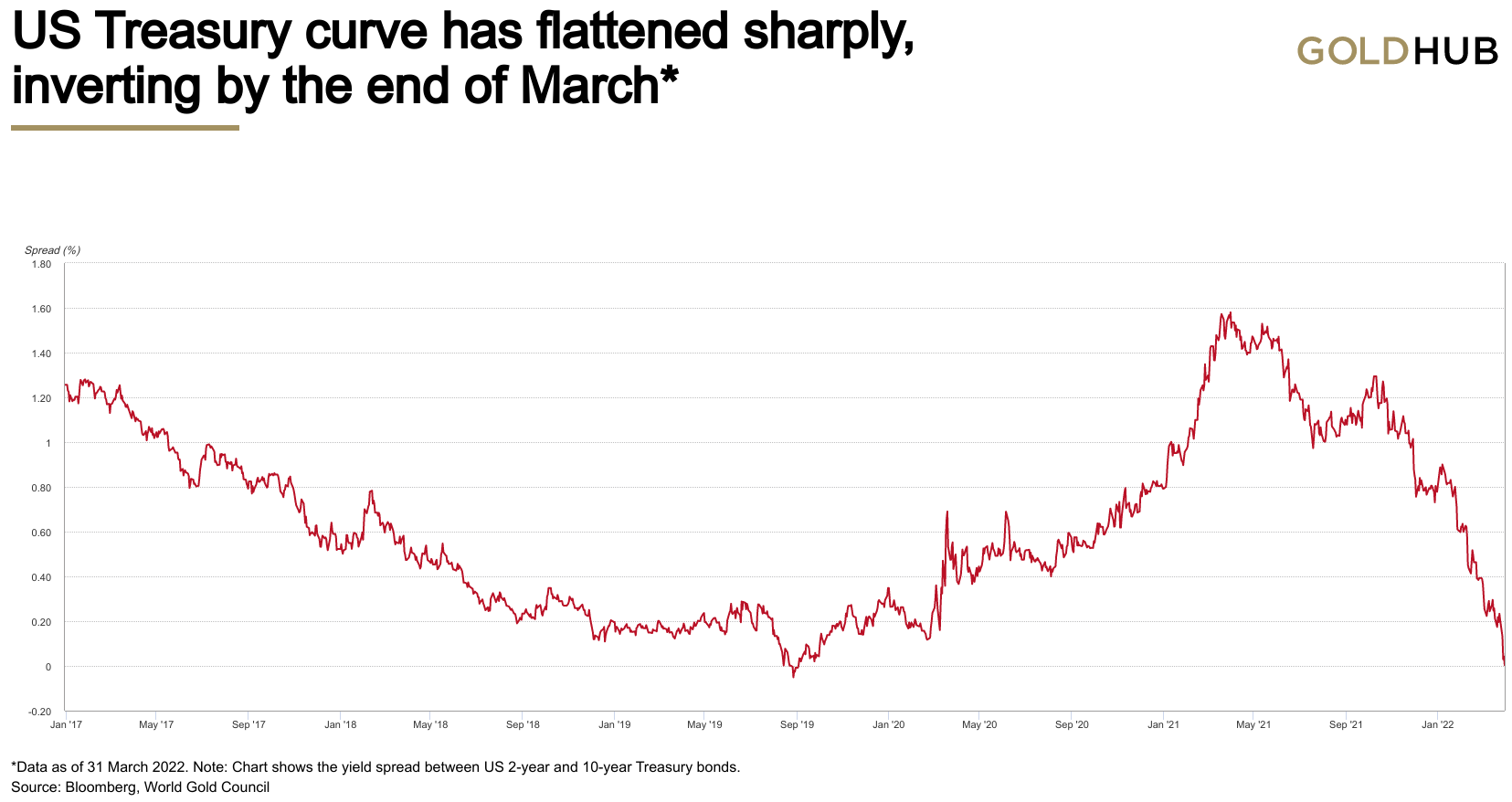
Difference between 2-year and 10-year yields in the US is almost negative (Source: World Gold Council)
Geopolitical turmoil is also causing a flight to the precious metal. Gold has no counterparty risk. Due to the economic sanctions, a large part of the Russian central bank's foreign exchange reserves have been frozen, which has damaged confidence in the euro and the dollar. As a result, central banks may look at their gold holdings with renewed interest. For example, the Russian central bank recently Announced gold at 5,000 rubles per gram, a measure to support the value of the ruble.
The flight to precious metals can be seen in the graphs below. These show the development of the gold stocks of all major gold ETFs in the world. These investment products are especially popular among investors and asset managers, as they are traded as shares through the stock exchange. As the first chart shows, gold ETFs added 187 tonnes of gold to their holdings in March alone. By comparison, that was more than last year's total net outflow of 174 tonnes.
For the first quarter, net inflows were 269 tonnes, valued at $17 billion. Of these, gold ETFs in North America accounted for the largest share, as the blue bars show. The green bars show that European investors only bought gold on a large scale in March, after the Russian invasion of Ukraine. Interestingly, Asian gold ETFs sold gold on balance in the first quarter, possibly because investors in those countries are taking profits.
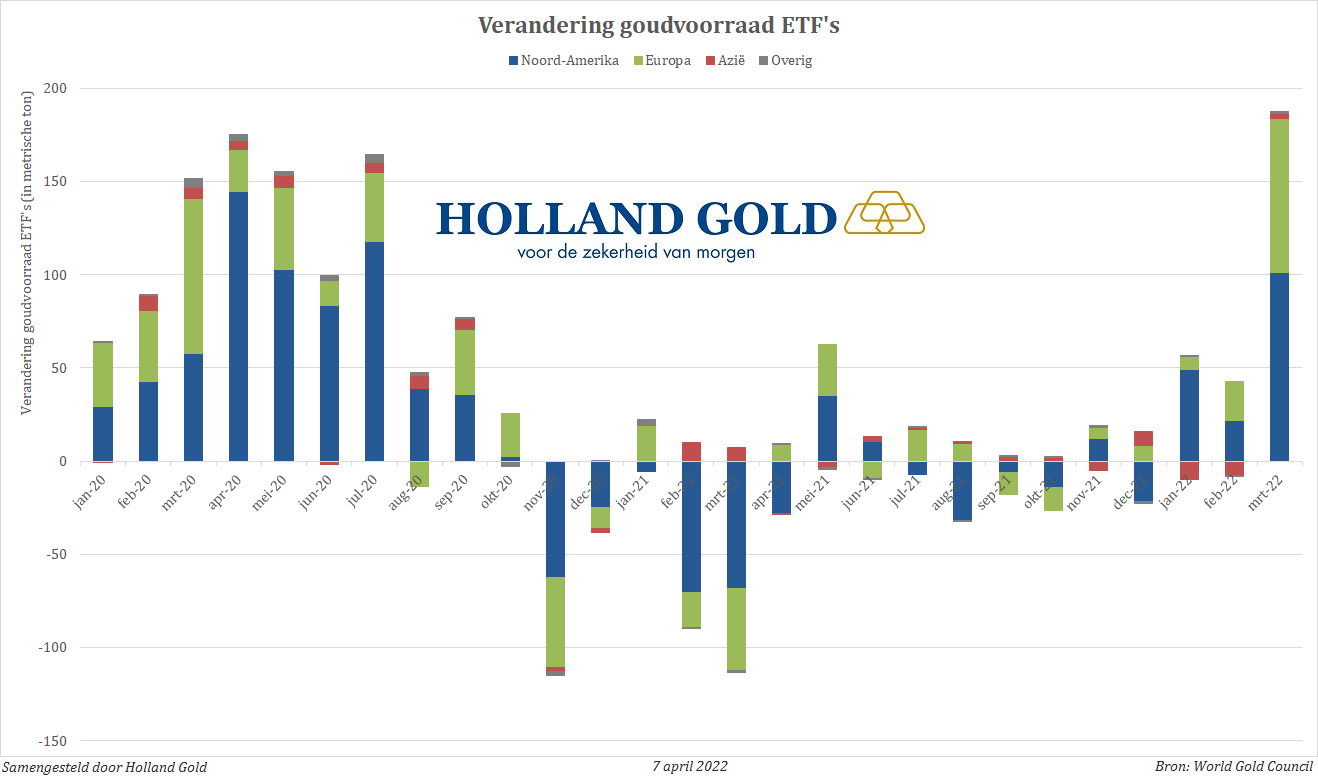
Russia's invasion of Ukraine triggered flight to gold
The second graph shows the total development of the gold stocks of ETFs since the introduction of these investment products more than twenty years ago. As you can see, total gold stocks are almost back to the old record of 2020, when the gold price passed $2,000 per troy ounce for the first time in history. The price is now slightly lower, but the interest in the precious metal is as strong as ever. Especially in European countries, which of course has to do with the war and high inflation. 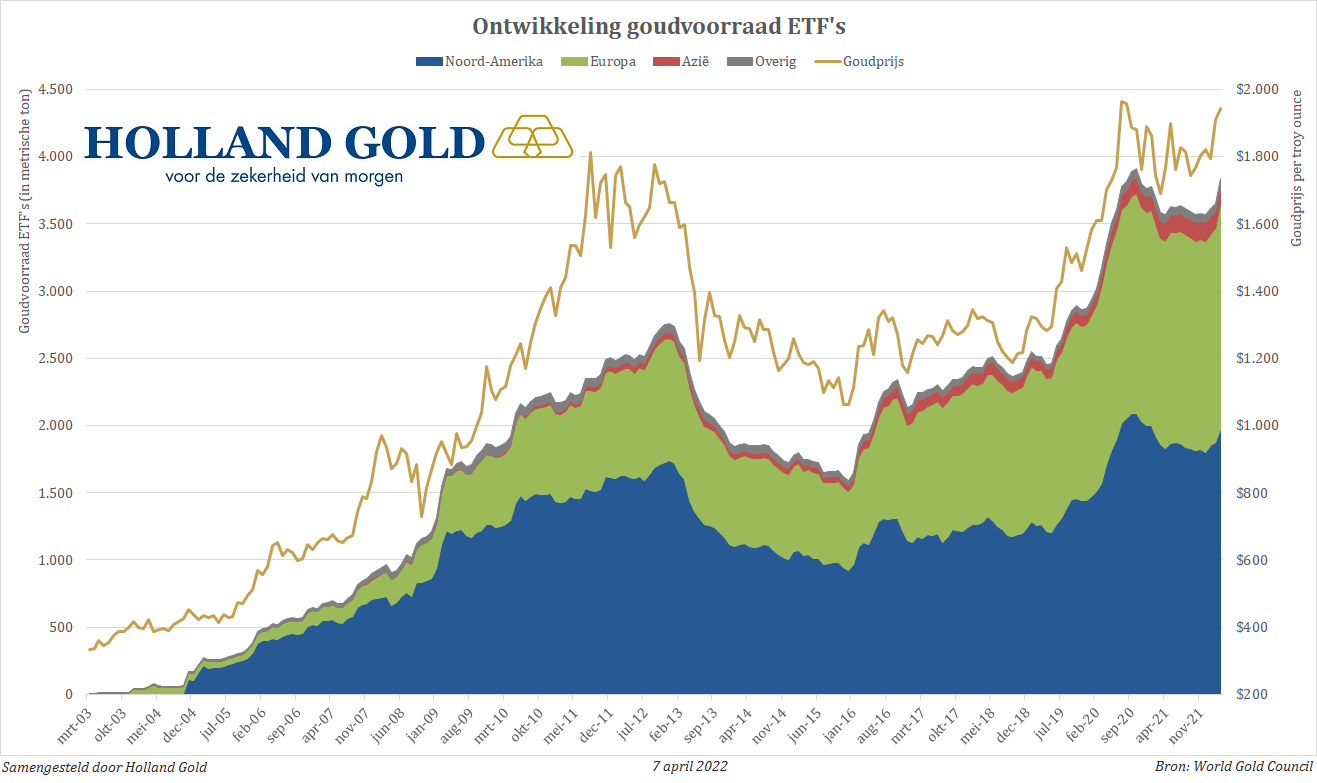
Gold stocks ETFs to highest level since late 2020
Investors not only buy shares of gold ETFs, but also physical coins and bars. In the first quarter of this year, for example, the US Mint sold 426,000 troy ounces to Golden Eagle and Golden Buffalo mint. That was the largest volume for the U.S. mint in the first quarter since 1999. Other mints and smelters also saw a sharp increase in demand for investment gold.
Also at Holland Gold we saw record crowds shortly after the Russian invasion. Many people buy the precious metals as a safe haven and as a means to protect purchasing power from currency depreciation. This trend will continue for the foreseeable future, especially if the war continues, inflation remains high and financial markets remain unsettled.
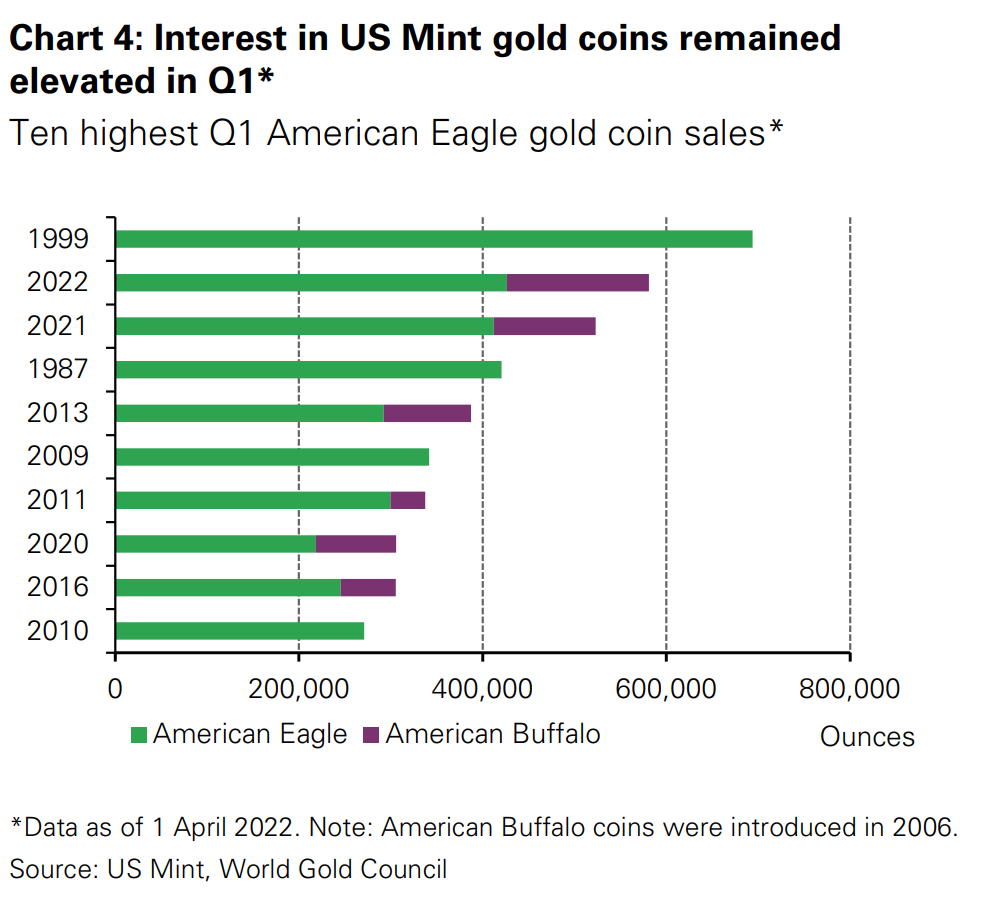
U.S. Mint sold a lot of gold coins in the first quarter of this year
This contribution comes from Geotrendlines
 Have a look at us YouTube channel
On behalf of Holland Gold, Paul Buitink and Joris Beemsterboer interview various economists and experts in the field of macroeconomics. The aim of the podcast is to provide the viewer with a better picture and guidance in an increasingly rapidly changing macroeconomic and monetary landscape. Click here to subscribe.