English
EN


The price of palladium reached a new all-time high of more than €37,000 per kilogram this week. The precious metal has therefore become a lot more expensive than gold, which costs just over €36,000 at the time of writing. Palladium rose more than 22% in price last year, making it the best-performing precious metal of 2018.
Due to the price increase in recent years, palladium has also become a lot more expensive than platinum, while historically that ratio has usually been the other way around. The price difference has now even risen to $500 per troy ounce, the highest level since the beginning of this century. In 2008, the roles were reversed, when a troy ounce of platinum was more than $1,500 more expensive.
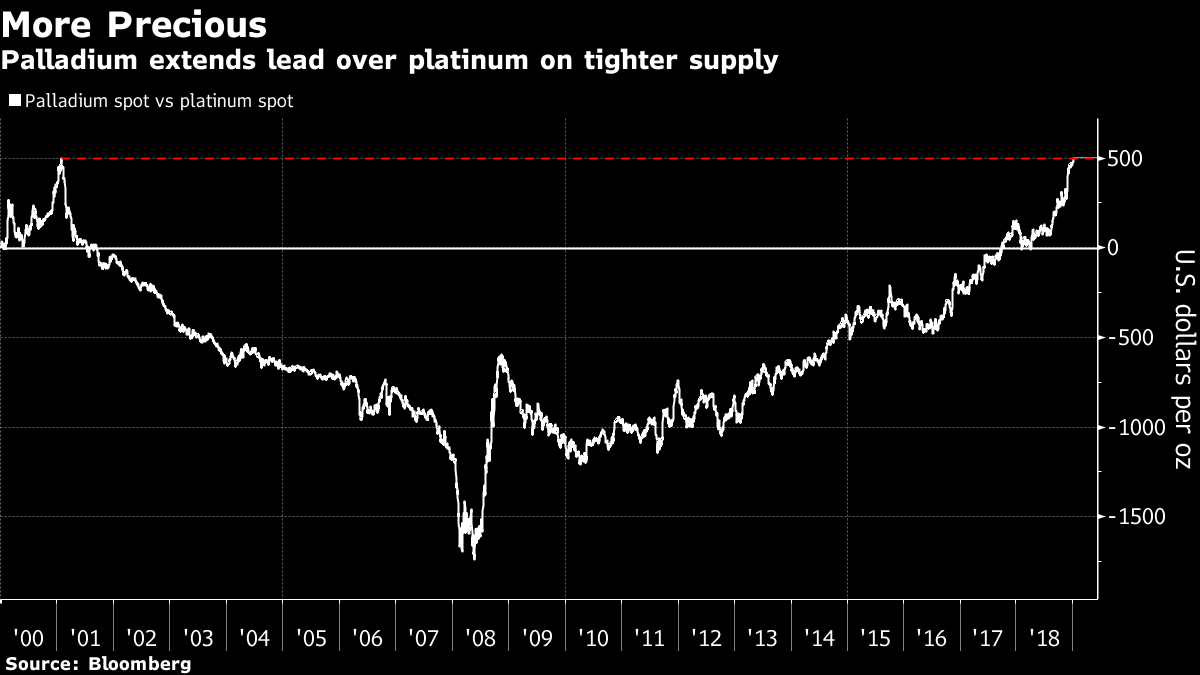
Price of palladium to new record, also against platinum (Source: Bloomberg)
Palladium is widely used in gasoline cars and benefits from an increased demand for this type of vehicle. Platinum is used in diesel cars, which have become less popular at Volkswagen due to the scandal. These cars are also taxed more heavily, because they are more polluting than petrol cars. As a result of these developments, the price of platinum dropped to $821.35 per troy ounce, the lowest level in a decade.
Due to the higher palladium price, automakers are looking at the possibility of switching to platinum, but that is not easy. The former has certain properties that make it more suitable for use in gasoline cars, such as better resistance to high temperatures. To switch to platinum, car manufacturers have to make costly modifications to the engine and exhaust system.
The scarcity of palladium will continue in the near future, especially if investors and speculators also start investing in the precious metal. Due to the low platinum price, the demand for this precious metal will pick up, reducing the surplus. The charts below show how these markets have developed over the past twenty years.
Do you want to invest in these precious metals? Then take a look at the platinum Maple Leaf and the palladium Maple Leaf.
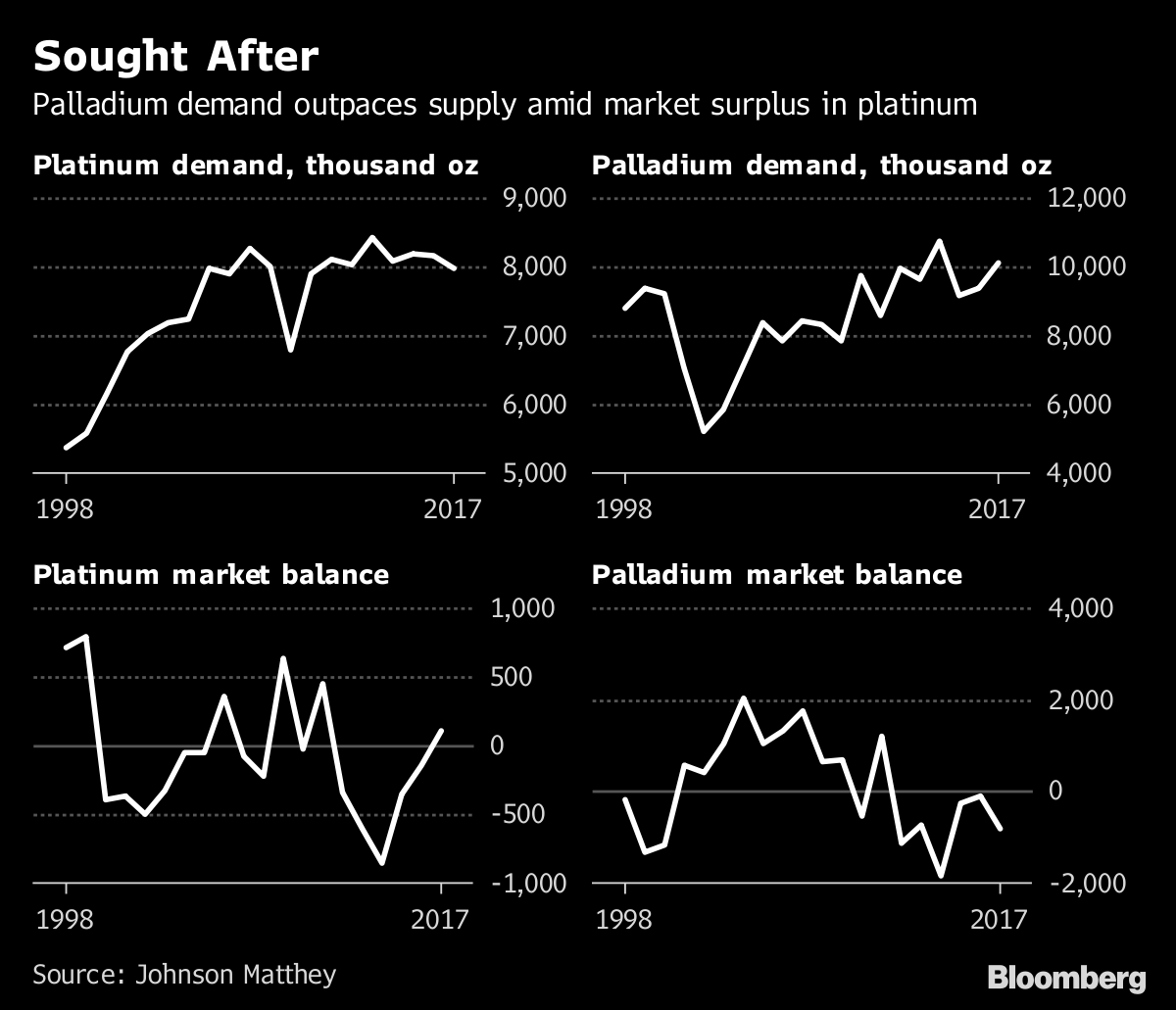
Platinum surplus persists, but decreases (Source: Bloomberg)