English
EN


After World War II, the U.S. dollar gradually took over the status of the British pound as the main currency for international trade. In recent decades, it was almost a matter of course that the dollar was accepted everywhere and that all central banks built up dollar balances in addition to gold in order to be able to import goods from abroad.
Nevertheless, since the introduction of the euro and with the rise of the BRICS countries, we have seen small shifts in the monetary landscape. Most transactions in the world are still settled in dollars, but we also see that countries are taking steps to settle transactions between them in their own currency or in euros.
The repressive policy of the United States with economic and financial sanctions against other countries will only accelerate this process in the coming years. Russia already warned the government in Washington not to use the dollar as a political weapon, while Turkey's finance minister even called the dollar an unreliable means of payment. Also, a country like Iran has now switched from dollars to euros for international trade because of the sanctions.
Of course, it is the countries that suffer the most from the dollar system that are beginning to oppose it. For the United States, the dollar monopoly offers advantages mainly because it allows the country to finance itself easily and the value of the currency remains high. That means Americans have a lot of purchasing power, at the expense of other countries that don't have that privilege.
That other countries Finding alternatives for the dollar, statistics from the SWIFT payment system also show. These show that central banks have fewer dollar reserves on their balance sheets today than they did in 2004. It also appears that the dollar's market share has fallen by a few percent since then, while that of other currencies (excluding the euro) has almost doubled. The following chart from Allianz clearly shows this trend.
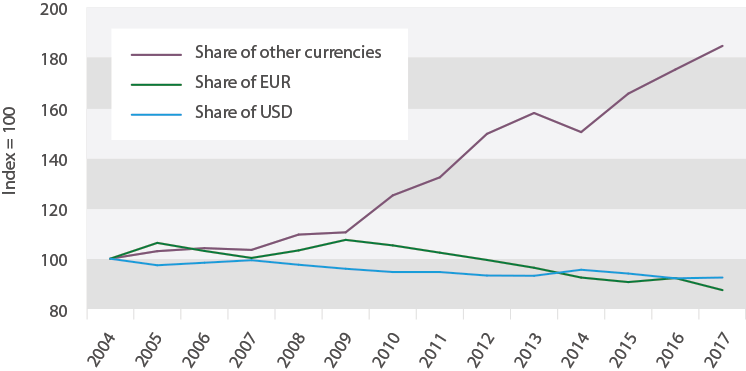
Other currencies gain market share in foreign exchange reserves (Chart via Allianz)
The dollar is not only losing ground as a currency reserve, it has also been used less in recent years for transactions via the SWIFT payment system. Since December 2014, the dollar has lost almost 15% of its market share, while that of the euro has increased by more than 20% over the same period.
It is striking that the Japanese yen has also been popular in recent years, while the number of international transactions in Chinese yuan via the SWIFT payment system is decreasing. One possible explanation is that China uses different systems for some trading partners, which simply means that fewer yuan payments are registered via SWIFT. This also applies to Russia, which has developed its own version of the SWIFT system in recent years.
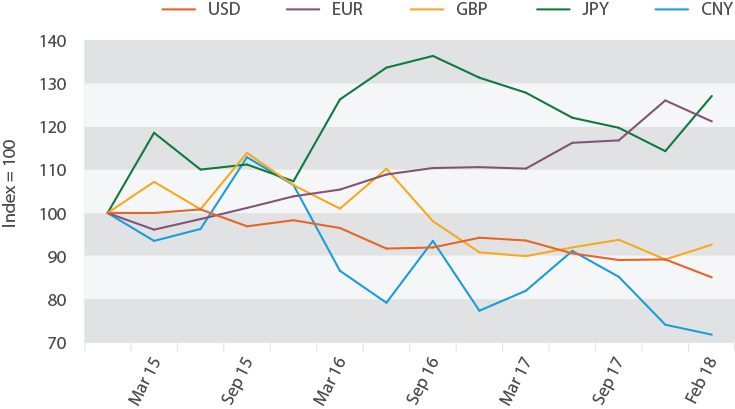
Dollar less popular as a means of payment (Chart via Allianz)
The transition to a monetary system that relies less heavily on the dollar would mean that the United States would have to give up a number of advantages. For example, it will become much more expensive for the US government to finance its debt (higher interest rates) and the value of the dollar against other currencies will fall drastically. We also saw the latter in the period from the early 1950s to the mid-1970s. The share of the British pound in central banks' foreign exchange reserves fell from 60% to less than 5% during this period, and the value of the pound fell from more than $4 to about $1.
Also, a declining demand for dollars in the world will have a negative effect on the value development of dollar-denominated shares and bonds. A positive effect is that the United States, with a weaker currency, will once again become more interesting for companies that produce and export goods. This could create more jobs, albeit with reduced purchasing power than is currently the case. That purchasing power will then flow into the currency that will take over the dollar's role as the world's reserve currency.
This contribution was made from Geotrendlines