English
EN


Eurozone inflation rose to 4.1% year-on-year in October, the highest level since 2008. This is reported by the European statistical office Eurostat based on provisional figures. The main cause of the high inflation is the sharp increase in the price of energy, which was 29% higher in October than a year ago. Not only did petrol at the pump become much more expensive, the price of gas also skyrocketed.
The increase in energy prices is also indirectly affecting the prices of other products, which also made groceries more expensive. Raw materials such as wood, steel and copper, as well as various foodstuffs, have also risen further in price. In addition, transport costs have also increased, for example for container transport from Asia to Europe and the United States. Those rates have increased more than five times in a year.
Central banks have long maintained that high inflation would remain a temporary phenomenon, caused by disruptions in the supply chain. Their expectation was that the price increases would level off over time, but that is not yet the case. In both the United States and Europe, prices are now rising much faster than 2% per year, the inflation rate that central banks say they are aiming for.
Nevertheless, there is no prospect of a major change in monetary policy for the time being. The Federal Reserve has very cautiously announced tapering this week, but interest rates will remain low for a long time. The same goes for the ECB and the Bank of England, which also have no plans to raise interest rates yet. And that makes savers nervous, because they see that the purchasing power of their money is evaporating faster and faster. The high inflation comes on top of the negative interest rates on savings.
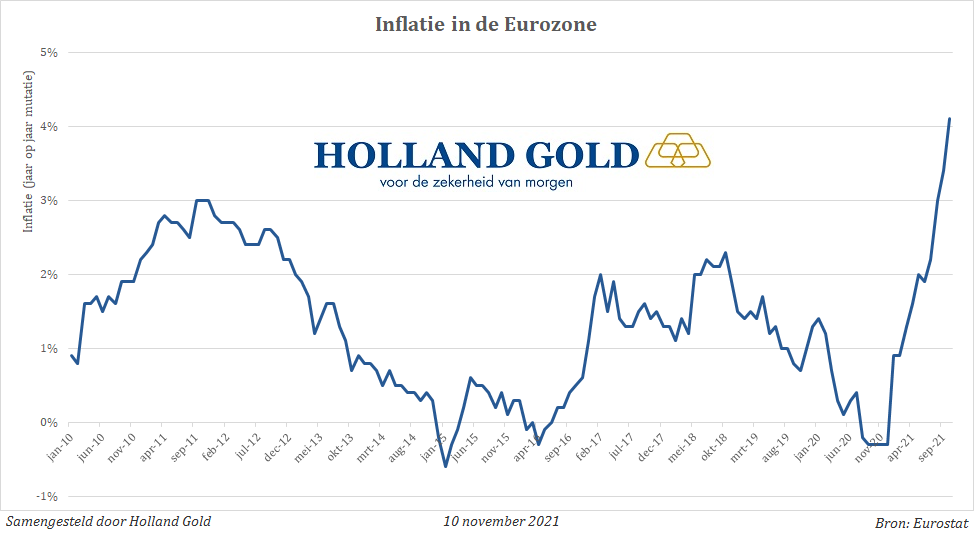
Inflation in the Eurozone reaches highest level since 2008
The wait-and-see attitude of central banks towards inflation is causing a flight to stock markets and safe havens. For example, the Gold price This week to almost €50,500 per kilo, the highest level since the beginning of this year. The precious metal is gaining popularity as an alternative means of savings, as it does not have negative interest rates and is less affected by inflation. Historically Performs Gold is good in times of high inflation.
The silver price also rose a bit, but at €670 per kilo it is not yet at the highest level of this year. That was during the Silversqueeze At the beginning of February, when the silver price reached a level of €770 per kilo. Negative real interest rates are beneficial for precious metals, as savers are more likely to consider alternatives. Especially if savings rates remain historically low and savings do not yield a return.
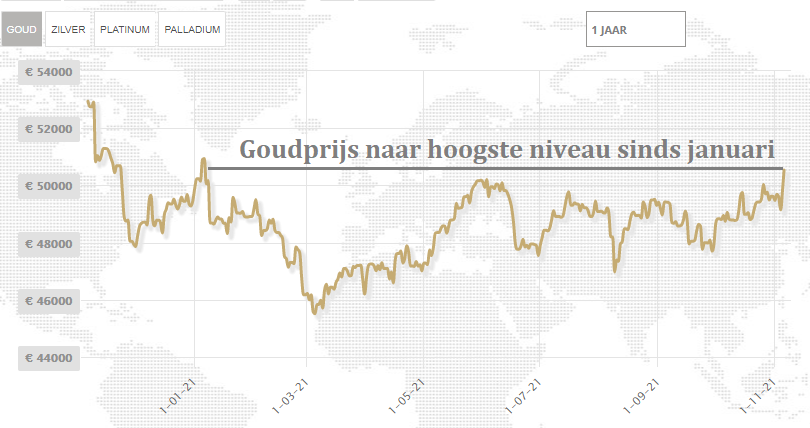
Gold price back above €50,000 per kilo
This contribution was made from Geotrendlines