English
EN


Uranium stocks have fallen back recently, but according to Jack Hoogland, that price decline says little about the fundamental outlook. While stock market sentiment has deteriorated, the positive news around nuclear energy has continued to pile up.
As far as I am concerned, uranium stocks provide the very best evidence that the price declines of recent times (including those in gold, silver and copper) have been driven solely by sentiment. Because while uranium stock prices were falling, we were flooded with extremely positive news.
First of all, last week’s published reactor database update from the WNA showed that the number of new reactors under construction has risen from 73 at the end of 2025 to 80 now.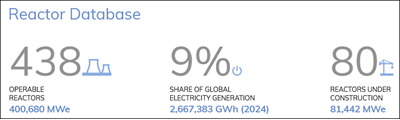
Never before have so many new reactors been under construction worldwide! And the number of officially approved reactors in the planning phase rose from 117 at the end of 2025 to 123 now. This alone is enough to create a huge shortage of uranium!
On top of that, it was announced late last week that Japan will invest no less than $65 billion in American small modular reactors (SMRs). The aim is to become the global market leader in SMRs together with the rapidly advancing United States.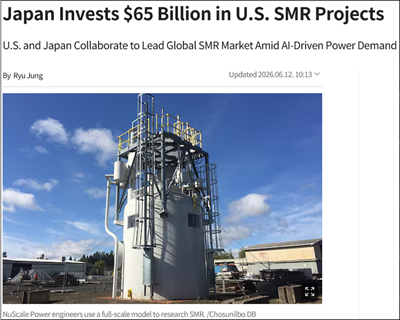
And in Europe, the focus has now shifted so strongly toward nuclear energy that people are even speaking of the beginning of a golden age for European nuclear energy. In the tweet below, we see that the number of nuclear deals in the first half of this year is already double the total for all of 2025. 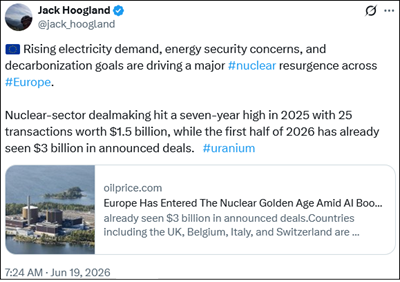 The current expectation is that Europe will have around 53 GW of small reactors alone by 2050.
On top of that, Canada’s Minister of Energy announced that the country will build ten new reactors. And that Canada wants to compete on the global market with its own CANDU reactors.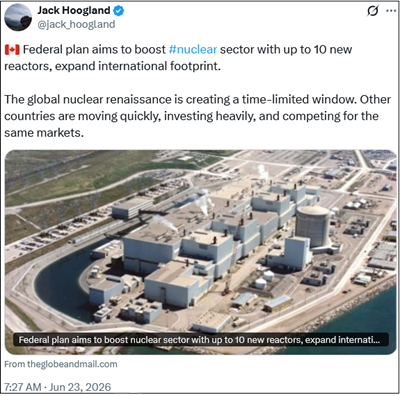
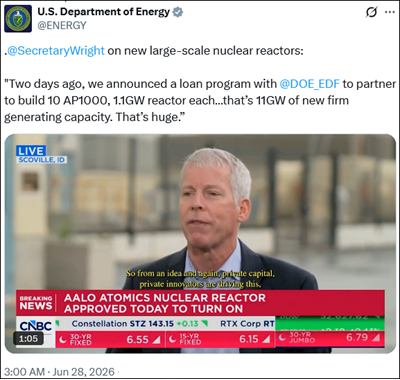
The U.S. Department of Energy announced that it will help co-finance the first ten newly built reactors with a favorable loan of $17.5 billion. Separately, the United States has taken major steps in reducing bureaucracy and in developing SMRs.
The problem with all this good news, however, is that uranium production will lag far behind over the next 15 years, leading to a huge shortage. In the tweet below, we see Goldman Sachs’ expectation that the annual uranium shortage will rise to as much as 85 million pounds in 2030. And that shortage will become even much larger in the years after that.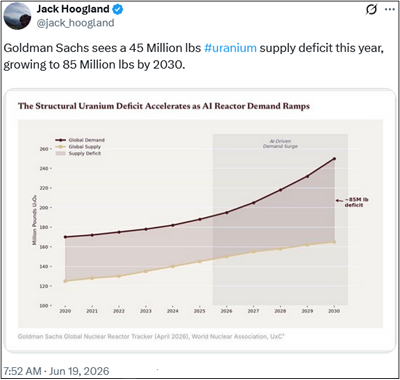
Such a large shortage, while demand for uranium is inelastic, means that uranium could easily rise in the coming years from the current $94 per pound to $500, or even $1,000 or higher.
The very best evidence that the price declines in uranium stocks have been caused solely by sentiment can be found in the chart below.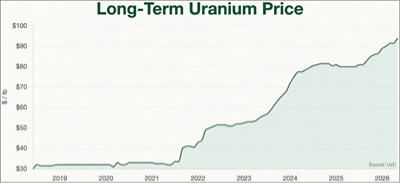
The average uranium price in multi-year contracts (90% of the market) is in a strong upward trend and has risen to its highest level in many years. This key uranium price is not affected by market sentiment at all, and therefore we see no correction in the chart.
All this explains why top commodity investor Rick Rule indicates in the tweet below that these price declines actually make him happy.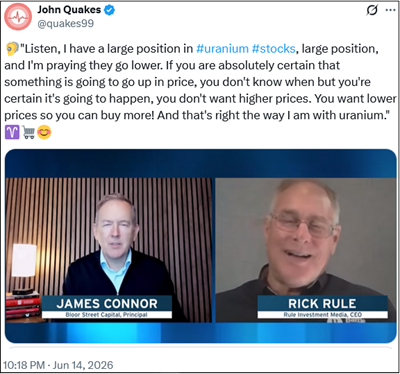
Because if you know that prices will rise enormously over time, and you know that the current correction is based purely on sentiment, then you know that this is the ideal time to buy more.
What I told you before, I would like to repeat here once more. The uranium bull market will be the biggest bull market we will experience in our lifetime!
Jack Hoogland worked at the American bank Citigroup in Amsterdam, Düsseldorf, Madrid and Brussels as a Financial Analyst, Risk Manager and Finance Director. Jack has followed the financial markets since the late 1980s and, after the financial crisis, increasingly focused on macroeconomics and the financial system. Read more from Jack Hoogland.