English
EN


When investors try to interpret the gold price, they often look at inflation, interest rates and geopolitical tensions. Yet an important part of annual gold demand comes from an unexpected source. Indian households are estimated to own more gold than the world’s ten largest central banks combined. During India’s wedding season, gold also plays a central role, creating strong seasonal demand every year.
This annual wave of demand regularly coincides with a strong period for gold. At the same time, the rising gold price also has drawbacks. Higher prices make jewellery less affordable and even encourage some families to sell gold. What influence does this recurring seasonal demand have on the gold price, and can investors benefit from it?
Cultural demand from Asia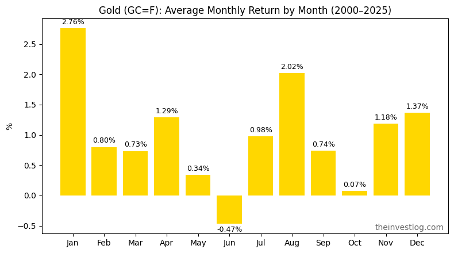 Average monthly return of gold. (Source: theinvestlog)
The Indian wedding season and Chinese New Year are traditionally accompanied by strong demand for gold. This period coincides with January, historically by far the strongest month for gold. The Indian festival of Akshaya Tritiya, which usually falls in April or May, also generates additional demand each year.
This extra demand is no coincidence, but stems from the special role gold plays in both societies. According to the World Gold Council, the precious metal plays an important role in India during religious festivals and personal milestones. Buying and gifting gold is seen in many communities as a sign of prosperity and good fortune. Indian weddings are estimated to account for around half of the country’s annual gold demand, giving them an important role in global demand for physical gold.
In India, gold is not only a symbol of wealth and status, but is also seen as a way to preserve wealth. Especially in rural areas, it is often regarded as a reliable form of savings.
In China, too, gold plays an important role in both culture and the financial system. Around Chinese New Year, gold jewellery and coins are often given as gifts as a symbol of luck, prosperity and financial success. As in India, many Chinese households see gold not only as jewellery, but also as a way to preserve wealth.
Gold therefore plays an important cultural and economic role in both India and China. This is also reflected in the large quantities of gold held by households. According to ASSOCHAM, Indian families collectively own more gold than the world’s largest central banks. Chinese households also hold substantial gold reserves.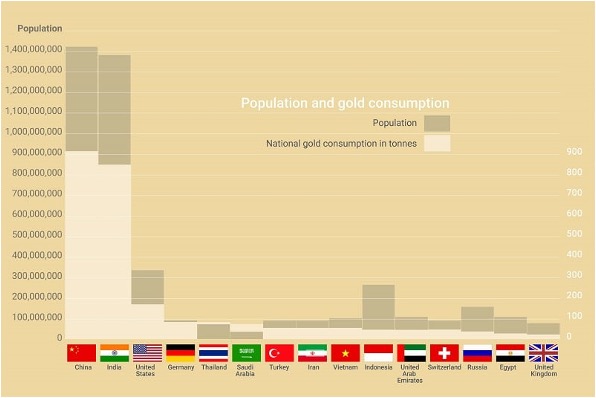
Gold consumption by country. (Source: BullionByPost)
In addition, China and India have for many years ranked among the world’s largest gold consumers, with structurally high demand for jewellery, gold bars and coins.
Over the longer term, the continued high economic growth of both countries could lead to a further increase in gold demand. As incomes rise, more households gain the ability to buy additional gold as jewellery, a gift or a form of wealth accumulation.
However, the high gold price also has drawbacks. Due to the sharp increase in prices, families may be able to buy less gold for weddings, or may have to postpone the wedding. Some families even decide to sell gold to free up additional funds.
Conclusion
Although the major price movements in gold are ultimately determined by factors such as inflation and geopolitical uncertainty, seasonal demand from India and China can play an important supporting role. As prosperity in these countries continues to rise, purchasing power also increases. For investors, it can therefore be valuable to take this recurring demand into account. Sometimes, part of global gold demand simply begins with a wedding on the other side of the world.