9.3
8.883 reviews

English
EN


As an investor, you can make a lot of money by swimming against the tide, but it is also possible to lose a lot of money that way. For example, a trader lost in two weeks €20 million with a short position in German government bonds. The German 10-year yield was close to zero percent at the end of April, but would then fall further to -0.12%. The contracts that the trader had offered on April 28 for 25 cents each, he had to buy back this week at a much higher rate of 121 cents. A loss of almost €20 million.
This poignant example is not an isolated one, as many more traders have probably burned their fingers on German government bonds in recent years. Despite reports of an ailing economy, interest rates continue to fall. Since the beginning of this year, interest rates have fallen from 0.2% to -0.12%, which means that the price of bonds has risen further. Investors who speculated against a depreciation have paid a high price for it, such as this trader who lost millions in a short period of time.
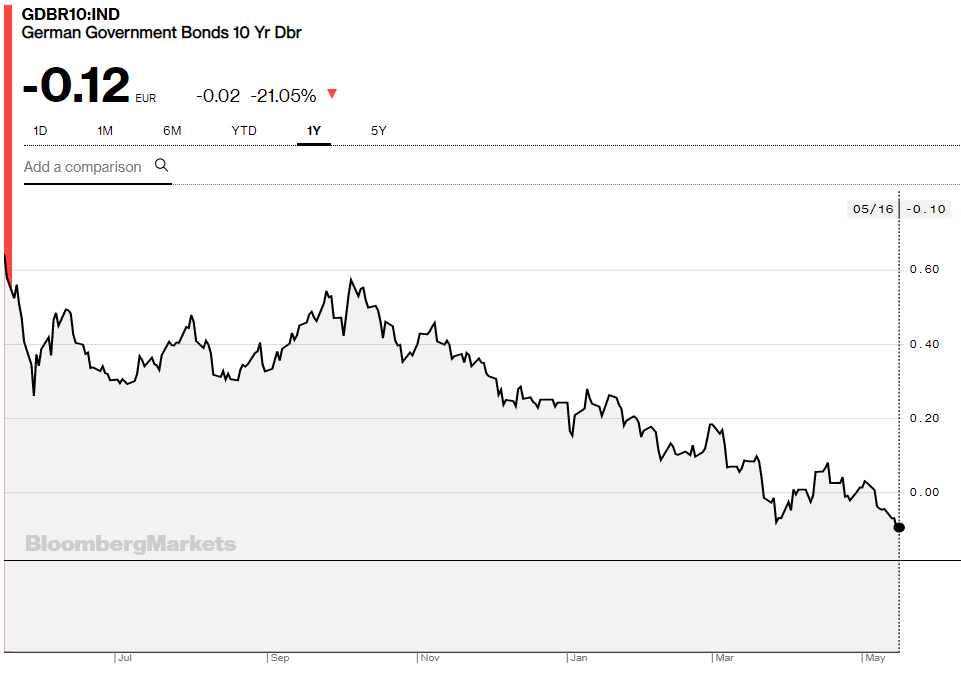
Interest rates on German government bonds continue to fall (Source: Bloomberg)
There are several reasons why interest rates on German government bonds are falling. Most importantly, there is a structural shortage of high-credit debt securities, which makes investors willing to pay a premium for the most creditworthy German government bonds. If uncertainty about the global economy increases, more investors will flee to the safety and liquidity of German debt.
Second, the market is supported by the European Central Bank, which has withdrawn billions of bonds from the market with its bond-buying programme. The central bank has also bought billions in German government bonds, adding to the scarcity. Finally, it should be mentioned that Germany has simply been spending less money in recent years. The country now has a Budget surplus, which means that fewer new bonds are simply being issued.
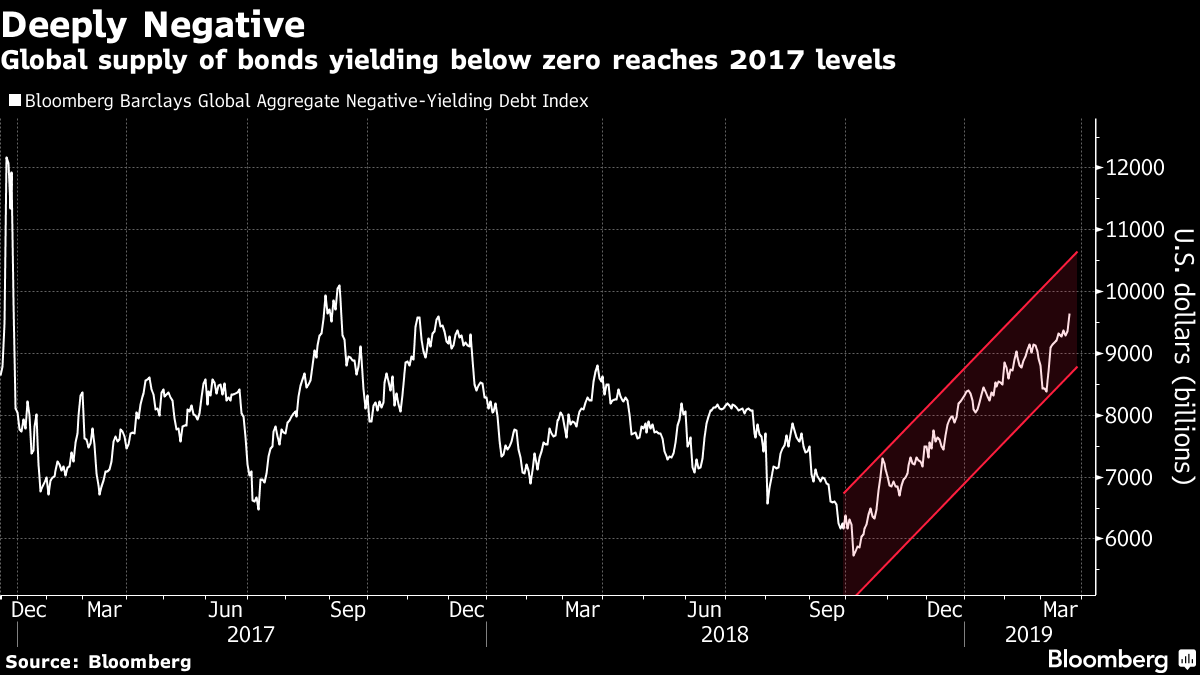
More and more government bonds have negative interest rates again (Source: Bloomberg)
Uncertainty about the trade conflict and rising geopolitical tensions are causing a flight to government bonds with the highest credit status. Investors prefer to lend their money to the government, even if it means earning negative returns. It's the world upside down, but one you have to live with as an investor.
Speculating against this system is not without risk, especially if central banks are ready to support the market. Bond investor Bill Gross can also comment on this Have your say. In 2015, he advised to short German 10-year bonds. A costly mistake, on which his investment fund lost a lot of money.
Low interest rates are a challenge for institutional investors, who have a relatively large number of non-performing government bonds on their balance sheets. Due to disappointing returns, they have not been able to index for years, which means that pensions do not rise in line with inflation. Due to the exceptionally low interest rates, it is becoming increasingly interesting to buy gold. The precious metal has no counterparty risk and is able to preserve its purchasing power better than money over the longer term.
Disclaimer: Holland Gold does not provide investment advice and this article should not be considered as such. Past performance is no guarantee of future results.


