English
EN


The Federal Reserve needs to buy $250 billion worth of bonds in the coming months to support the banking sector. That's what Joseph Gagnon and Brian Sack, two former employees of the central bank, write in a analysis for the Peterson Institute for International Economics. After that, the central bank must continue to buy bonds to provide the banks with sufficient reserves. These measures are intended to prevent banks from running into liquidity problems.
Last week Opened the U.S. central bank was the emergency window for banks, because the interest rate that banks charge each other had suddenly risen to 10%. Due to a combination of circumstances, there was a lack of liquidity, which caused the price of money to skyrocket. The central bank then decided to make liquidity available to banks in exchange for high-quality collateral such as government bonds and mortgage loans. This support programme remained active for the rest of the week and was then even extended until October 10. It was also expanded to include 14-day loans.
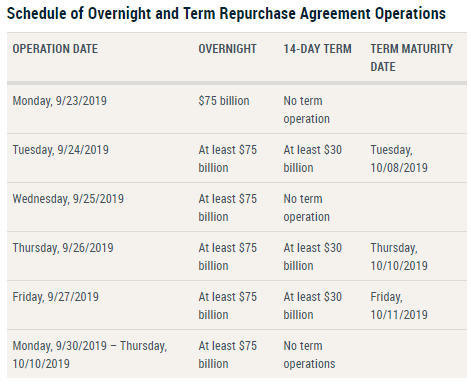
Federal Reserve extends support program until October 10 (Source: Federal Reserve)
In recent years, the U.S. central bank has gradually reduced its balance sheet from $4.5 trillion to $3.8 trillion. The central bank brought bonds and mortgage loans back to the market, taking liquidity out of the market again. It turned out to be a somewhat optimistic strategy, because banks are now in need of reserves.
To solve this problem, the central bank should send a strong signal, according to the two former central bankers. According to them, the Federal Reserve needs to buy $250 billion worth of bank debt over the next six months to reduce the likelihood of a future liquidity crisis. Central bank figures show that the size of the liquidity programme is often not sufficient is.
The first chart below shows the amounts for which banks requested liquidity from the Federal Reserve (blue) and how much they eventually received (yellow). In addition, several tens of billions will be added for the liquidity support with a maturity of 14 days. The second chart shows that the Federal Reserve's balance sheet total has increased by nearly $100 billion as a result. These are the bonds and mortgage loans that the central bank has bought from banks in the past two weeks.
The Federal Reserve's liquidity support to the banking sector is thus increasingly starting to 'quantitative easing' to seem. Analysts from a.o. JP Morgan and Morgan Stanley already take that into account. The prospect of a new asset purchase program could well give a boost to the gold price.
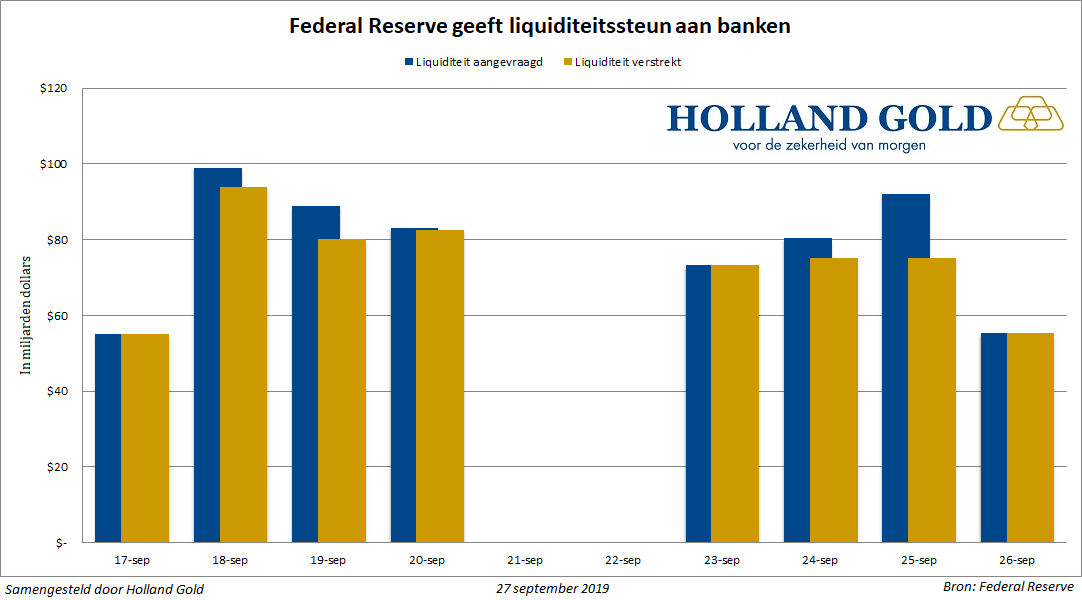
More demand than supply of liquidity at the Federal Reserve's counter (Source: Federal Reserve)
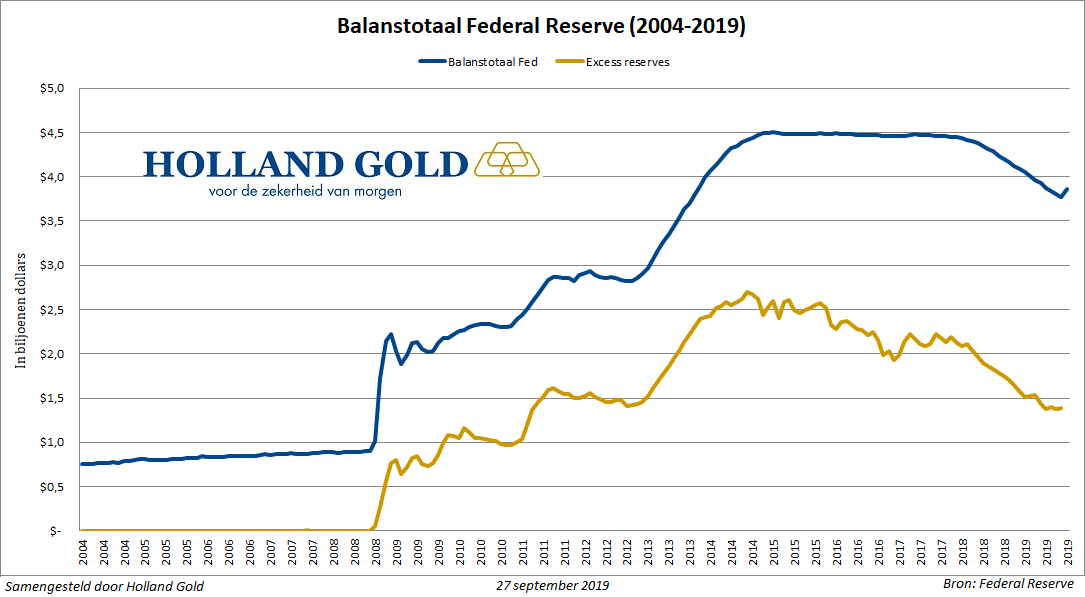
Federal Reserve balance sheet total and excess bank reserves (Source: St. Louis Fed)