English
EN


The Federal Reserve added more than $200 billion in debt to its balance sheet last month. This is according to an analysis of the latest figures from the central bank. In doing so, the Fed has undone six months of 'tapering', because the balance sheet total has been $3.96 trillion back to March levels.
It is also striking that banks regularly request more liquidity than the set quota of $75 billion. From this, we can conclude that the liquidity problems in the banking sector are more structural in nature. In order to keep interest rates within the desired range, the central bank must structurally make liquidity available. This could be a signal that banks trust each other less.
In mid-September, the market was rocked by a sudden rise in interest rates on the interbank lending market. The interest rate at which banks lend each other short-term money rose to 10%, as liquidity in the market dried up. This was explained as a temporary problem, as large corporations were taking money out of their accounts to pay taxes. The Federal Reserve intervened by Emergency Desk to banks, causing interest rates to fall again.
However, the liquidity problem in the banking sector seems to be fundamental, because four weeks later, banks are still queuing up for the emergency window. In fact, in recent days, the demand for liquidity has actually increased. On Tuesday, the $75 billion quota was already exceeded and on Thursday, the central bank provided nearly $30 billion more than the set quota. So it's no wonder that the central bank is keeping this emergency facility open longer. First it was extended until October, not much later until November and eventually even to January next year.
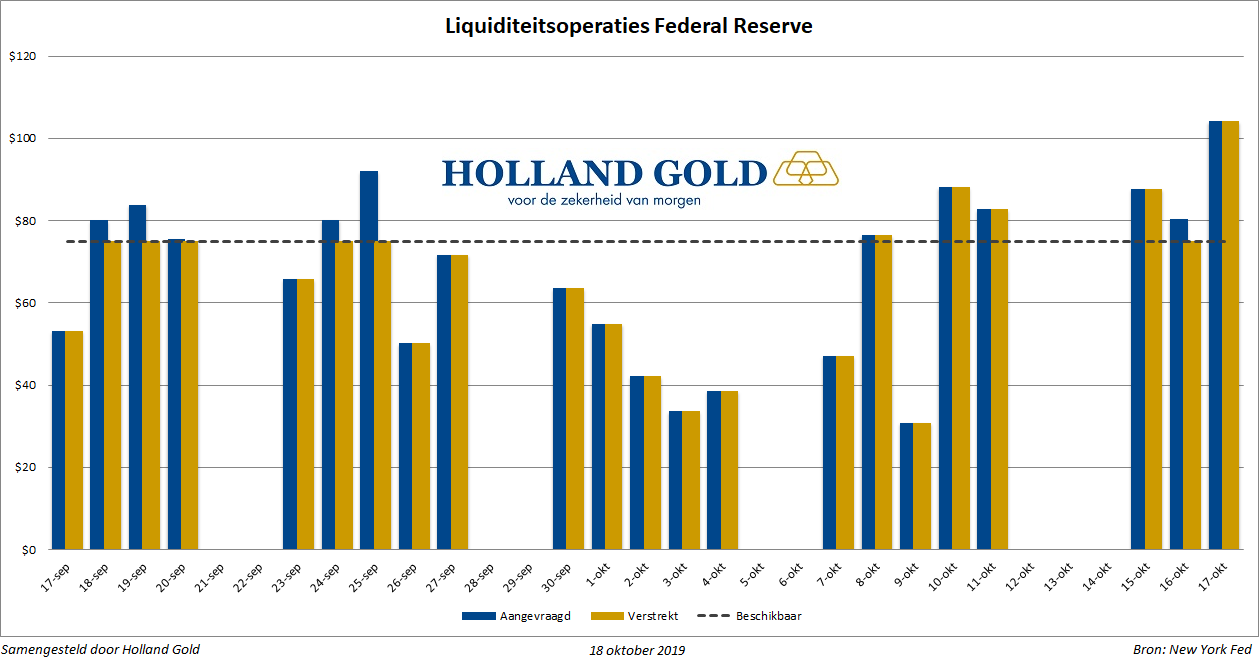
The Federal Reserve's liquidity operations regularly exceed the $75 billion quota (Source: New York Fed)
Also, on October 11, the central bank announced a New buy-back program at. The central bank decided to buy $60 billion a month worth of bonds starting on October 15. That's separate from the $200 billion it already has parked on its balance sheet as a result of its Repo operations. Remarkably, there was not much attention paid to this in the media, possibly because the governor of the central bank said that this was not the case. 'quantitative easing' may be mentioned. Thanks to this bond-buying program, the Fed's balance sheet total will increase by a few hundred billion euros in the coming months. It is expected to buy bonds through the second quarter of next year.
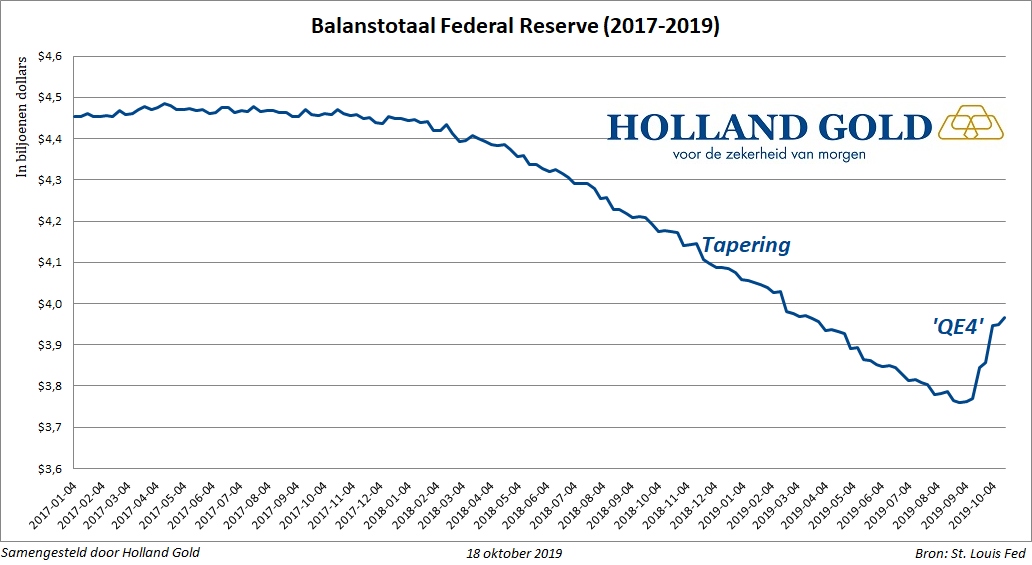
Federal Reserve's balance sheet total has already increased by $200 billion since the emergency window opened (Source: St. Louis Fed)
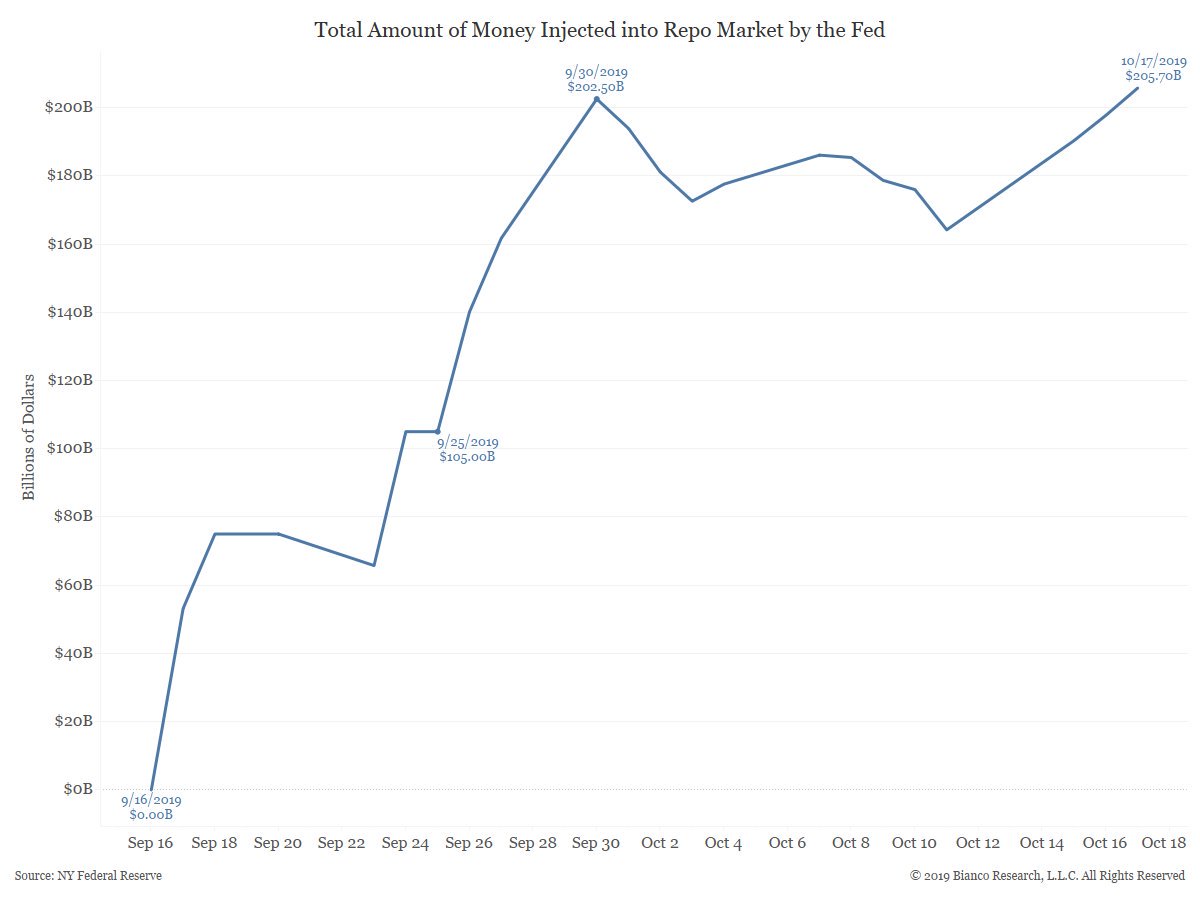
The Fed has already bought more than $200 billion (Chart by @biancoresearch)