English
EN


Deutsche Bank's analysts have become less negative about the euro in recent days, according toReuters. According to George Saravelos, currency strategist at Germany's largest bank, the euro will stabilize against the dollar in the coming months . Only in the second half of this year does he foresee a further decline towards parity with the dollar, while the bank previously predicted this for the first half of this year.
For the end of this year, Deutsche Bank is sticking to a price target of $0.95 for the euro, but in the coming months the currency may make an upward move towards $1.10. The Federal Reserve's tightening monetary policy vis-à-vis the ECB will push the exchange rate down in the long run, but uncertainty about the strength of the U.S. economy and the Trump administration's tax reforms may mean that decline may take some time, according to Saravelos.
According to Deutsche Bank's currency strategist, the political risk of the various elections in Europe does not seem to be too bad, while Mario Draghi suggested during the last press conference that the ECB can taper stimulative policy more quickly. These factors could provide a tailwind for the euro in the short term.
Deutsche Bank is the fourth largest bank in the world in terms of currency trading. According to figures from Euromoney, the bank has a market share of about eight percent in global currency trading of $5 trillion per day.
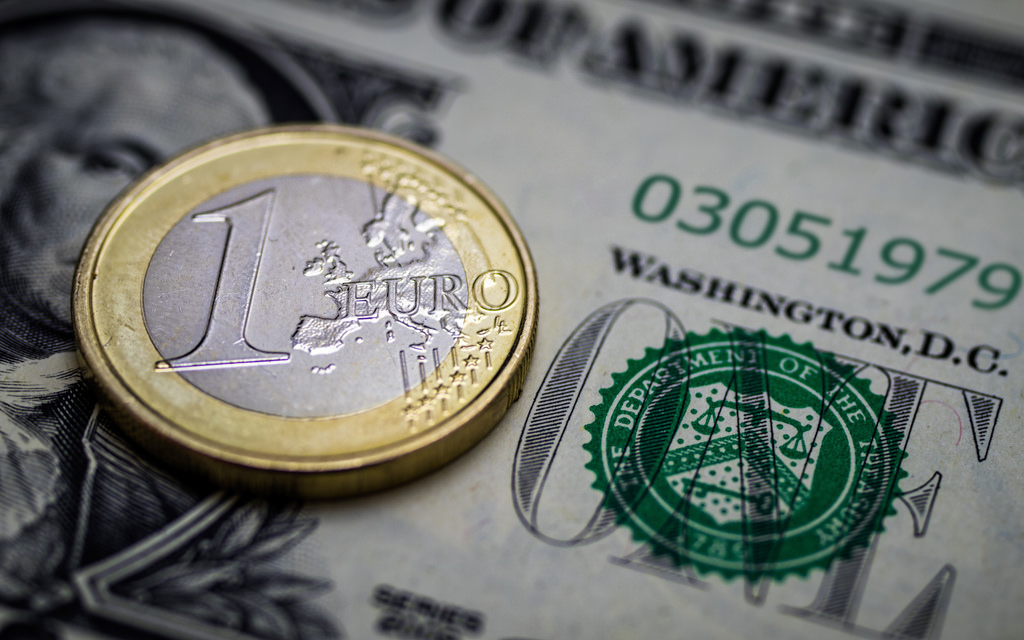
Deutsche Bank less negative about the euro