9.3
8.682 reviews

English
EN


The Swiss central bank has now bought an equity portfolio of $84.3 billion, according to figures from the US regulator and calculations by BloombergThat's a 5% increase in value from the first quarter, when the central bank's equity portfolio was worth $80.3 billion.
Switzerland's central bank has bought billions worth of foreign currency and other financial assets in recent years to depress the value of the Swiss franc. The result of years of monetary stimulus is that it now has $740 billion in assets on its bank balance sheet, 20% of which is in the form of foreign stocks. So those are predominantly U.S. stocks.
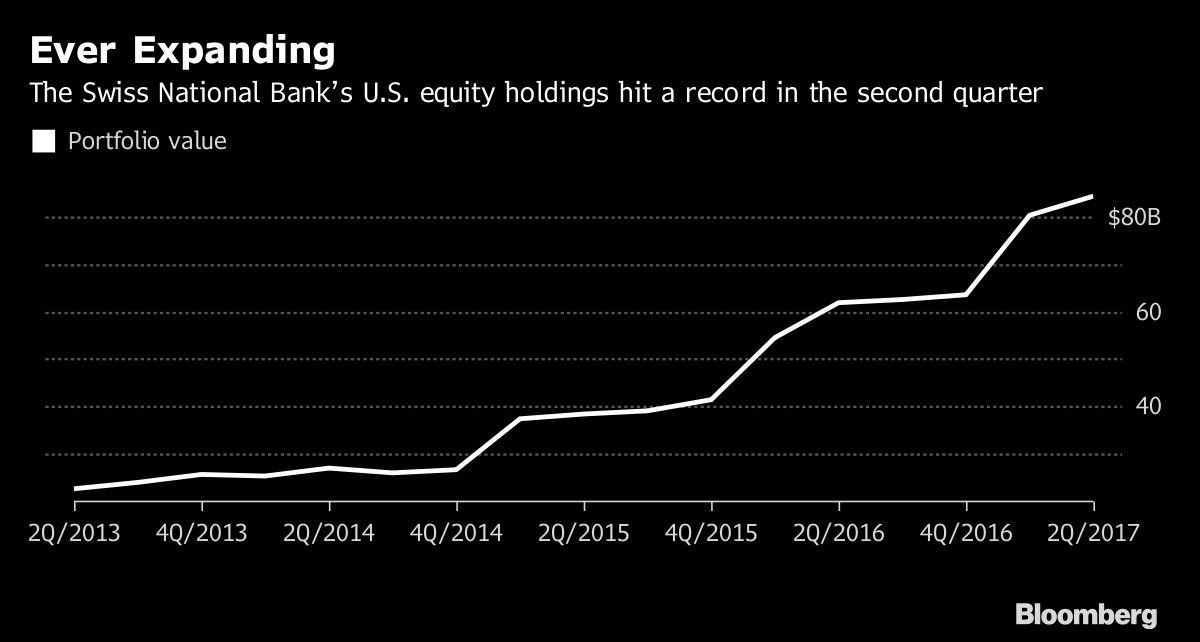
Swiss central bank's equity portfolio swells to $84 billion (Source: Bloomberg)
According to Bloomberg, the central bank has a stake in 2,558 publicly traded companies in the United States, most of which are in popular technology companies such as Apple, Microsoft, Amazon, Facebook and Google. The top ten is filled with names such as pharmaceutical company Johnson & Johnson, oil producer Exxon Mobil, telecom company AT&T and Procter and Gamble.
The Swiss central bank now owns a $2.76 billion stake in Apple, which means that at the current price, there are about two shares of Apple for every resident of Switzerland. The central bank has already bought up a total of almost $9,000 worth of shares per capita.
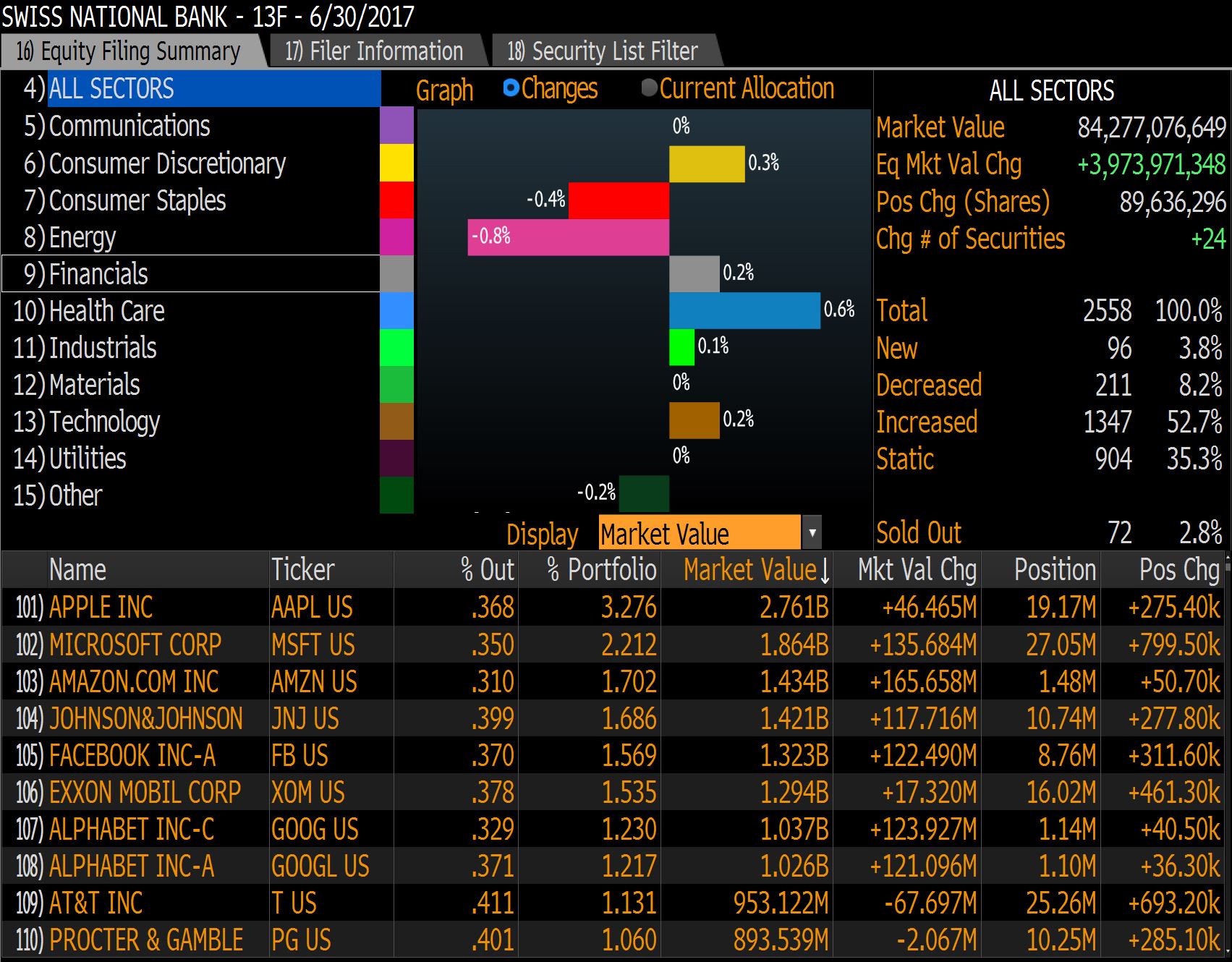
The big tech companies are especially popular (Source: Bloomberg)
By buying up shares , the central bank becomes an active participant in the economy, thereby endangering its independence. This sometimes leads to bizarre situations, in which, for example, the central bank also intentionally or unintentionally finances the arms industry. For example, Bloomberg discovered that the central bank has more than $200 million worth of shares in the company Raytheon, producer of Tomahawk missiles. The Swiss also have more than $180 million worth of shares in Northrop, the company that builds B-52 bombers. The weapons produced by these companies are not known to be controversial, which means that the central bank is allowed to invest in them according to its own guidelines.
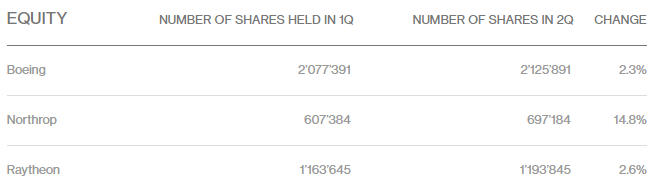
The Swiss central bank also owns shares in arms producers (Source: Bloomberg)


