English
EN


This article has been automatically translated from Dutch. Click here to see the orginal article including all links to sources.
Two unexpected reports about early departures from key positions raise questions about the apolitical nature and independence of central banks. Why is there such deep fear of the French elections that one would be willing to put the ECB’s independent image at risk?
This week, the Financial Times reported that ECB President Christine Lagarde would like to leave the European Central Bank before the end of her eight-year term, which runs until October 2027. There has been no official announcement yet, but the leading British newspaper cites a source said to be familiar with her considerations. The report came as a surprise and is all the more striking because she would not be the only one failing to complete her term.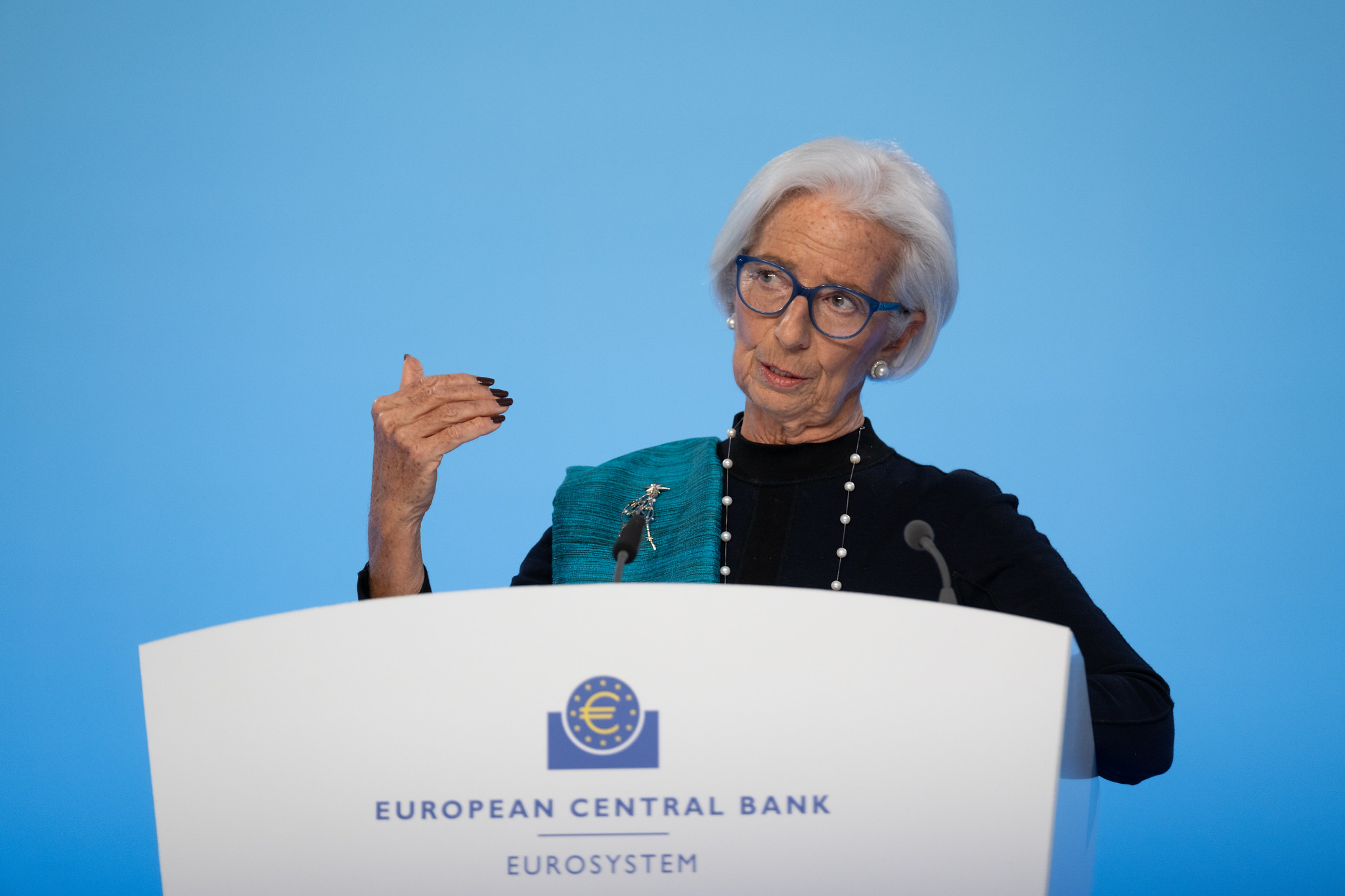
Christine Lagarde (source: ECB)
François Villeroy de Galhau, Governor of the Banque de France, had already announced earlier this month that he would not complete his term. He will step down in June, 18 months earlier than planned, as his mandate was originally due to run until the end of 2027. His departure also came as a surprise. What is going on?
Villeroy de Galhau specifically emphasized that he had taken the decision “in full personal independence.” The independence of central banks from politics is considered essential, including by the European central banks themselves. It is meant to prevent monetary policy from being used for politicians’ electoral or fiscal objectives, at the expense of price stability (inflation) and credibility.
Only a few months ago, European central bankers publicly defended the independence of the Federal Reserve, which has come under pressure from Donald Trump. The report about a possible early departure by Lagarde now also puts the independence of the ECB itself into question.
The early departures of Lagarde and Villeroy de Galhau would be anything but independent and apolitical. Their premature exits are said to be linked to the French presidential elections scheduled for April next year. Lagarde and Villeroy de Galhau would thereby be giving French President Emmanuel Macron, as well as German Chancellor Friedrich Merz, the opportunity to appoint new leaders to these institutions. Macron cannot be re-elected and, if both leaders were to serve out their full terms, he would no longer have any influence over the appointment of successors to these key positions.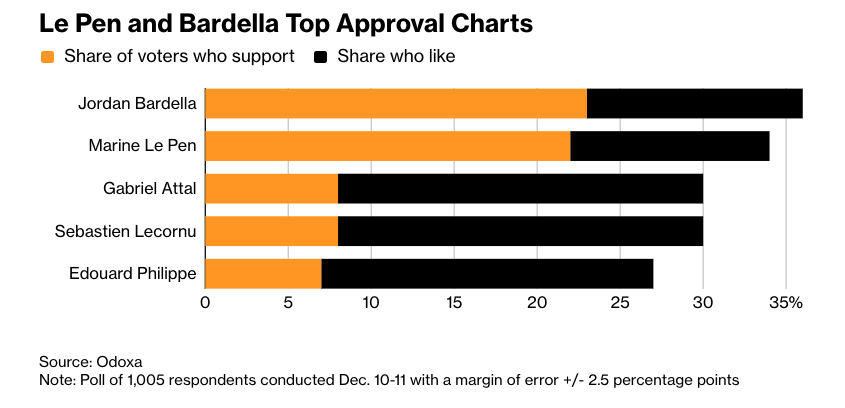
Le Pen and Bardella are leading in the French presidential polls (source: Bloomberg)
According to economist Robin Brooks, the ECB should be apolitical, but what is happening now is anything but apolitical. The right-wing and EU-critical Rassemblement National (RN) of Marine Le Pen leads many French opinion polls. Although Le Pen herself appears to be excluded from participating in the presidential election, Jordan Bardella stands ready as a replacement and, like her, is seen as a pronounced eurosceptic.
According to German economist Holger Schmieding, the EU is trying in various ways to sideline “disruptive populists.” In Schmieding’s view, Europe cannot afford to be held hostage by a minority of obstructionists. Another major decision that policymakers are trying to finalize before the French elections concerns the new multiannual EU budget framework of nearly €2,000 billion.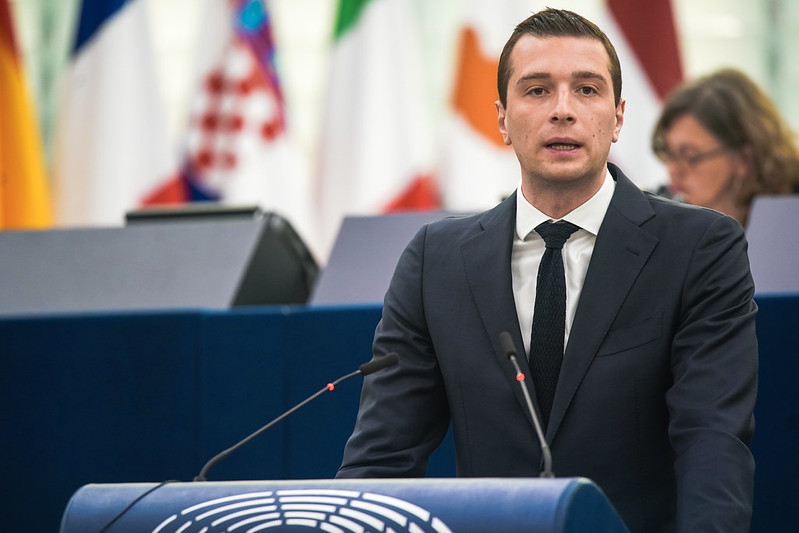
Jordan Bardella in the European Parliament (source: European Parliament)
Bardella told Bloomberg that Macron is, in his view, in the process of locking in the institutions and deliberately erecting obstacles for his successor. “This is an unacceptable attempt to bend the institutions to his will,” said Jordan Bardella.
The Rassemblement National is known for wanting to reclaim power from Brussels back to Paris, place French law above EU rules, exert greater control over national borders, and reduce France’s financial contributions to the EU. That would amount to a collision course with EU treaties and the current Brussels policy direction.
Against that backdrop, Villeroy de Galhau made a statement last Wednesday that could be interpreted as not entirely apolitical. According to the outgoing Governor of the Banque de France, his successor must be firmly anchored in Europe and committed to the EU project and EU treaties.
Bloomberg writes that the independent image of the ECB is now at stake. Germany and France, which according to the outlet have a tradition of dividing top eurozone positions between themselves, would be playing a dangerous game. Le Pen and Bardella could actually exploit this situation in their campaign. It could also set a precedent that future populist leaders might use as justification to interfere with a central bank.
That said, the EU-critical reader would do well not to automatically side with Jordan Bardella. Bardella views quantitative easing, as applied from 2015 onward, as a solution to the French government’s debt problem. At the time, central banks used this tool to inject money into the economy by purchasing assets such as government bonds with newly created money. That money creation fuels inflation and ultimately leads to further erosion of the euro’s value. One could also frame this more positively: in practice, this is the implicit solution many politicians have in mind, judging by the policies pursued. The difference is that Bardella at least speaks about it openly.
All the commotion that has arisen has meanwhile forced Lagarde to respond. She states that her “baseline” is to serve out her mandate until the end. It is up to you, the reader, to judge whether she is telling the truth, or primarily trying to extinguish the fire.
When Christine Lagarde will actually depart remains unclear for now, as does who will succeed her. According to economist Robin Brooks, however, the leading contenders for the ECB presidency share one clear common denominator: prominent central bankers are softening their positions for career reasons.
Joachim Nagel, President of the Bundesbank, surprised observers last week by expressing support for eurobonds. This is striking, as the Bundesbank has traditionally always opposed joint EU debt issuance, precisely because it further undermines fiscal discipline in highly indebted countries such as France. Eurobonds are not in the interest of a low-debt country like Germany. According to Brooks, Nagel made this statement to position himself favorably in the race for the ECB presidency.
Klaas Knot, former President of De Nederlandsche Bank, is also seen as a major contender to succeed Lagarde. Like another candidate, Isabel Schnabel, he voted in favor of the controversial Transmission Protection Instrument (TPI). With this instrument, the European Central Bank can cap government bond yields when they rise sharply.
According to Brooks, TPI is not in the interest of the Netherlands and Germany and ultimately weakens Europe, because it merely creates the illusion of sustainable public finances. Nagel, Schnabel, and Knot should not, in his view, be rewarded for these policy choices, despite the fact that they currently rank among the leading contenders for the ECB presidency.
One way or another, it therefore seems unlikely that we should expect the euro to suddenly become a paragon of value stability.
Also be sure to take a look at our YouTube channel
On behalf of Holland Gold, Paul Buitink and Yael Potjer interview various economists and experts in the field of macroeconomics. The aim of the podcast is to give viewers a clearer picture and guidance in an ever faster-changing macroeconomic and monetary landscape. Click here to subscribe.