English
EN


The 5.4% rise in gold prices in the first half of this year was supported by central bank purchases and hedging risks in certain events, such as the mini-banking crisis in March. Also, the U.S. dollar and bond yields have had a less negative impact on the gold market in the first half of 2023 than last year, despite some strong movements in recent months. This is what the World Gold Council writes in a retrospect on the gold market in the first half of this year.
The weakness of the Gold price in June was mainly driven by a rise in U.S. Treasury yields, falling volatility in financial markets, the strength of the dollar and outflows from global gold ETFs.
The Gold Return Attribution Model, GRAM, is a simple, yet insightful statistical breakdown of the key factors driving the monthly changes in the Gold price (in U.S. dollars). It is based on an estimate of the relationship between gold and a range of factors that have explained reliable behavior since 2007. These factors are grouped into four broad categories: economic expansion, opportunity cost, risk, and momentum.
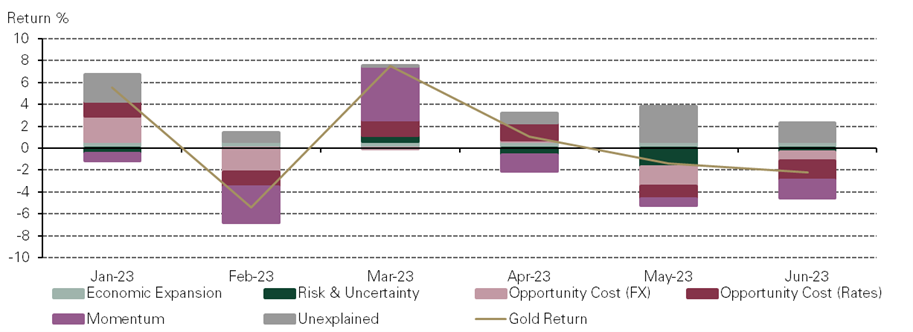
The Gold Return Attribution Model (Source: World Gold Council)
In the first half of the year, several factors contributed to the rise in the value of gold, including purchases by central banks and a flight to safe havens at certain times, such as during the banking crisis in March. There was also some pressure on gold due to the weakness of the US dollar against the euro, but this was partially offset by the strength of the dollar against the yen, the Chinese yuan and the Australian dollar.
The good news for gold is that central bank demand remains healthy, and annual surveys suggest that it is likely to stay that way. In addition, there are still recessionary risks and uncertainties in the market, so a strategic allocation to gold remains important.