9.2
8.875 reviews

English
EN


Global demand for investment gold rose 40% last year to a record 1,773 tonnes. This is what the World Gold Council This week in its latest report on the gold market. This increase is almost entirely attributable to gold ETFs, investment products that hold physical gold as collateral. These funds added 877.1 tonnes of gold to their reserves last year, more than doubling compared to 2019. However, due to disappointing demand for gold jewellery and a decline in gold purchases by central banks, overall demand for the precious metal was lower.
Global demand for coins and bars rose by just 3% last year to 896.1 tonnes. The increase is limited because there are also many Gold bars particularly in countries such as China and India. In those countries, gold was sold to make up for lost income. It was mainly Western economies where the demand for the precious metal increased sharply, driven by turmoil in the financial markets and extremely low interest rates.
For example, the demand for Gold Coins last year to a record of 297.6 tonnes. That is 10% more than the old record of 271 tonnes in 2013, while the gold price was also higher last year. Investment coins are especially popular in Western countries, while in Asian countries people buy jewellery and bars more often. That explains why demand for gold bars fell by 9% last year to 529.5 tonnes.
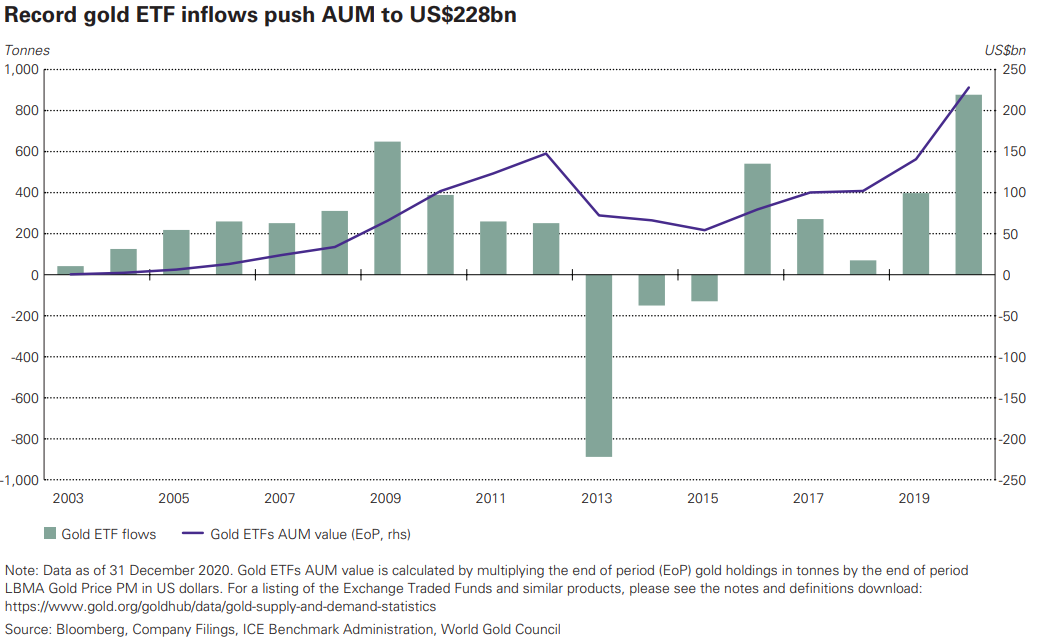
Gold stocks ETFs to record high (Source: World Gold Council)
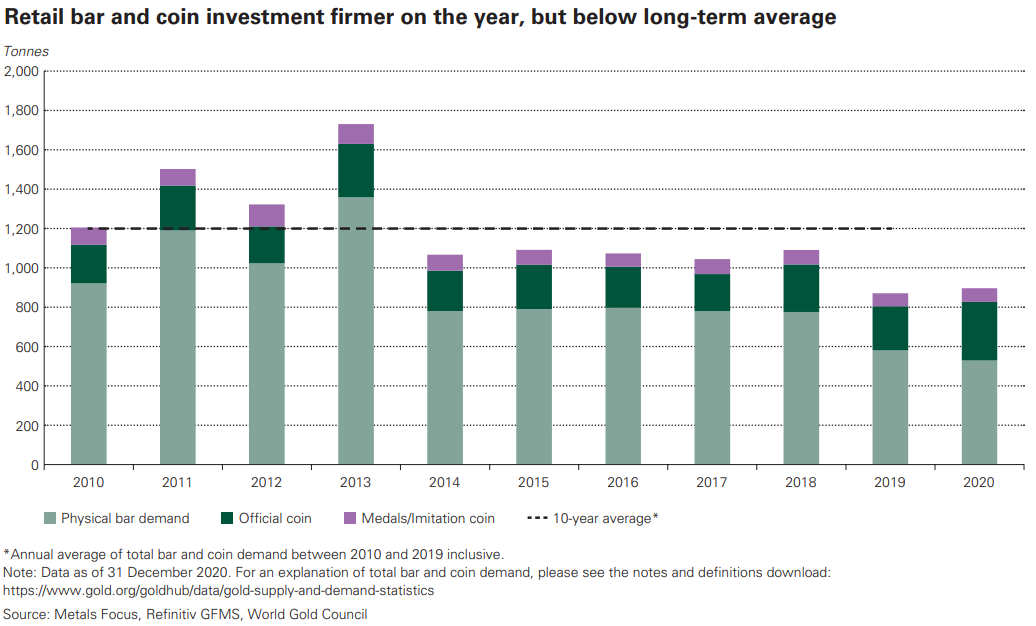
More demand for investment gold in Western countries is offset by a drop in demand in Asia (Source: World Gold Council)
Central banks bought much less gold last year than in recent years. In the third quarter, they were even net sellers of the precious metal for the first time in ten years. This is mainly due to the absence of major buyers such as China and Russia, countries that have added the most precious metal to their reserves in recent years. Turkey still bought on a large scale, but had to sell some from time to time due to economic problems. The central banks of some emerging economies had to deal with the coronavirus crisisSelling gold.
The trend of central banks expanding their gold holdings is still intact after a decade, but it has lost momentum. There are several possible explanations for this. Consider, for example, shortages in the physical gold market, the increased gold price and economic headwinds as a result of the corona crisis. As a result of the latter, emerging economies in particular had to draw on their reserves.
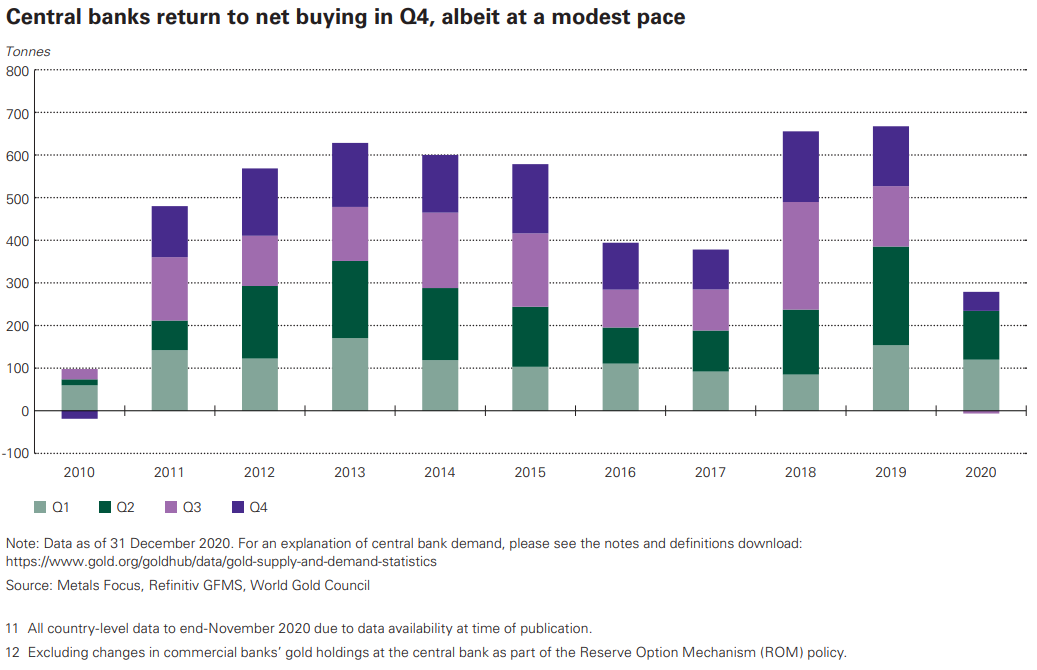
Central banks' gold purchases more than halved (Source: World Gold Council)
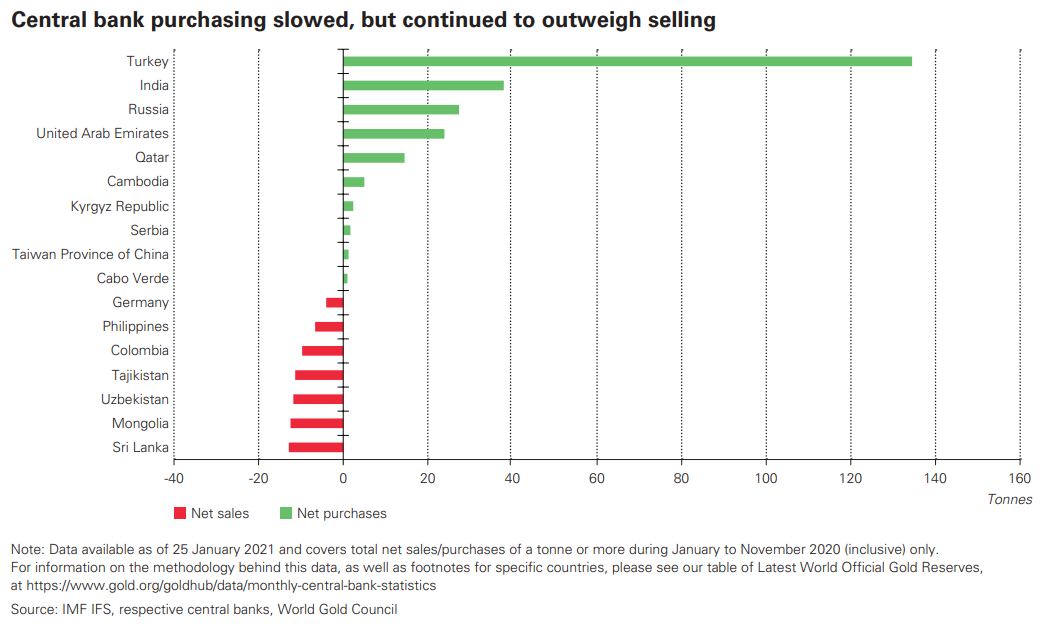
Turkey in particular expanded its gold reserves (Source: World Gold Council)
The gold jewelry market is dominated by China and India. Together, these two countries account for almost half of global demand. The corona crisis hit them hard, as the global demand for jewellery fell to the lowest level ever measured by the World Gold Council. Due to the poor economic outlook, Chinese and Indians bought much less jewelry than usual.
On top of that, many jewellers had to close their doors for some time due to the lockdown measures. This has had a negative impact on the market worldwide, as many people prefer to buy their jewelry in-store rather than online. In Western countries, too, the mandatory closure of jewellers caused a drop in demand.
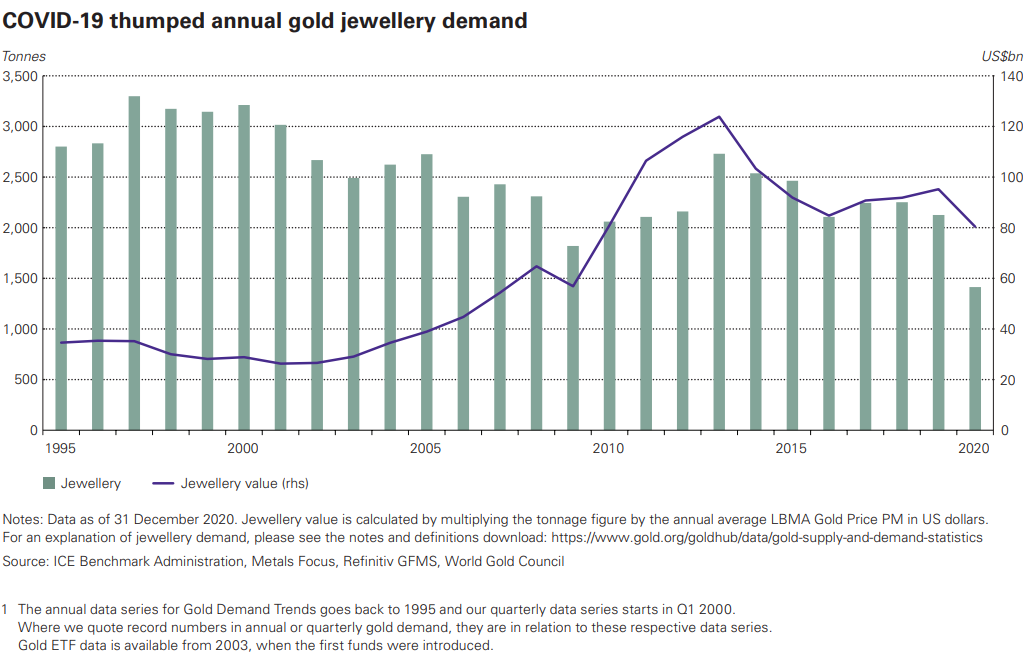
Less demand for jewellery due to corona crisis (Source: World Gold Council)
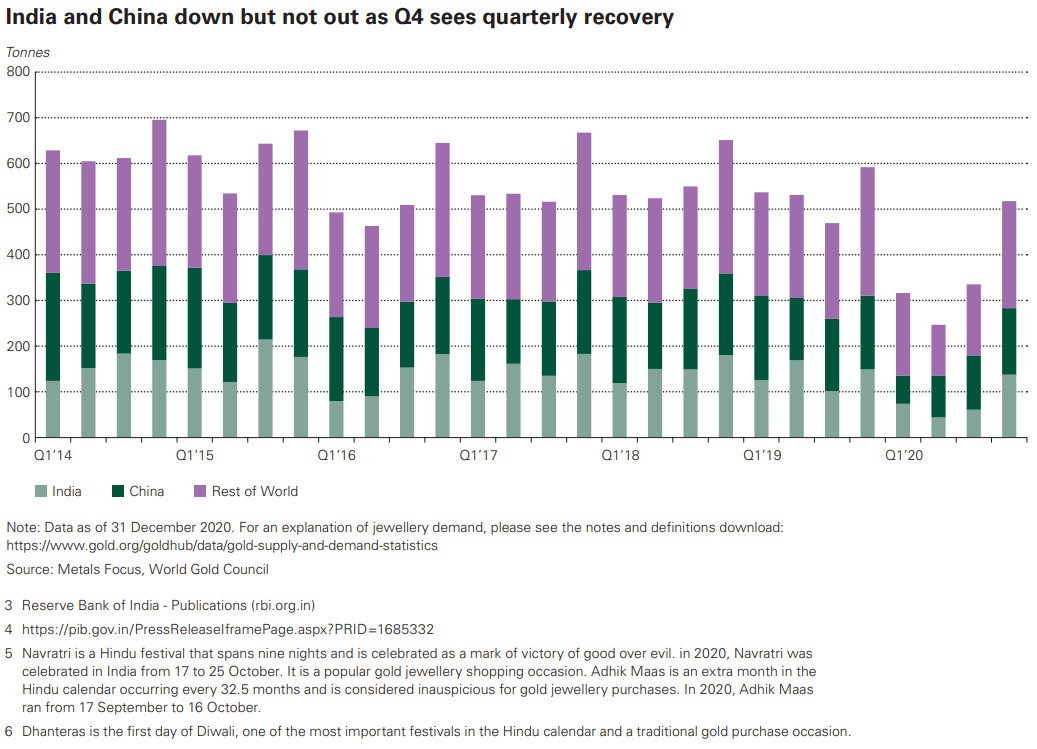
Especially in China and India, the market for jewelry dried up (Source: World Gold Council)
Despite the increase in Gold price there was less bullion on the market last year. Many gold mines were affected by the corona measures, which forced them to temporarily shut down their production. As a result, global production of gold mines fell by 4% to 3,401 tonnes. It is also striking that last year, despite the significantly higher gold price, hardly any more scrap gold came onto the market than in 2019. The so-called secondary supply rose by only 1% to 1,297.4 tonnes. This may mean that people are less willing to sell their gold or that a lot of scrap gold has already been handed in.
The price of gold rose by 24.6% last year, the biggest price gain in ten years. In the summer, the price even rose to a all-time high from $2,067 per troy ounce. Low interest rates, economic uncertainty and support programs by central banks and governments have unleashed a flight to gold. The expectation is that these trends will continue to provide a boost to the gold price in 2021.
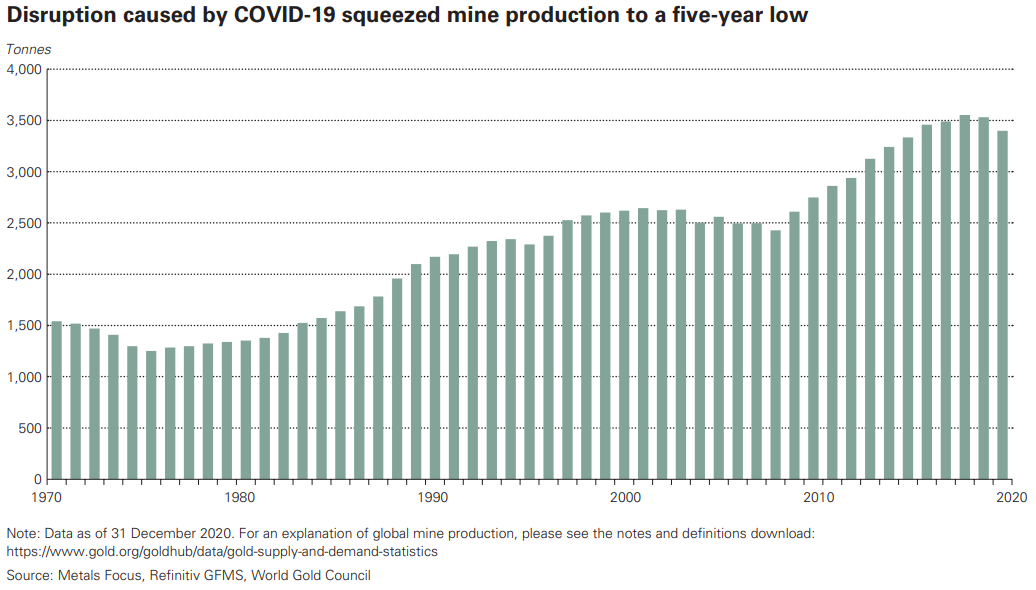
Gold mine production under pressure due to corona measures (Source: World Gold Council)
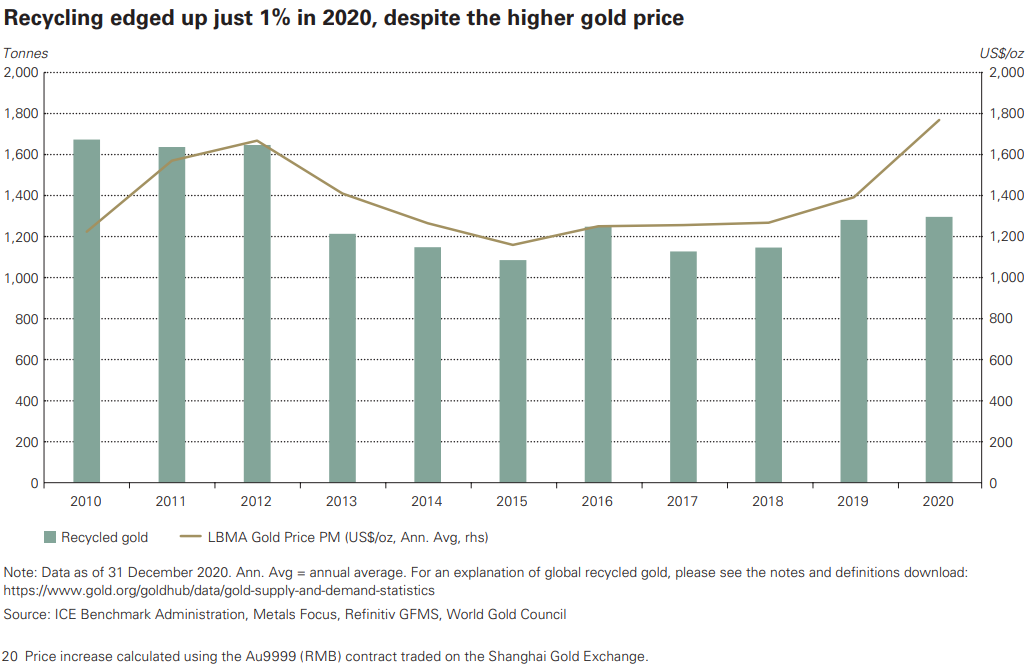
Despite higher gold prices, hardly any more scrap gold has been offered (Source: World Gold Council)
This contribution was made from Geotrendlines


