English
EN


Paul Buitink spoke for Café Weltschmerz with Willem Middelkoop on the latest developments in the Middle East and the rise in the gold price. Both gentlemen also spoke about the worrisome developments in the American banking system, where the Fed has intervened again in recent months. According to Middelkoop, a new crisis is already in the air. That's why central banks continue to buy gold on a large scale.
Below you can see the full conversation, the text continues below the video.
According to Middelkoop, the foreign policy of the United States in recent decades has mainly revolved around achieving 'regime change'. In many cases, these policies revolve around maintaining the dollar system. According to him, the United States is taking a big risk by seeking confrontation with Iran.
Middelkoop refers to a pronunciation by John Kerry, who said in 2015 that the dollar cannot remain the world's reserve currency for long if the United States withdraws from the deal and imposes sanctions on other countries. After all, Iran is a major oil producer, exporting mainly to countries such as China and India.
Middelkoop notes that a strong Eastern bloc has emerged of countries that oppose the dollar system. These countries are no longer buying U.S. Treasuries, but are adding more and more gold to their reserves. The importance of gold as a hedge against geopolitical risk is becoming increasingly clear. In doing so, central banks are imposing a Solid foundation under the gold market.
The increase in the Gold price is not only the result of the tensions surrounding Iran, but also of an underlying trend. The crisis of 2008 has shaken countries awake and they are once again looking with interest at the precious metal as a safe haven. Middelkoop notes that China has already reduced its dollar positions in recent years, while Russia has sold almost all of its US government bonds. Instead, they, along with more than twenty other countries, are buying More and more gold.
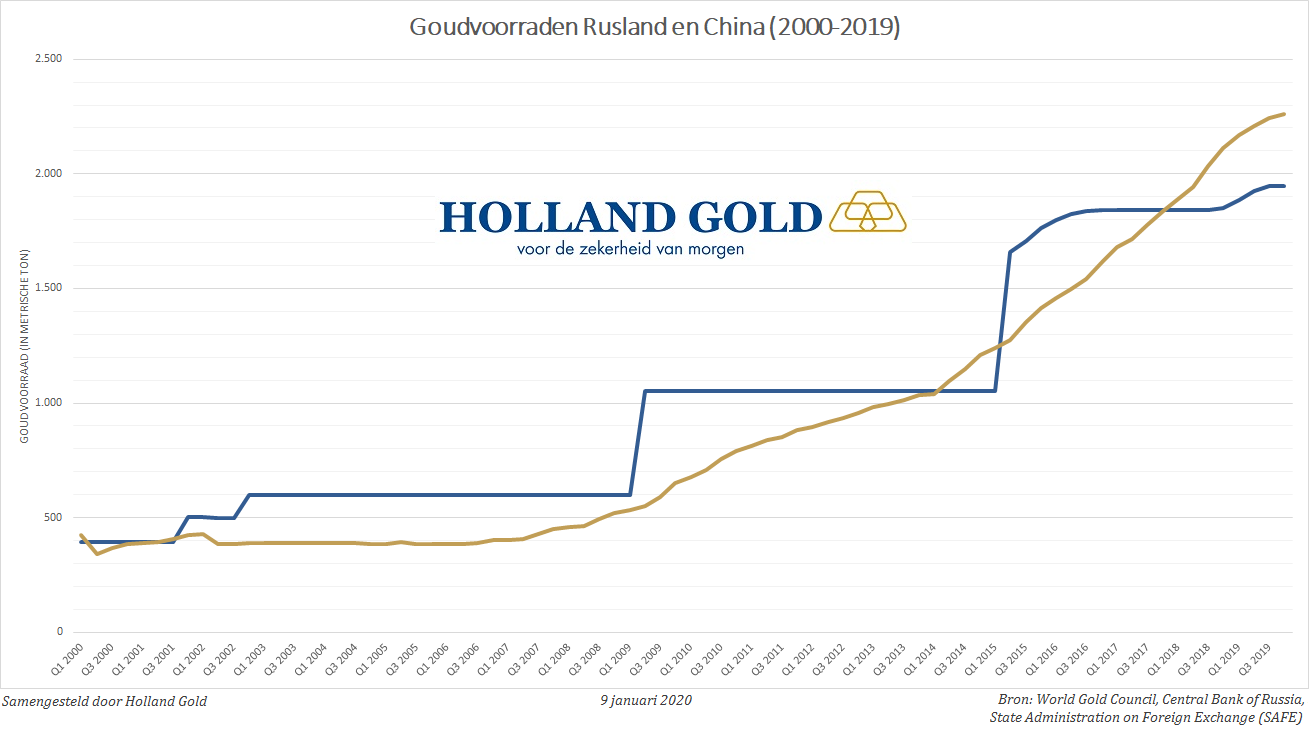
Russia and China continue to buy gold (Source: World Gold Council)
According to Middelkoop, the crisis in the repo market can be traced back to the budget deficit of the United States. Because the government incurs so much debt, it has to put a lot of new government bonds on the market. Banks have to buy this debt but would not be able to absorb the huge supply. According to him, this has created a lack of liquidity in the repo market.
Middelkoop notes that the Fed's balance sheet total is rising as fast as it did after the collapse of Lehman Brothers in 2008. The balance sheet now has a size of $4 trillion and can quickly return to the record of $4.5 trillion. In recent months, the Fed has added more than $400 billion to its balance sheet.
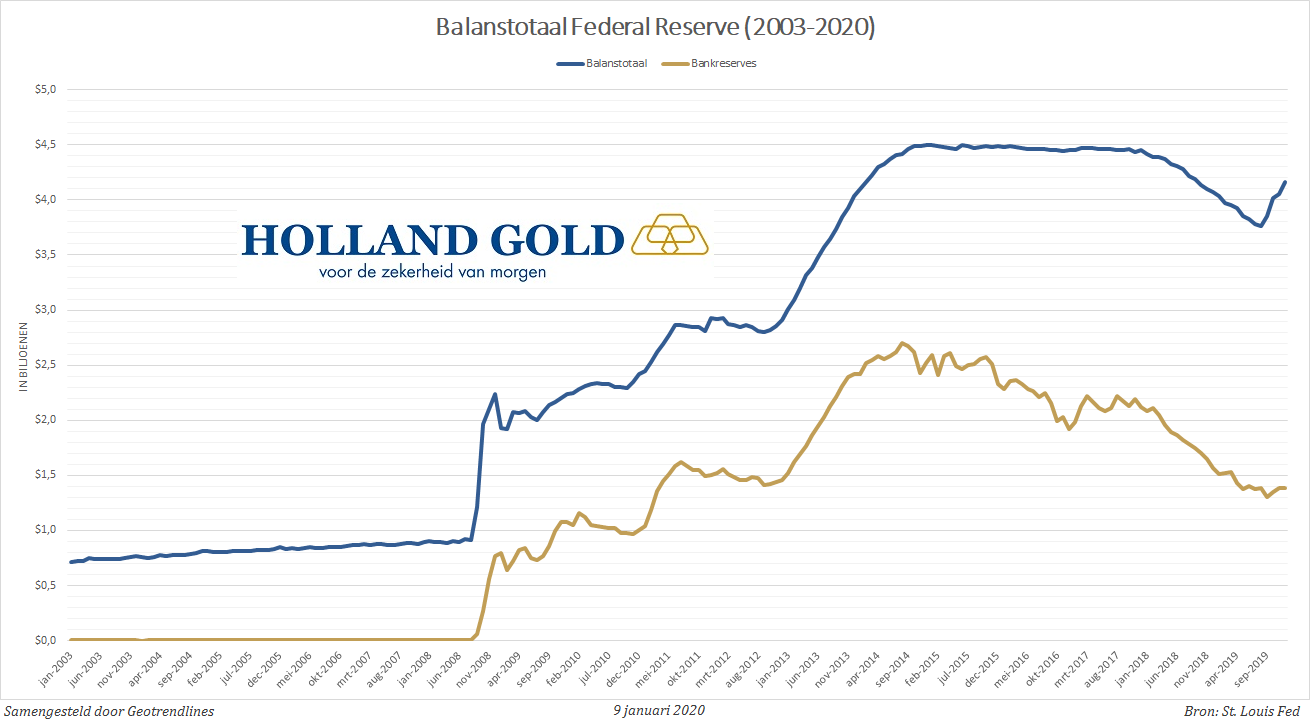
Federal Reserve's balance sheet total has risen sharply since September (Source: St. Louis Fed)
Paul Buitink notes that the Federal Reserve is also buying government bonds that were released a few days earlier. Last week, we published a Extended article at Holland Gold. With this practice, the big banks on Wall Street make guaranteed profits, Buitink concludes.
According to Middelkoop, we can already conclude that there is a new crisis in the financial system. He notes that there were already problems before the collapse of Lehman Brothers, such as the collapse of two hedge funds. According to him, these crisis signals explain why the gold price has been so hard in recent weeks contracted.
This contribution was made from Geotrendlines