9.3
9.038 reviews

English
EN


All the world's major currencies will have to be on a level playing field in the foreseeable future, because that is the only way to make global trade fairer. The US president said this earlier this month during a joint press conference with Japanese President Shinzo Abe.
During his election campaign, Trump made a promise to his voters to revive the American economy, an objective that he believes can only be achieved if trade can be conducted in a fair way. By keeping the currency artificially cheap, according to Trump, China has had an unfair competitive advantage over the United States. as a result of which many jobs went to the Far East.
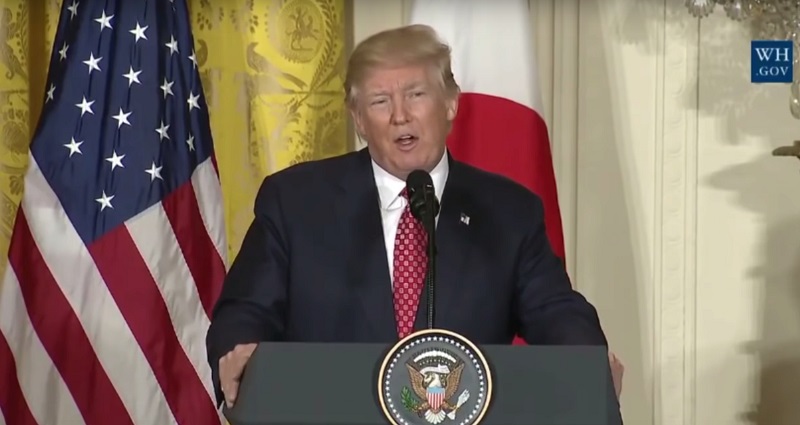
Trump and Abe press conference [start video from 25:53]
We are having discussions with several representatives in China. I think it's good for Japan, the U.S., and other countries in the region. As far as currency devaluations are concerned, I've been complaining about that for a long time and I think we'll all probably end up on a level playing field much sooner than you think. Because that is the only fair solution, the only way to compete fairly in trade. We're getting to that point and we're all going to work very hard to do what's right for our country. But it has to be fair and we're going to make it fair.
The United States will become a much bigger player in trade than it already is. Much of this has to do with our tax policy, which we will be adapting in the foreseeable future. We are going to have a much more stimulative tax policy than we are doing now. No one knows what our policy is at the moment. We are working with Congress, and I think they will be very impressed.
Trump does not shy away from naming and addressing the major problems in our monetary system. This does not alter the fact that a return to 'fair trade' has major consequences for both China and the United States. If central banks stop accumulating dollar reserves, the overvaluation of the dollar will decrease significantly.
This is not only bad for the purchasing power of the American people, but also for the value of the $6 trillion in dollar reserves that central banks worldwide have on their balance sheets. It is therefore no coincidence that central banks in the rest of the world have been structurally reducing their dollar reserves in recent years and exchanging them for other currencies and gold.
H/T: @LukeGromen