English
EN


The run on silver is not limited to silver coins, but now seems to be having an effect on the market for silver ETFs as well. In fact, the demand for the precious metal has been so high in recent weeks that the largest silver fund may no longer be able to meet the demand. Moreover, analysis by Bullionstar shows that about 85% of the total silver supply in London is now Assigned of so-called Exchange Traded Funds. That means there are only a few thousand tons of silver left available to investors. If the run on silver continues any longer, it could have major consequences for the silver market.
At the end of January, there was a call on the platform Reddit to buy silver en masse. Investors thought the same as with the stock GameStop jointly a short squeeze but that didn't happen. The Silver Price Although it shot up to almost $30 per troy ounce, it was unable to maintain that level. However, the tension in the physical silver market is slowly building up.
The delivery times and premiums on Silver Coins have risen sharply and mints can barely meet the demand. Also, the most popular silver ETFs are seeing a huge influx of capital, which means they have to put more and more physical silver in the vault to keep up with demand.
According to Bullionstar gold market analyst Ronan Manly, the situation is really starting now dire to become. He researched the silver holdings of ETFs and concluded that almost 85% of the total supply of 1.08 billion troy ounces of silver (33,609 tonnes) in the LBMA's vaults has now been allocated to these investment products.
The remaining 15% of silver holdings are in the hands of private parties who may not want to sell it. It can also be in the form of coins in the safe. This is despite the fact that ETFs only accept 'Good Delivery' silver bars of 1,000 troy ounces. This means that it will become increasingly difficult for these funds to obtain precious metals. Especially if the run on silver continues and investors continue to buy physical silver or shares of silver ETFs.
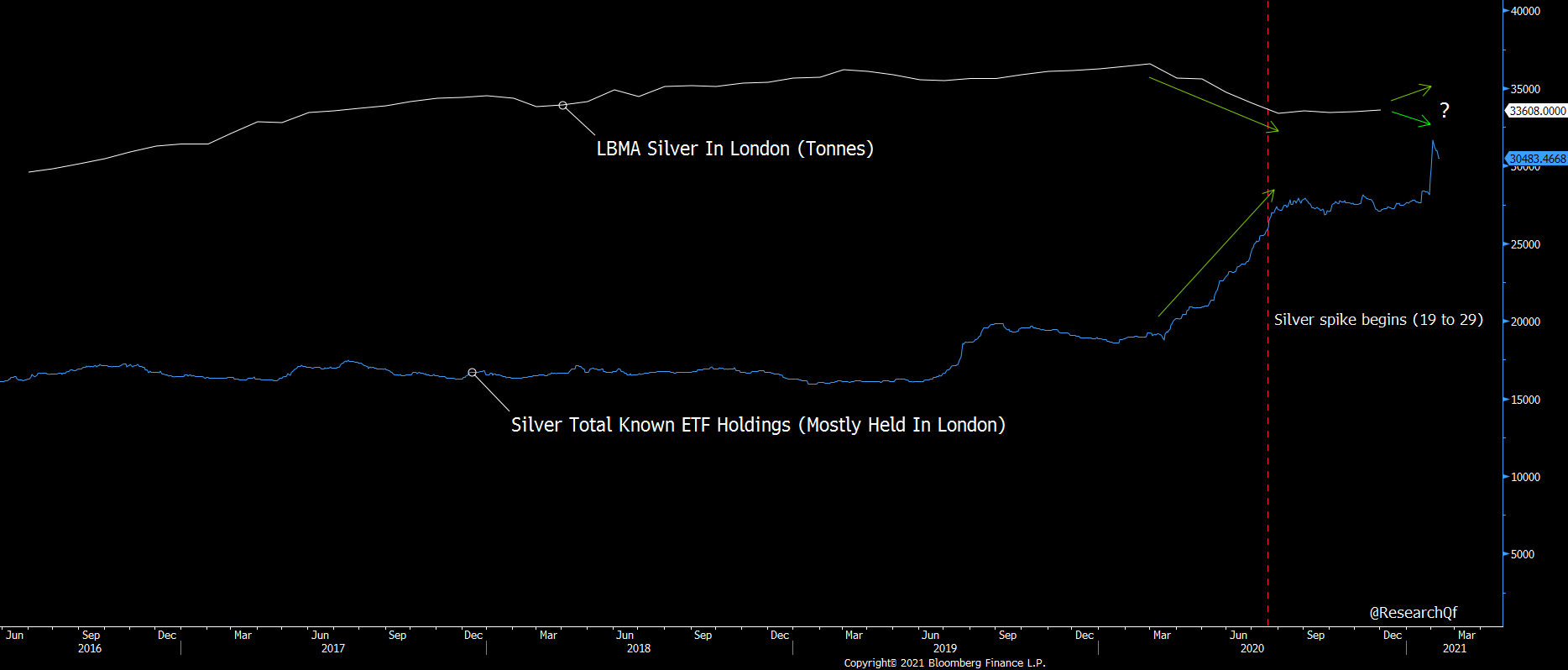
Silver stocks in London versus stocks of ETFs (Source: Bloomberg)
The chart above shows the total supply of all well-known silver ETFs, compared to the total silver supply in London. Of course, these figures cannot be directly compared, because these silver funds also hold precious metals in other locations. Nevertheless, it does give a good indication, because the vast majority of precious metal in London is stored at Bullion banks such as JP Morgan, HSBC and Standard Bank and at specialist warehousing companies such as Brinks, Malca-Amit, Loomis and G4S.
In three trading days - from Friday, January 29 to Tuesday, February 2 - the world's largest silver ETF, the iShares Silver Trust (SLV), added a total of 3,415 tonnes of silver to its stocks. This allowed it to put new shares into circulation to meet the huge demand. For the imaging, this amount of silver was equal to 14% of the annual production of silver mines and 10% of the total supply of silver in the vaults of the LBMA.
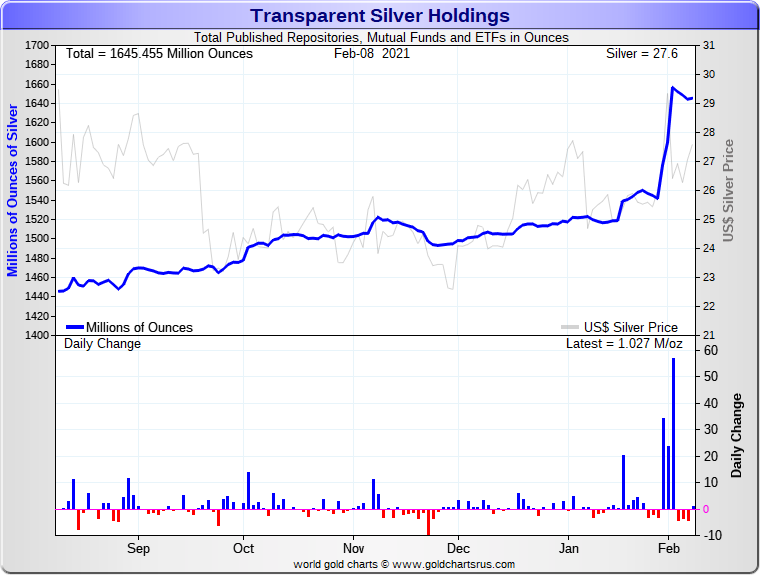
The effect of the Silver Squeeze was clearly visible in the silver stocks of ETFs (Source: Goldchartsrus)
A new run on silver similar to the beginning of February would be enough to remove all freely available supplies of silver from the market in London. The largest silver ETF would then need to purchase another 3,000 to 4,000 tons of physical silver to be able to issue enough new shares. That this is not an easy task is also evident from a very recent amendment to the fund's prospectus.
On February 3, a new passage appeared, in which the fund writes that the demand for silver can exceed the immediately available supply at times. As a result, the fund may not be able to issue enough new shares to meet demand, which may cause the value of the stock to deviate substantially from the silver price. The issuance of new shares is done through so-called Authorized Participant, which are banks that can supply the precious metal.
Below is the first part of this new passage from the prospectus:
The demand for silver may temporarily exceed the available supply suitable for delivery to the fund, which may an investment in the shares.
To the extent that the demand for silver exceeds the available supply at that time, Authorized Participants may not be able to immediately acquire sufficient amounts of silver required for the creation of new shares. These baskets may only be created by Authorized Participants and will only be issued in exchange for an amount of silver determined by the fund that meets the specifications.
Speculation in the silver market could lead to an increase in demand for the issuance of new shares. Authorized Participants may not be able to acquire sufficient silver acceptable for delivery to the fund for the issuance of new shares due to limited than available supply combined with a sharp increase in demand for the shares. In such circumstances, the fund may suspend or limit the issuance of new shares. Such an occurrence can lead to further volatility in the share price and significant deviations in the market price of the shares relative to the net value of the assets.
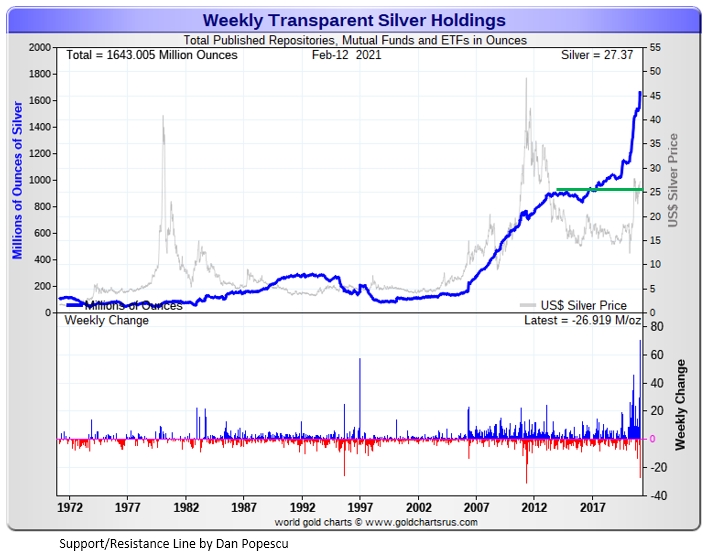
Stocks of silver ETFs have increased sharply since the coronavirus crisis (Source: Goldchartsrus)
To date, the run on silver has only had an effect on the Availability of silver coins and the price of silver. Now the Silver Squeeze to ETFs as well. This is a market that is many times larger than that of silver investment coins. The SLV warns of more volatility and increasing risk for traders who are short SLV shares. They may have to pay a higher premium when they want to buy back shares, the fund warns in its updated prospectus.
A sudden increase in demand for stocks that temporarily exceeds supply can lead to stock price volatility.
There may be a significant change in investor sentiment towards silver. Investors can buy stocks to speculate on the price of silver or to hedge existing exposure to silver. Speculation on silver price can involve both long and short positions. To the extent that the total short position is greater than the number of shares available for purchase, investors with a short position may have to pay a premium to buy back shares.
These buybacks, in turn, can drastically increase the price of the shares. Until additional shares can be issued. This could lead to volatile price movements of the shares that are not directly correlated with the silver price.
The trading price of the shares has been volatile recently and could potentially remain volatile.
The trading price of the shares has been highly volatile and could continue to be subject to large fluctuations due to various factors. The silver market in general has experienced extreme price and volume fluctuations that are often not related to the use of silver in jewelry, technology, and industrial applications or to the cost of production in major silver producing countries such as China, Mexico, and Peru. Supply chain disruptions due to the COVID-19 outbreak and investor speculation have contributed significantly to the recent price and volume fluctuations.
Making predictions about the silver market is difficult, because it is quite a complex market with many different players. It is not only an industrial raw material, but also an investment object. The market also consists of different segments, as we described earlier in This article. It is worth mentioning that the market for silver is much smaller than the gold market and is therefore much more volatile. If the flight to precious metals continues, this could lead to tightness in the physical silver market.
Also interesting is that central banks no longer hold silver stocks. That means central banks can't intervene by making bullion available to ETFs. This has happened twice before in the gold market, namely in 2016 and in 2020. In both cases, GLD could not cope with the demand for gold and borrowed bullion from the Bank of England. Funds that hold silver as collateral do not have that option. We will continue to monitor these developments closely.
Also Read:
This contribution was made from Geotrendlines