English
EN


The era in which central banks stimulate the economy is coming to an end, so Writes billionaire hedge fund manager Ray Dalio. After nine years of almost unlimited monetary stimulus, the global economy must now prepare for a new era, in which central banks will provide less support.
According to the fund manager of Bridgewater Associates, the largest hedge fund in the world, hedge funds and asset managers should keep dancing to the proverbial music, but it is advisable to "To be closer to the exit and to keep a close eye on everything".
According to Ray Dalio Several central banks have now given clear signals that stimulus will be tapered, ending a nine-year period in which they only pushed interest rates down further and turned on the money tap to support the economy.
The Federal Reserve has not only implemented a number of interest rate hikes, it has also announced its plans to reduce its balance sheet by putting government bonds back on the market. This will further increase long-term interest rates in the United States. Other central banks also want to change their monetary stance in the short term.
Hedge fund manager Dalio refers to Draghi's speech of more than a week ago, which showed that the ECB is also willing to taper the stimulus program. Change is also in the air on the other side of the world, as the Bank of Japan has been buying significantly fewer government bonds in recent months. As a result, long-term interest rates in Japan have also risen somewhat further.
Central banks have maintained an unprecedentedly accommodative monetary policy for years, but now that stock prices in several countries are back at record highs and new financial bubbles threaten to emerge , they think it's enough. By slowly but surely turning off the money tap, central bankers try to prevent the economy from overheating, but practice teaches us that sooner or later this usually goes wrong. Ray Dalio has the following to say about this:
"This is the beginning of the downward phase of the economic cycle, in which central banks are trying to taper monetary policy at a pace that is just right to keep economic growth and inflation at the desired levels. Sooner or later, they will make a mistake, causing the next crisis to break out."
A rise in interest rates can have a very big impact on households, businesses and governments. In recent years, anyone has been able to borrow money at extremely low interest rates, with the result that global debt has reached a record level of $217 trillion Increased.
A rise in interest rates means that it becomes more expensive to finance those debts, which can jeopardize economic growth. Think, for example, of households that have higher monthly payments due to the rise in mortgage interest rates or are no longer able to buy a house. It will also become more expensive for governments to borrow, which may result in taxes having to rise further.
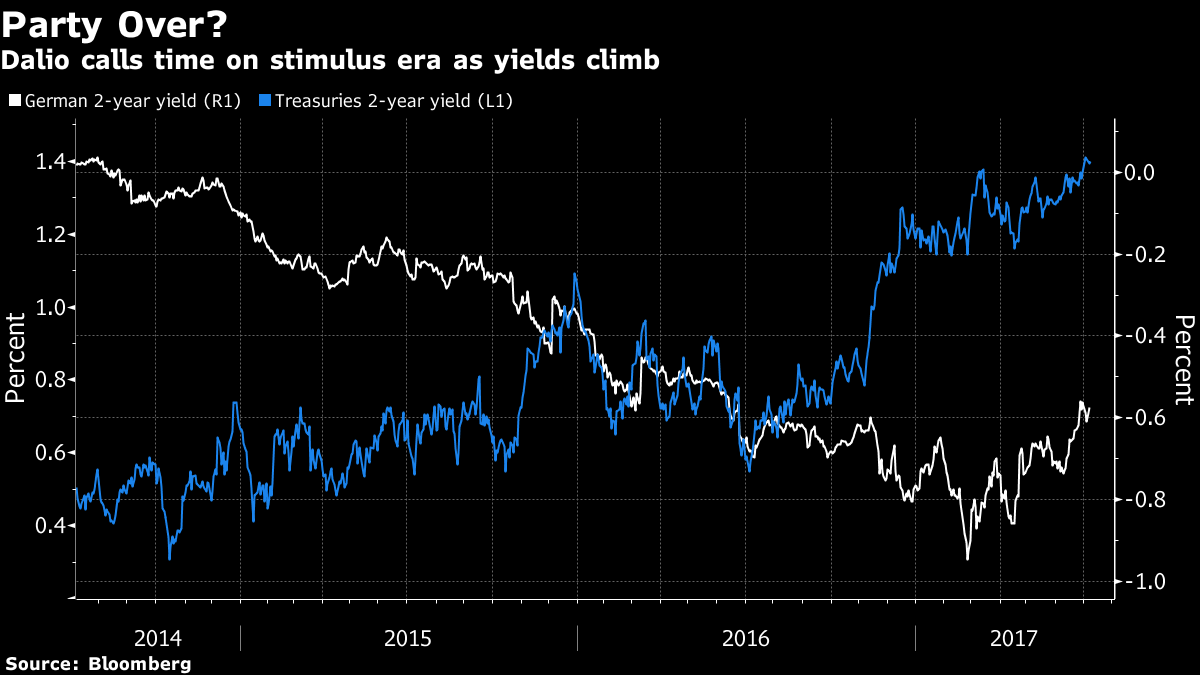
Ray Dalio expects end to era of low interest rates (Source: Bloomberg)