English
EN


The World Gold Council has released a new report for the second quarter of 2013. This report shows that the recent declines in the price of gold have led to a significant increase in demand for coins and bars.
The demand for physical gold was also evident in the purchases of individuals in China and India. Global demand for jewellery increased by 37% tonnes in the second quarter compared to the previous year. This has reached its highest level since the third quarter of 2008. In China, demand was up 54% and in India by 51% compared to the previous year.
Demand for bars and coins grew by 78% in the second quarter. For the first time, a peak of 500 tonnes was reached in a quarter. In China, demand for bars and coins even increased by 157% compared to the same quarter last year.
Central banks' net purchases of gold also increased for the tenth time in a row this quarter. This reinforces the trend that started in the first quarter of 2011.
The demand for gold in the technology sector is stable with only a 1% increase compared to last year. This has everything to do with the current global economic situation.
Gold-backed ETFs fell slightly. This was caused by hedge funds and speculative investors who have reduced their position somewhat.
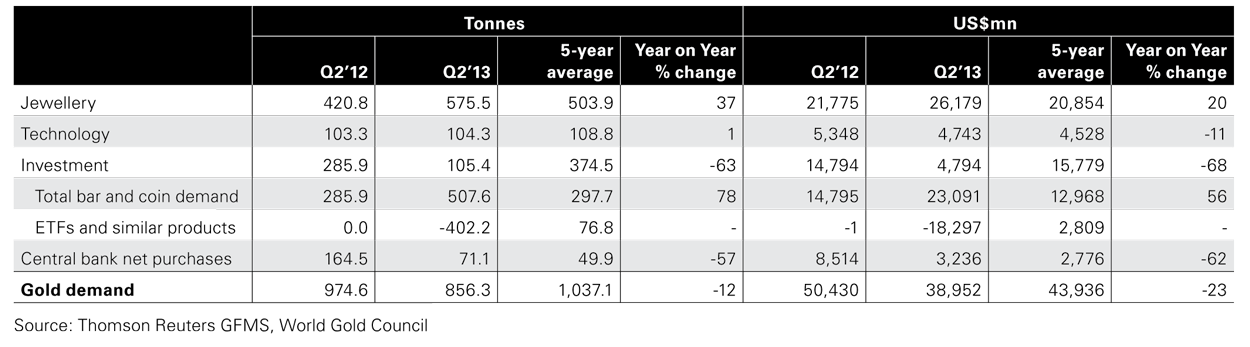
Overall, the demand for gold fell by 12% in the second quarter. The supply of gold has also fallen significantly, with recycle gold showing a drop of 21%. The production of gold at the mines has shown an increase of 6%.
Marcus Grubb, Managing Director of the World Gold Council, indicates that the second quarter continues the trend of increasing demand for physical gold and increasing ETF sales. As a result, supply and demand are moving further towards each other.
This quarter, the shift in demand for physical gold from the West to the East is again clearly visible. This is also confirmed by the London Bullion Market Assiocation. The average gold price in the second quarter was $1,415 per troy ounce, which is 12% lower than the previous year.
Source: gold.org