English
EN


The central banks of Turkey, Russia and Azerbaijan sold gold, while Poland is considering using its gold reserves to finance military spending. Since 2022, purchases by central banks have been a key driver behind the rise in the gold price. Will this change in 2026? In this market update, we separate fact from fiction.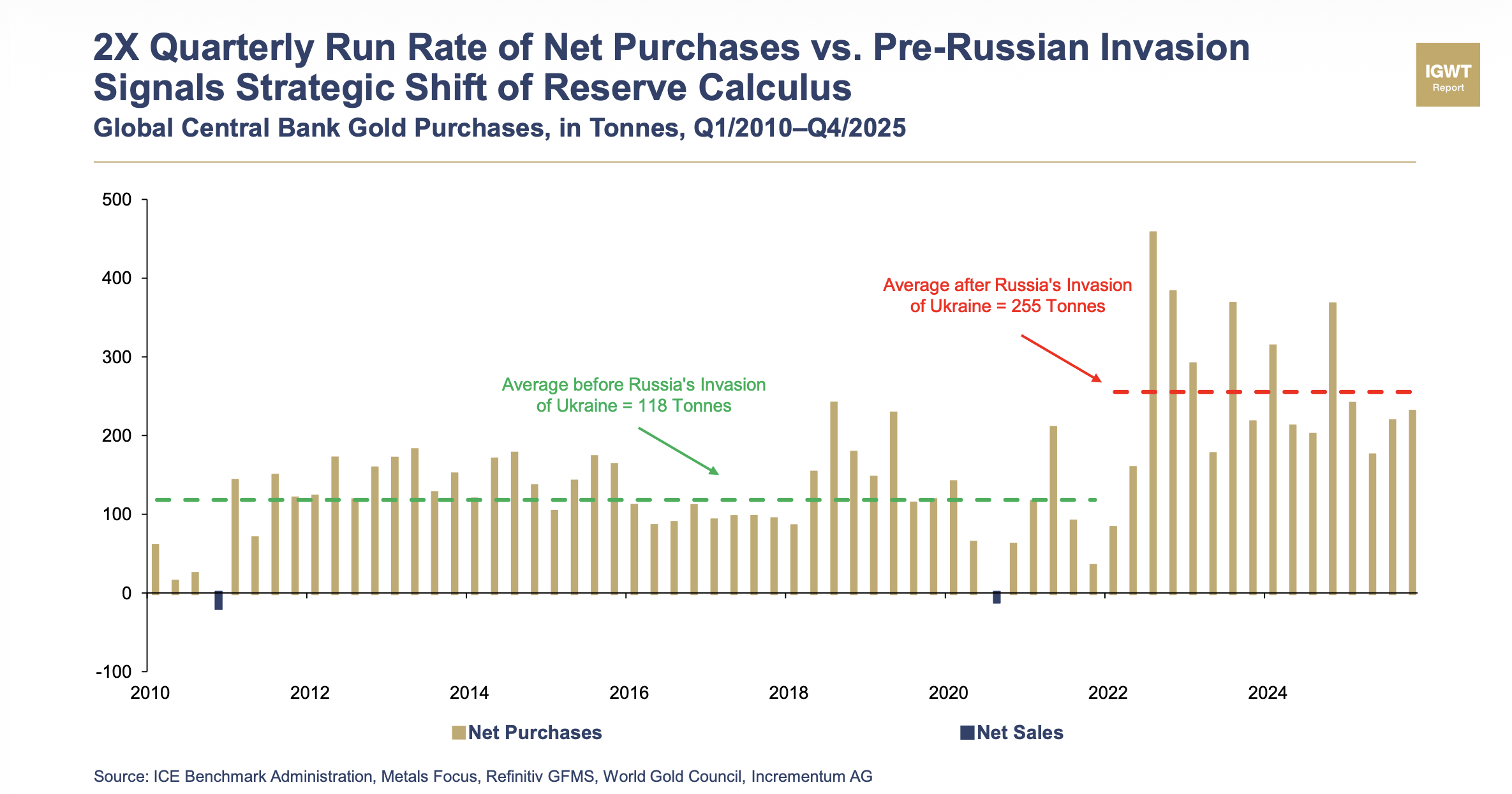
Central bank gold purchases per quarter, expressed in tonnes of gold (source: In Gold We Trust report chartbook)
Since the Russian invasion of Ukraine in 2022, global gold purchases by central banks have increased. Before the war, this averaged 118 tonnes of gold per quarter; after the outbreak of the war, this rose to 255 tonnes.
Central banks hold gold because it historically served as backing for the currencies these countries issued. After the abandonment of the gold standard, banks continued to hold gold as a reserve in case of a banking crisis.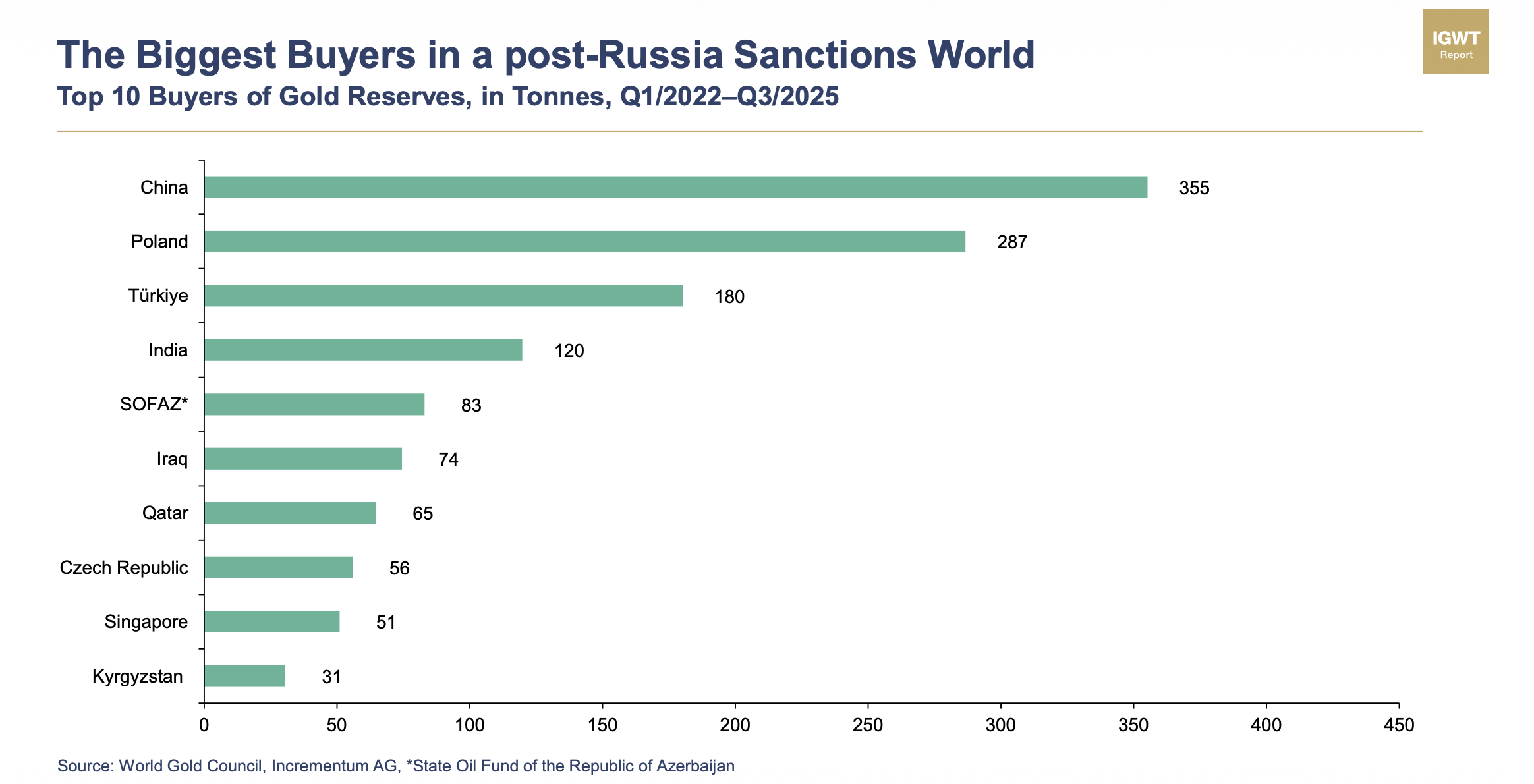
Gold purchases in tonnes for the top ten gold-buying central banks (source: In Gold We Trust report chartbook)
In recent years, central banks have increasingly turned to gold as protection against geopolitical tensions, sanctions and the uncertain future of the dollar. In response to the invasion of Ukraine, Russia was cut off from the international payments system SWIFT. This led BRICS countries in particular to realize that the dollar can be used as a weapon against them. Gold, however, is a more neutral reserve that central banks can hold alongside dollars and euros, and it is also easier to use gold to circumvent sanctions. Countries such as China, Russia, India and Turkey are among the largest gold buyers, while former Soviet states such as Poland and Azerbaijan (SOFAZ) also rank high on this list.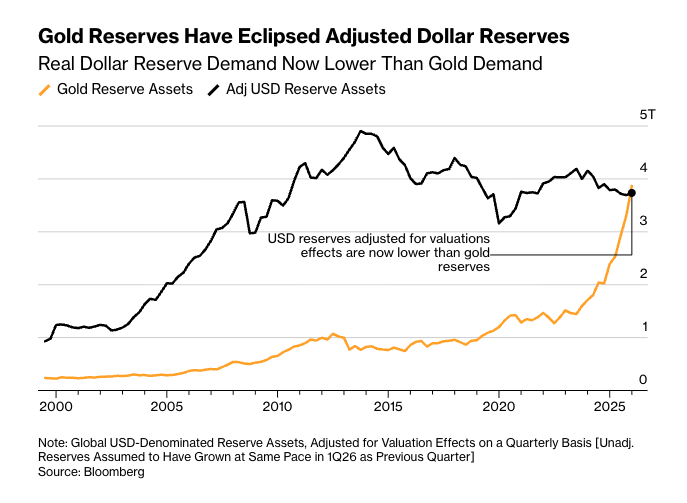
Since 2026, gold has made up a larger share of central bank reserves than the dollar (source: Bloomberg)
Since 2026, gold has even taken a larger position on central bank balance sheets than US bonds, for the first time since the IMF began tracking this data in 1990. This highlights how significant gold has become as a safe haven for central banks in a time of heightened uncertainty and declining confidence in the dollar. Gold purchases by central banks are among the main reasons why the gold price has risen so sharply since 2022.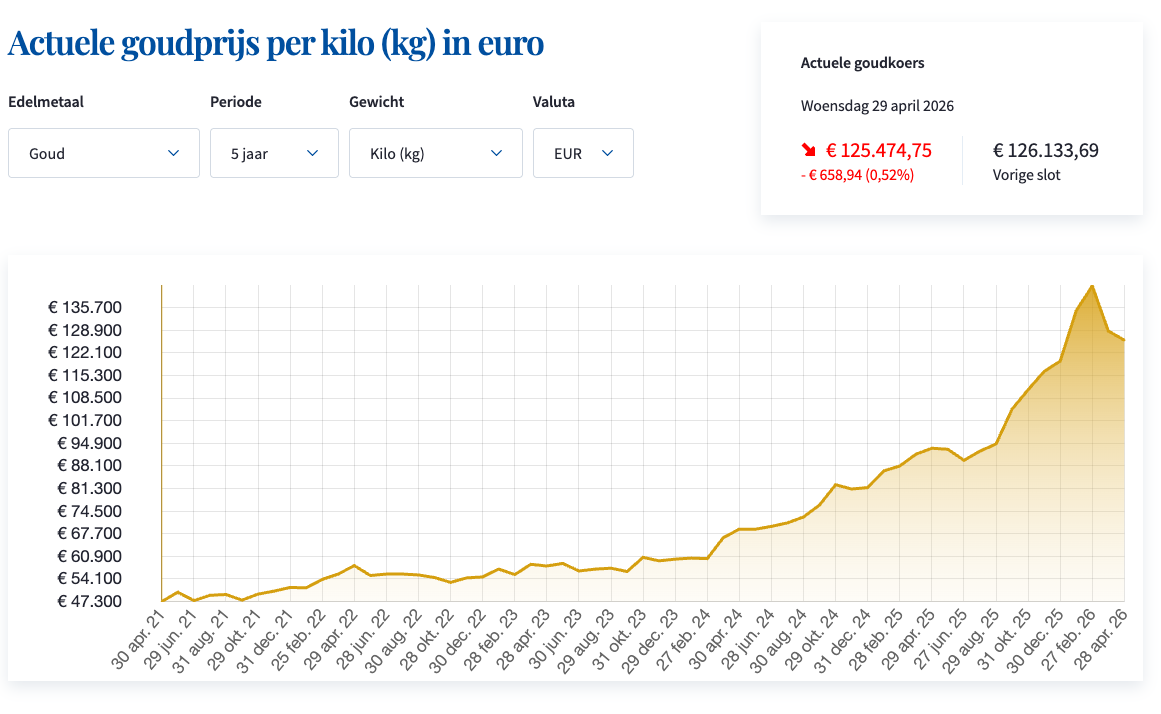
The gold price has continued to rise since 2022
Since the outbreak of the war in Iran and the closure of the Strait of Hormuz, this trend appears to be reversing. For the first time, we are seeing central banks sell significant amounts of gold. “The narrative that central banks continuously buy gold in a one-way trend is now being challenged,” says Nicky Shiels, head of metals strategy at PAMP. The developments at a glance.
Do the Russian, Turkish and Azerbaijani sales signal a turning point in the gold market? Not necessarily, according to the World Gold Council, which collects data on central banks worldwide. In the first quarter of 2026, central banks recorded net purchases of 243.7 tonnes of gold globally, a 3% increase compared to the first quarter of 2025. While this coincides with an increase in sales by central banks, it should be viewed in context.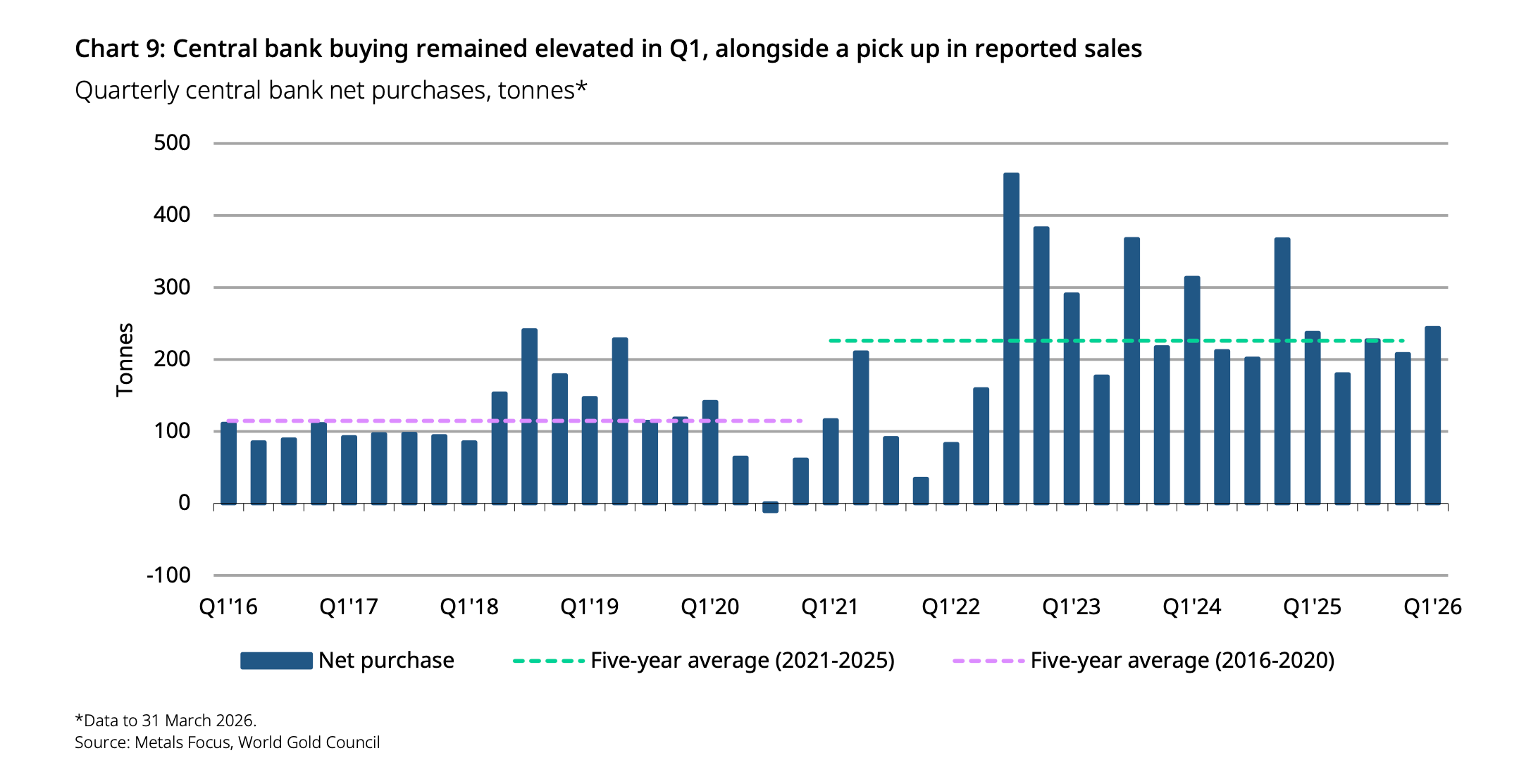
The first quarter of 2026 again shows an increase in central bank gold purchases compared to the previous year, and is above the 5-year average (source: World Gold Council)
“It is the first time in a long while that we are clearly seeing gold correct,” says John Reade, chief strategist at WGC, in Bloomberg: “This has allowed central banks, which may have been waiting on the sidelines for exactly this opportunity, to step in and buy significant quantities.” Despite the increase in sales, it is important to look at the reasons behind them.
Turkey sold its gold in response to the Iran war and energy crisis, in order to support the lira and quickly obtain dollars. This was necessary because the country is heavily dependent on imports of oil and gas for its energy supply. Gold held at the London bullion market was likely used to quickly generate liquidity. In addition, nearly 80 tonnes of gold have been used in gold-related currency swaps. This means the central bank effectively ‘pledges’ its gold reserves to a large institutional bank. The gold is sold, while forward contracts are also entered into to buy it back later at a lower price. “In other words, when [the swaps] expire, the gold in question will return to our reserves,” said Fatih Karahan, governor at the Turkish central bank.
Azerbaijan sold gold from its state oil fund SOFAZ after the value of gold had risen so rapidly that it came to represent a too large share of the fund. This was more a profit-taking measure to rebalance the fund than an emergency move.
Russia sold its gold to finance high military spending, which is becoming increasingly visible in the country’s budget deficit.
Poland has not yet made a decision and it appears highly unlikely that it will tap into its gold reserves for military spending. The Polish Minister of Finance stated last week that this idea is an absolute mirage. He and Tusk are pushing for the use of European defence funds. The dispute is between them and the president (aligned with the right-wing opposition), who, together with central bank governor Adam Glapiński, wants to use the gold reserves.
When looking at the gold sales by Turkey and Russia, one could argue that central banks are using gold exactly for what it was originally acquired: economic emergencies. It also demonstrates how quickly gold can be made liquid when needed.
The World Gold Council concludes that central bank demand for gold remains strong and continues to underline gold’s important role as a safe haven. They expect gold purchases in 2026 to remain close to 2025 levels. No trend break, therefore.
What can we expect for gold today? Over the past three days, the correction in the gold price has continued, as rising oil prices fuel inflation concerns and rate cuts appear further out of reach. The Strait of Hormuz appears to remain closed for the time being.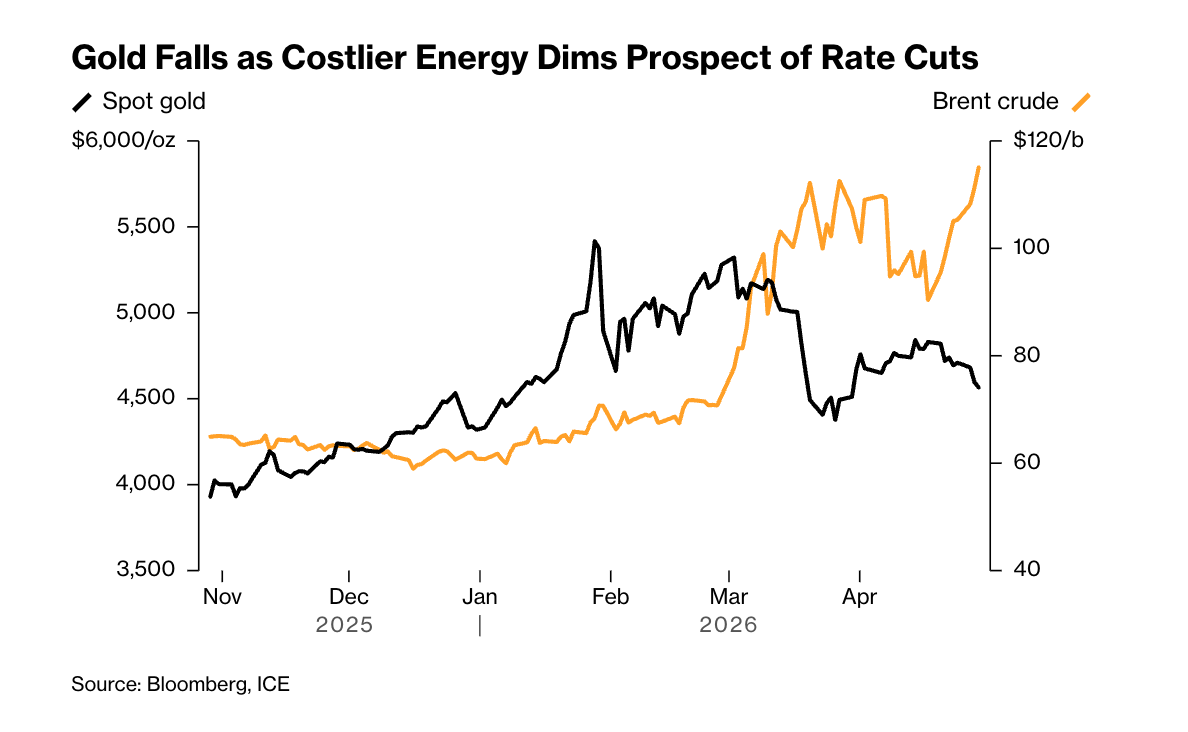
Gold rises when the oil price declines again (source: Bloomberg)
Later today, the Federal Reserve (Fed, US central bank) will announce a new interest rate decision. Markets expect rates to remain unchanged. Attention will mainly focus on the Fed’s commentary, as there is still a possibility that high energy prices will slow the economy, making a rate cut later this year more likely.
On Thursday afternoon, April 30, we will publish a new Holland Gold Monthly Update with Paul Buitink, in which we will discuss developments in the gold price in detail. Follow our YouTube channel and don’t miss it!