9.2
8.620 reviews

English
EN


The price of palladium hit a new all-time high of $1,700 per troy ounce at the beginning of this week. As a result, the precious metal continues to exceed the expectations of most investors and analysts. A structural shortage of palladium and the threat of strikes in South Africa have already sent the price up more than 33% this year. And that while the palladium price had already risen sharply last year. The precious metal has become even more expensive than gold due to the rally of the past two years and platinum.
According to Saxo Bank analyst Ole Hansen, there are currently no signs to believe that the rally in palladium is over. However, it is possible that there will be profit-taking, for example if the prices of other precious metals go down. In an explanatory note, he said Reuters the following.
"The underlying fundamentals have been positive for palladium all year and there is a shortage of supply. This will continue until the music stops, and at this point there is nothing to indicate that the music is going to stop. If we see a correction in some other metals, such as gold or platinum, then we might see some profit-taking on palladium as well."
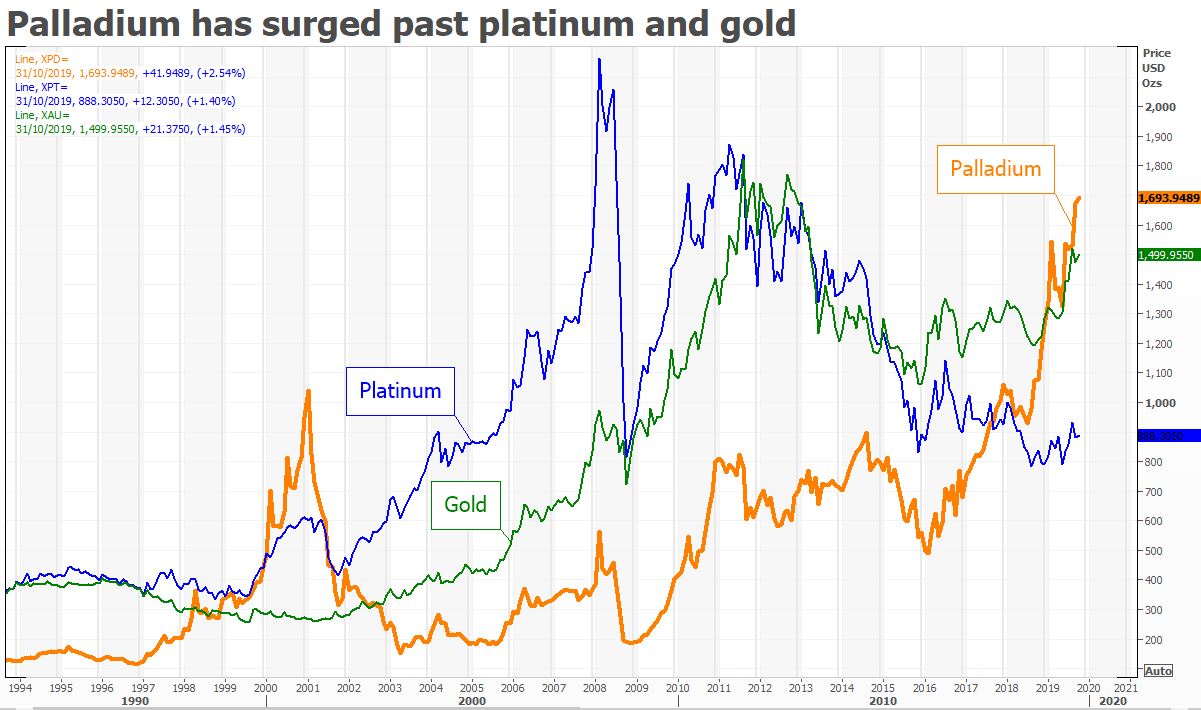
Palladium is in the spotlight among investors (Source: Thomson Reuters)
The price of palladium has almost doubled in the past two years, from around €25,000 to almost €50,000 per kilogram. This price increase is largely driven by the scarcity of supply. Not only the automotive sector is using more and more palladium, but also the jewellery industry. The price is therefore mainly determined by the expectation that the shortage will last longer. There are good indications for this, because from next year cars in China will have to meet stricter environmental requirements. This means that new vehicles in the Chinese market require about 30% more palladium, platinum and rhodium.
According to Philip Newman of Metals Focus, the palladium shortage will reach 617,000 troy ounces this year. This makes 2019 the eighth year in a row in which demand has exceeded new supply. To compensate for this difference, the market uses above-ground stocks. Since the end of 2010, this stock has decreased worldwide from 18 to 13 million troy ounces, according to Reuters.
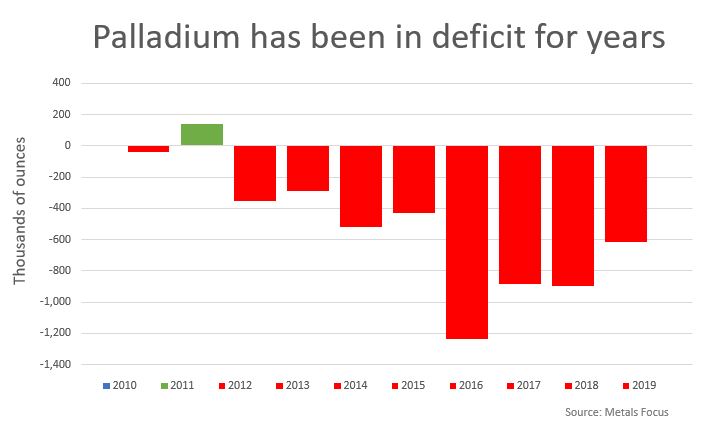
Palladium shortage persists (Source: Thomson Reuters, Metals Focus)
Speculators and traders expect the shortage of palladium to continue and are therefore already buying up future supply. They currently pay a 5% premium on top of the price to secure future deliveries. This situation, in which future supply is more expensive than direct delivery, is also referred to as backwardation said.
Figures from Thomson Reuters show that the price increase in recent months is mainly driven by physical buyers of the precious metal. The position of speculators in the market is long, but less extreme than, for example, in the years 2013, 2014 and 2017. From this, you could conclude that there is still upside potential in the palladium price. According to Jonathan Butler, an analyst in the precious metals division at Mitsubishi, the price of the precious metal could rise towards $2,000 per troy ounce in the next 12 to 18 months.
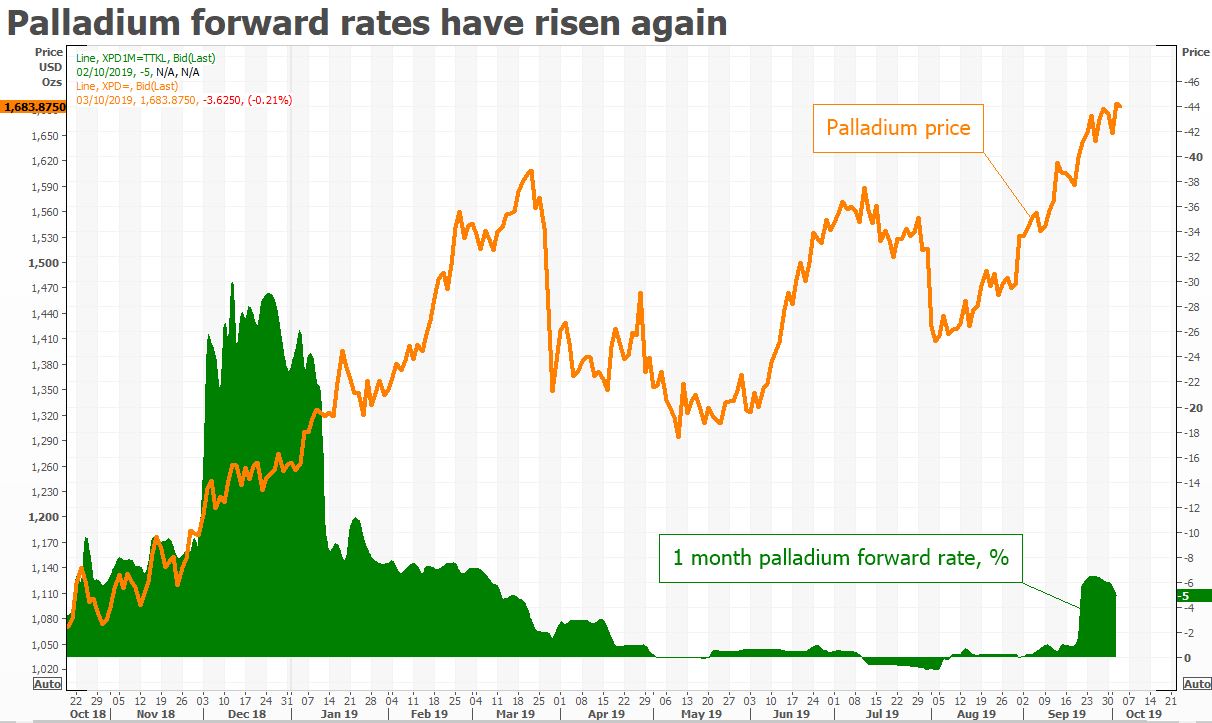
Traders pay a premium for future delivery of palladium (Source: Thomson Reuters)
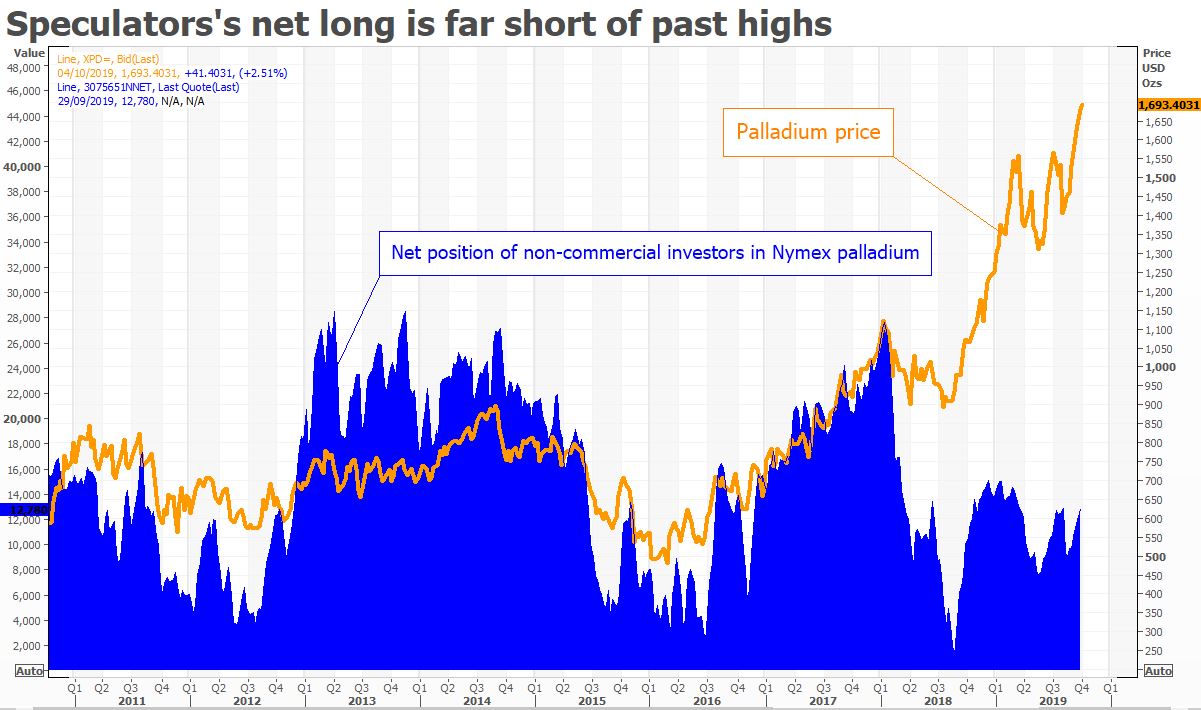
Speculative demand not yet at record high (Source: Thomson Reuters)


