9.3
8.683 reviews

English
EN


The Federal Reserve's balance sheet has risen further to almost $7 trillion due to various asset purchase programs. The central bank began buying hundreds of billions of dollars worth of government bonds and mortgage bonds in March. In addition, the central bank announced a new corporate loan purchase program, which was launched this week. With this, the Fed wants to relieve the pressure on the bond market and support companies that have run into problems due to the corona crisis.
On the first day of this New buy-back program the central bank withdrew more than $300 million worth of corporate loans from the market, according to New figures. The central bank did this by buying corporate bond ETFs. In the near future, the Fed also wants to buy corporate bonds directly through the Primary Market Corporate Credit Facility. It will then lend money to companies without the intervention of the market. It is a risky move that affects the independence of the central bank.
The central bank announced in April its plans to $2.3 trillion in corporate loans to buy up. A condition for this new program was that the government would guarantee losses on corporate loans. As part of the $2 trillion fiscal stimulus program, the U.S. government has set aside $454 billion for the Fed's new bond-buying program, giving the central bank the green light to buy corporate debt.
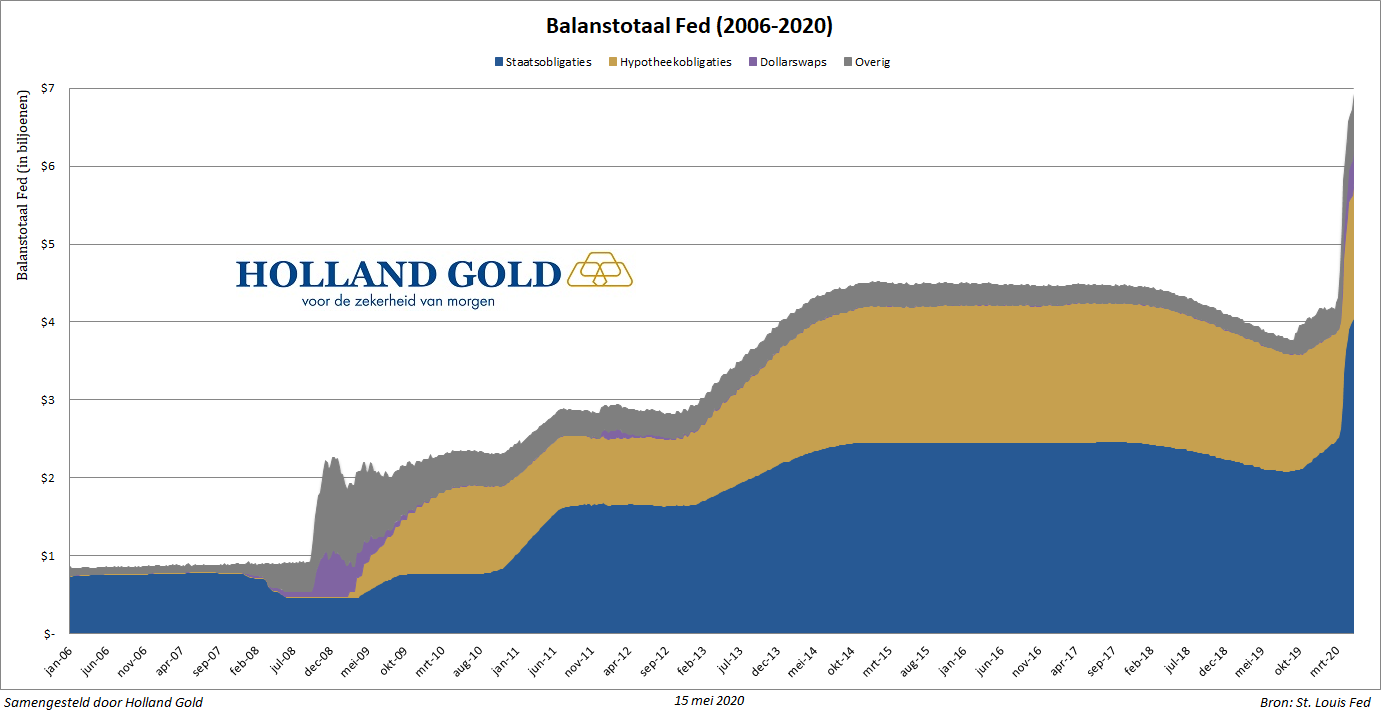
Fed balance sheet explodes to $6.93 trillion (click for larger version)
The Fed fears Permanent economic damage when companies' liquidity problems turn into solvency problems. This can also affect the labour market, because with the disappearance of smaller companies, many jobs will also disappear. The Fed has the mandate to monitor employment in addition to price stability. As a result, the central bank is prepared to pursue a risky and unconventional monetary policy.
So far, the Fed has managed to calm the financial markets somewhat. The interest rate differential between high-quality Investment Grade and riskier High Yield bonds has fallen, while liquidity in the corporate loan market has improved. At the same time, interest rates on U.S. Treasuries are still exceptionally low. This indicates that the financial markets still have little confidence in a speedy recovery of the economy. The question is whether the central bank can change this with all those billions in stimulus.
This contribution was made from Geotrendlines


