9.3
8.879 reviews

English
EN


The demand for silver has increased significantly due to the corona crisis and the silver squeeze. This is what the London Bullion Market Association (LBMA) writes in a new report about the silver market. Last year, demand for investment silver rose about 20% to about $10 billion, the highest level since 2012. In fact, silver ETF inventories rose by a record volume of 331 million troy ounces last year. In addition, investors bought 200 million troy ounces worth of coins and bars, the highest volume since 2016. Shares of silver miners also did well, as they rose an average of 44% last year.
The corona crisis initially caused a decrease in the Silver price. Investors were anticipating a major crisis that would curb industrial demand for silver. Due to large-scale monetary and fiscal support programs, the economic crash did not materialize and the demand for silver picked up again. The precious metal had become relatively cheap compared to gold and therefore attracted many investors. The precious metal also benefited from a flight to safe havens, as investors worried about currency depreciation and extremely low interest rates.
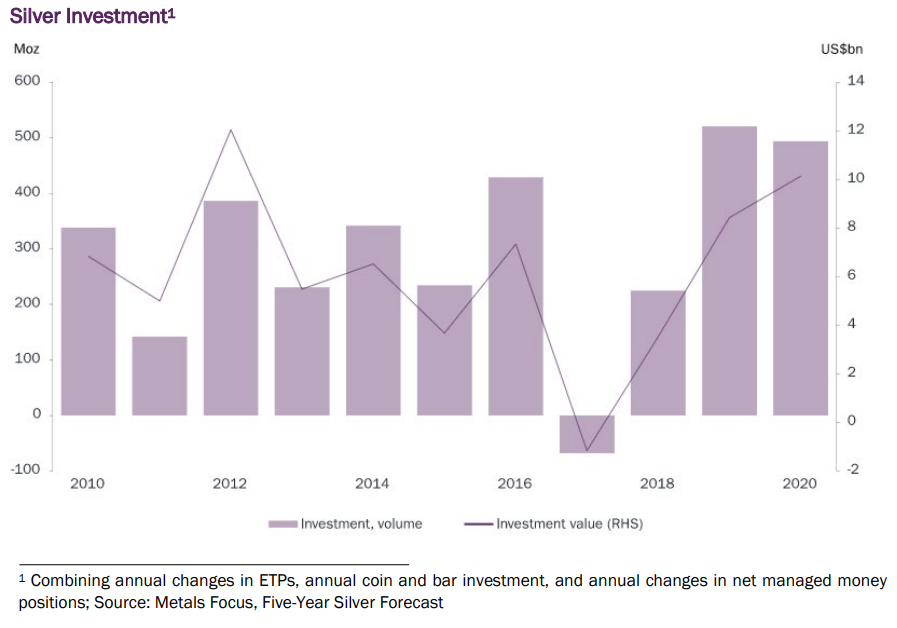
Demand for silver has risen sharply since the corona crisis (Source: LBMA)
A flight to safe havens propelled gold prices to record highs last summer, while silver hit its highest level in seven years. In fact, the demand for investment silver was so high that mints and smelters could not keep up with the demand. There were also logistical problems as a result of the coronavirus. As a result, delivery times and premiums increased significantly last year. At the beginning of this year, the silver market calmed down, until the beginning of February Silversqueeze erupted. Retail investors encouraged each other to buy silver en masse. The goal? Creating a short squeeze in the silver market and bringing the silver price to new records.
As a result of this call, there was a worldwide run on silver. For example, the stocks of silver ETFs rose by 119 million troy ounces in three days to a record of more than 1.2 billion troy ounces. The demand for Silver Coins and Silver bars. Inventories from traders and suppliers were sold out in no time. Mints scaled up their production further, but due to the continued demand for silver, premiums on coins are still higher than before the corona crisis.
A real short squeeze ensued Various reasons not. As we wrote earlier, the silver market is much larger than Gamestop's share ($28 billion in silver ETFs versus a $1 billion Gamestop market cap). In addition, the large short positions in silver are held by banks that hold physical stocks of silver, such as JP Morgan. They do not speculate on a lower silver price, but use the futures market to hedge the price risk of their stock.
According to the LBMA, the silver squeeze has tapped into a new target group of investors who are concerned about the purchasing power of money. Due to all the monetary and fiscal stimulus programs and the low interest rates, they prefer alternative savings such as gold, silver and virtual currencies. Most investors in the silver market use a buy and hold strategy, which is also reflected in the development of ETFs' silver stocks. Over the years, these stocks have only increased on balance. Investors bought when the price of silver was rising, but hardly sold at times when the price was falling.
Due to the run on precious metals, the market share of silver ETFs in total silver stocks in London has risen sharply over the past year. Currently, there is about 1.25 billion troy ounces of silver in London, 58% of which belongs to silver ETFs. By comparison, at the end of 2019, there were a total of 1.16 billion troy ounces in London, 35% of which were held in ETFs. The shortage in the silver market has visibly increased over the past year, but there is no acute scarcity yet. For example, the most common investment coins are still available, although the demand for silver is still higher than before the corona crisis.

Silver ETF stocks to record highs (Source: LBMA)
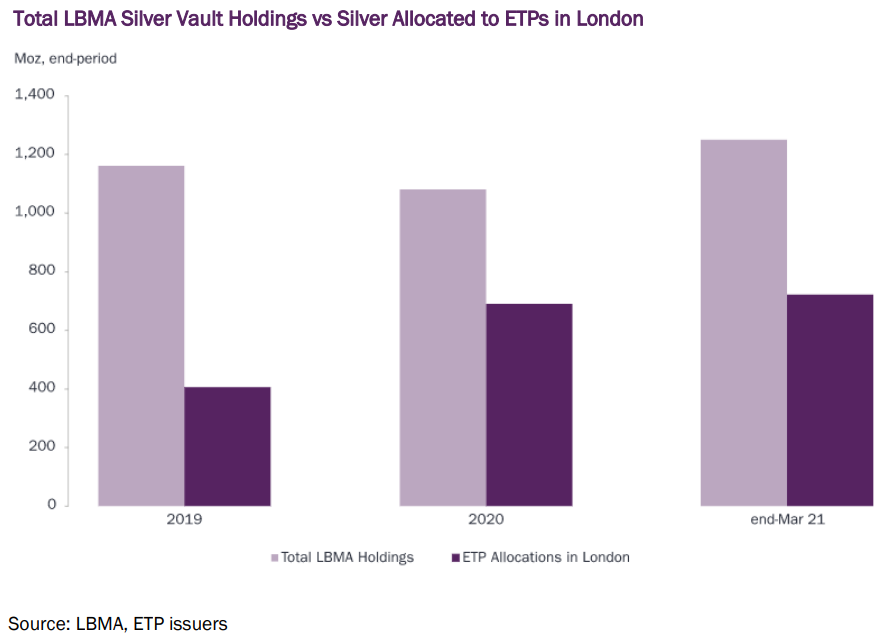
ETFs account for an increasing share of the total silver supply in London (Source: LBMA)
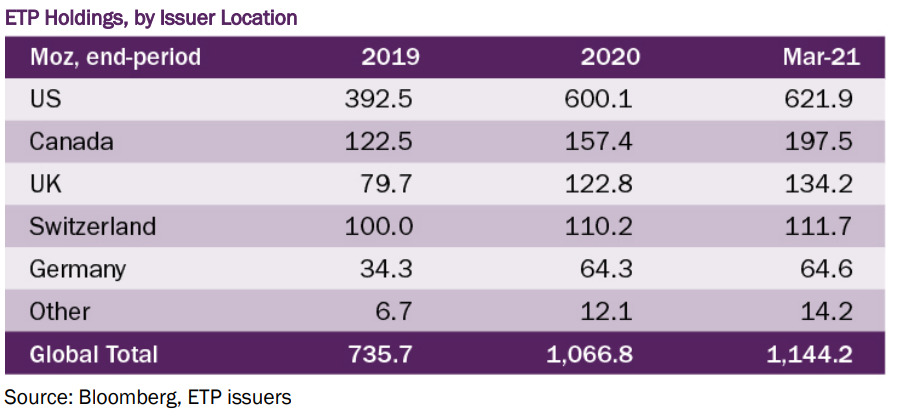
Most silver stocks are accounted for by US ETFs (Source: LBMA)
This contribution was made from Geotrendlines


