English
EN


Inflation has risen spectacularly in the space of a year. In May, the harmonised index of consumer prices in the Netherlands stood at 10,2%, while in the same month of last year it was only 1.9%. Earlier this year, the inflation rate peaked at nearly 12%, a figure we haven't seen in over forty years. The reason for this high inflation is now known to everyone, namely rising energy prices. In May, according to the Central Bureau of Statistics, these were 67.3% higher than a year ago. To what extent do they distort the picture of inflation? And how long will inflation remain so high?
Statistics Netherlands (CBS) calculates inflation on the basis of a Average consumption pattern, the compilation of which is based on data from the previous year. In this basket, a weighting has been assigned to various expenses, such as food, clothing, housing, transport, healthcare costs and the like. This weighting is therefore adjusted every year to reflect changes in spending patterns. Because everyone's spending pattern is different, CBS has a Personal Inflation Calculator in which the weightings of different categories can be adjusted yourself.
If we take a closer look at this average, we see that housing with associated fixed costs such as gas, water and electricity, groceries and transport are the three largest cost items. These account for about half of the total expenditure of an average household. An increase in housing costs and higher energy prices have a major effect on these three expenditures and therefore also on the inflation rate. More luxury spending, such as recreation and culture, hotels and restaurants, and consumption abroad, is less important. The basket of goods is further supplemented by clothing (5%), upholstery, household appliances and home maintenance (7%) and miscellaneous goods and services (10.3%).
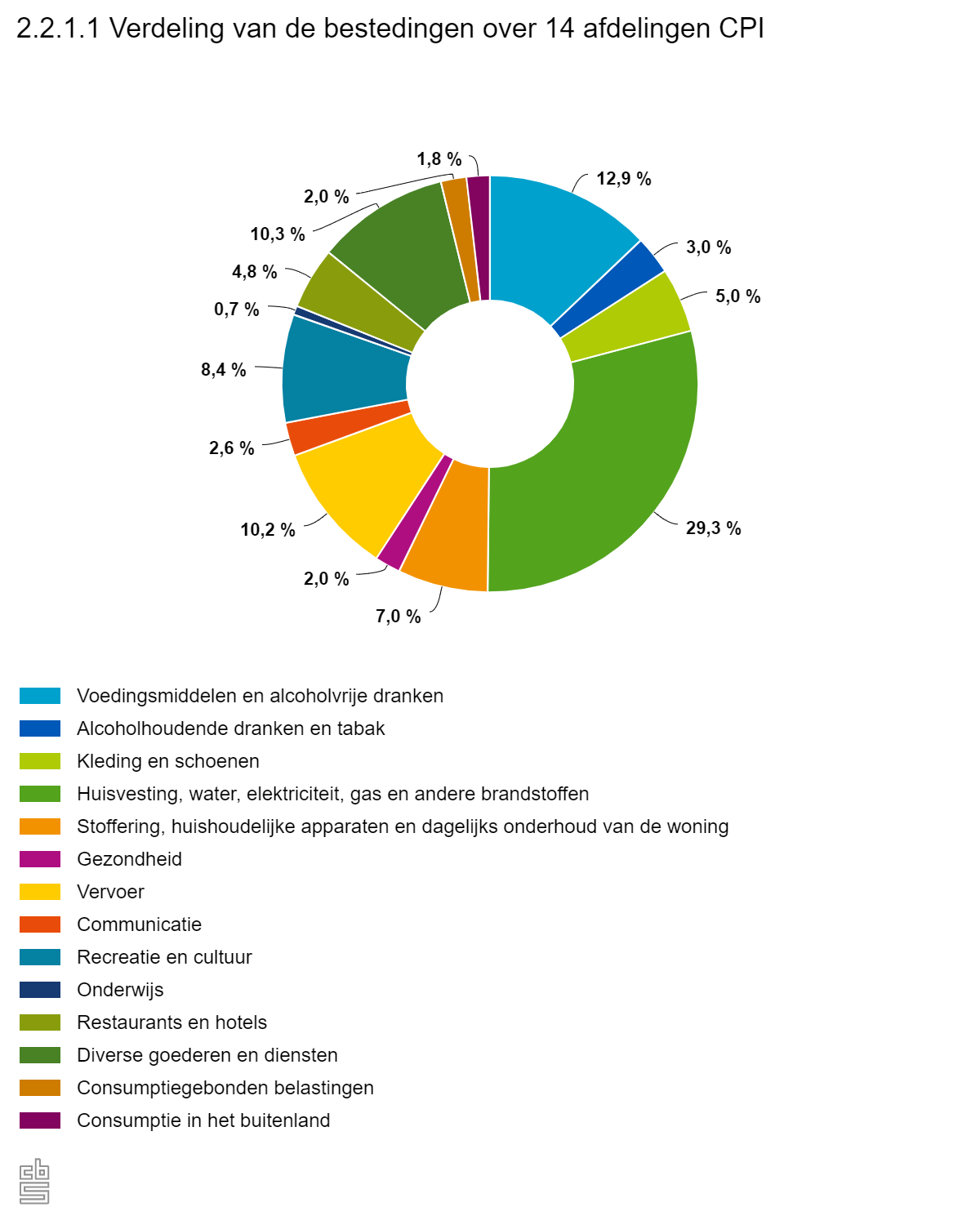
On the basis of which weighting does CBS calculate inflation?
But what can we say about inflation expectations based on these figures? In the end, energy prices are the most decisive factor in this, because they have an indirect effect on a large number of expenditures. We soon noticed the high energy prices at the pump and in the rates for electricity and gas, but indirectly these prices also have an effect on groceries and other products that require a lot of energy. As long as energy prices remain high or even rise further, we have to take high inflation into account. And it doesn't look like the conflict in Ukraine and the shortage of refining capacity for fuel production will end anytime soon.
A second factor that may play a role in the slightly longer term is housing costs. Buyers will have to deal with an increase in mortgage rates, which will increase the monthly payments of the mortgage. Tenants can expect a significant increase in rent, as the rent increase is often linked to inflation. If inflation remains high for the rest of the year, tenants will notice this in their wallets next year.
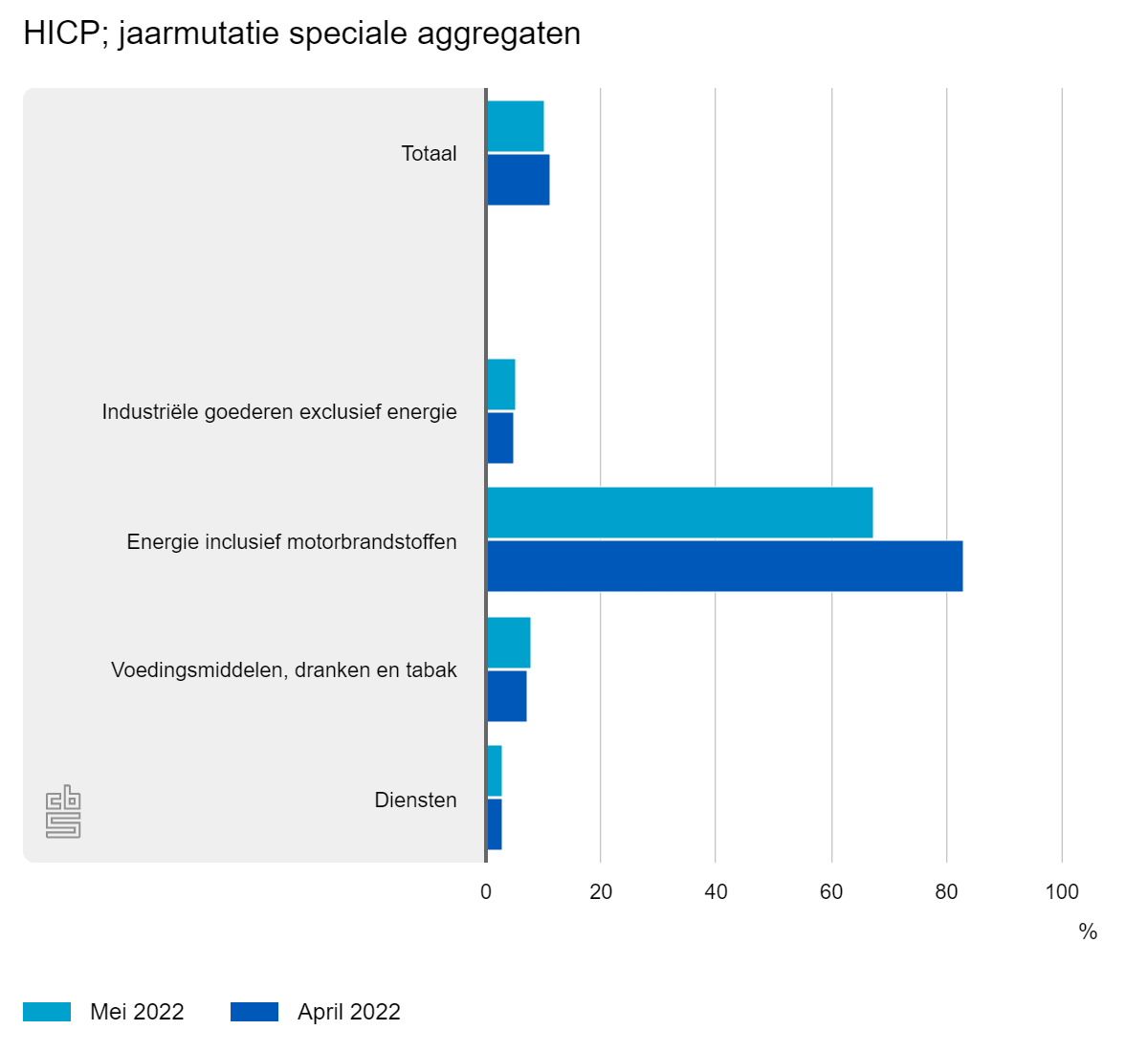
High energy prices are a major determinant of the average inflation rate (Source: CBS)
Due to rising fuel prices, increasingly expensive groceries and the prospect of higher housing costs, the disposable income of many households will decrease. Due to tightness in the labor market, many workers could expect an average wage increase of 3.3% next year, but that is not nearly enough to compensate for high inflation. This means that consumer spending is likely to fall. As a result, people will spend less money on luxury goods. Especially if the rise in house prices comes to a halt and turns into a decline. The prospect of falling house prices has a major effect on consumer behaviour, because a large part of households' wealth consists of equity on their own homes. Equity that people are increasingly absorb to do fun things with.
An uncertain and unfavourable economic outlook could put pressure on the prices of luxury goods. The first signs of this are already visible in the shopping street, home furnishing and sleeping shops, garden centres and kitchen shops. It has become remarkably quiet there lately, writes the Telegraph. This is beneficial for higher incomes, because they can spend proportionally more money on luxury goods. The average consumer will not benefit from this, because they will spend more money on fixed costs. The prices of goods could therefore fall in the luxury segment, while the prices of essential goods remain high due to high energy prices.
This contribution was made from Geotrendlines