English
EN


At the end of September, the gold price dropped to $1622 per troy ounce, the lowest level since the spring of 2020. Measured in dollars, there was even a Bear Market in gold, because the price at the end of September was more than twenty percent lower than the peak of $2,050 per troy ounce in March. This Negative trend However, this is in stark contrast to the demand for investment gold, which has risen significantly since the beginning of this year. Why is that? And what are the expectations for the gold price?
With skyrocketing inflation, savings rates close to zero, an energy crisis and a war on the periphery of Europe, you might not expect it, but the gold price has shown little spectacular in recent months. Shortly after the Russian invasion of Ukraine, the price skyrocketed, but since then it has only fallen further. Especially in dollars, because in many other currencies the Gold price sideways in recent months.
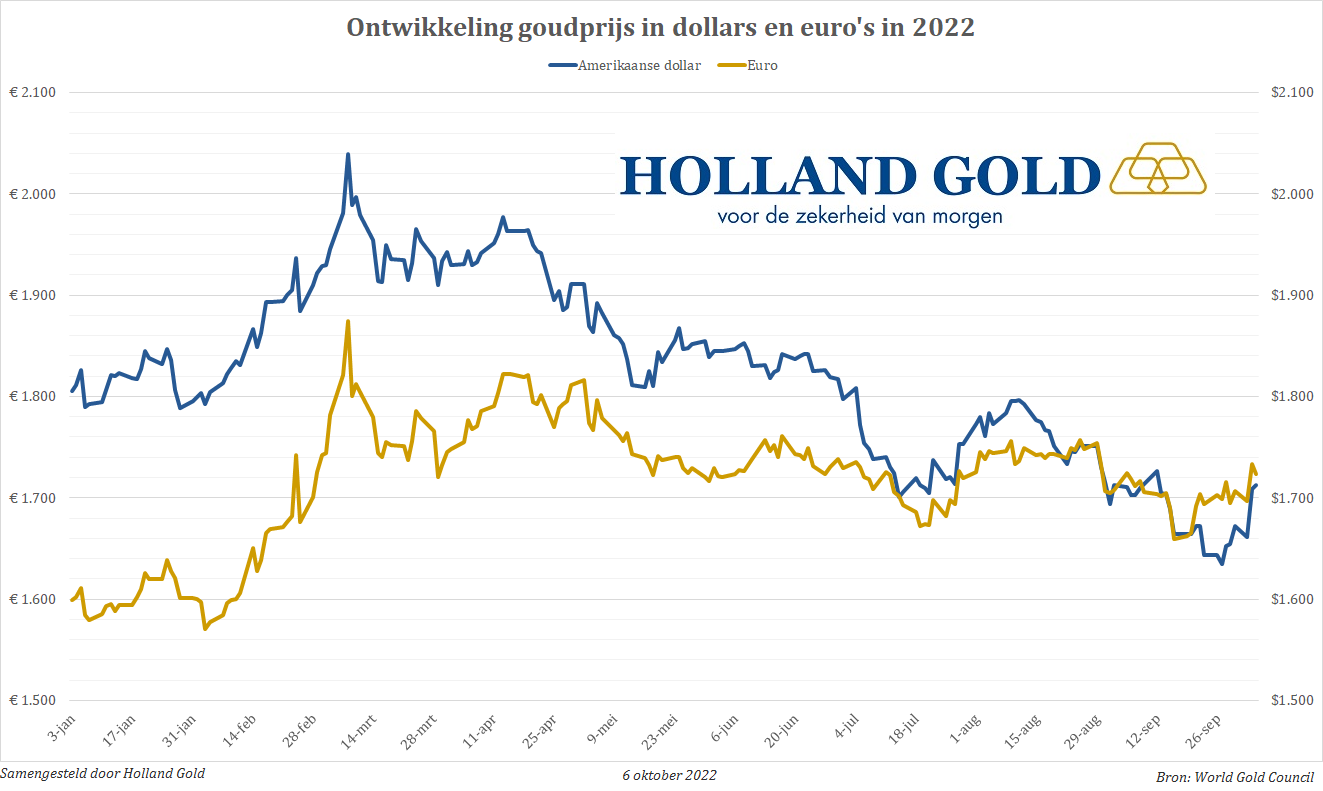
Gold price falls in dollars, but moves sideways in euros
And that brings us to the heart of the story, because the main reason why gold is currently under pressure is the strong dollar. As we mentioned last week, Wrote Dollars are currently in high demand worldwide, because parties that have borrowed in this currency need dollars to repay these loans. The rollover of these dollar loans has become much more expensive, partly because the US central bank has raised interest rates. In a flight to dollars, investors are now also selling other investments, including gold and stocks.
The flight to dollars is also reflected in the currency reserves of central banks, which have been growing at a record pace since the beginning of this year. Dropped. This year alone, $1 trillion in foreign exchange reserves evaporated, far more than during the 2008 credit crisis. This decline is partly attributable to the exchange rate effect, as the appreciation of the dollar has reduced the value of all reserves in other currencies converted into dollars.
But there are also central banks that have to draw on their dollar reserves to support their own banking sector or the value of their own currency. For example, countries such as China, Japan, South Korea and India have already had to sell part of their foreign exchange reserves. In some poor countries, this is already causing problems. Pakistan has only $14 billion in reserves left, insufficient to cover three months' worth of imports. For the same reason, Bangladesh went to the IMF last summer for a Emergency loan.
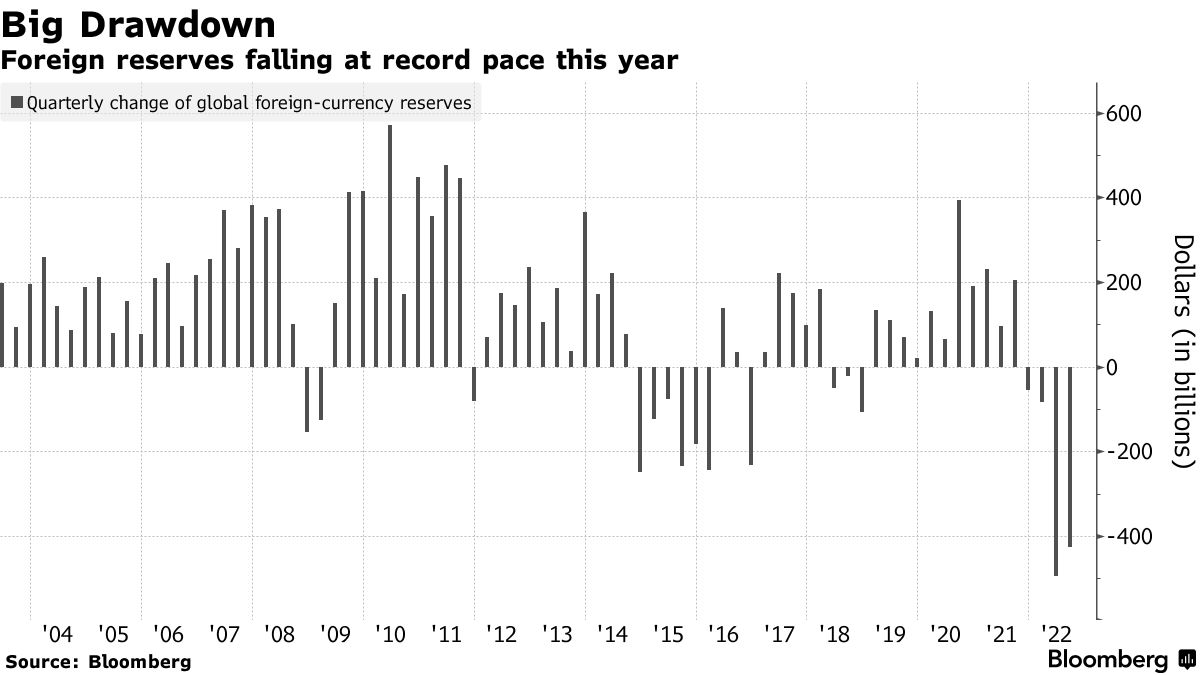
Central banks eat into their foreign exchange reserves (Source: Bloomberg)
Several central banks already have to draw on currency reserves, but they prefer not to touch the gold reserves for the time being. According to the latest figures from the World Gold Council In August, central banks added gold to their reserves for the fifth month in a row. Also, in recent months, few central banks have been selling gold, while at the beginning of this year this was still happening regularly.
Since the beginning of this year, Turkey has bought the most gold, followed by Egypt, Iraq, India and Uzbekistan. Kazakhstan was the only country to sell a substantial amount of gold this year. Central banks will therefore continue to Buy gold or hold on to their position, despite the difficulties some countries have in supporting their own currency. Since the beginning of this year, central banks have added about 320 tonnes of gold to their reserves.
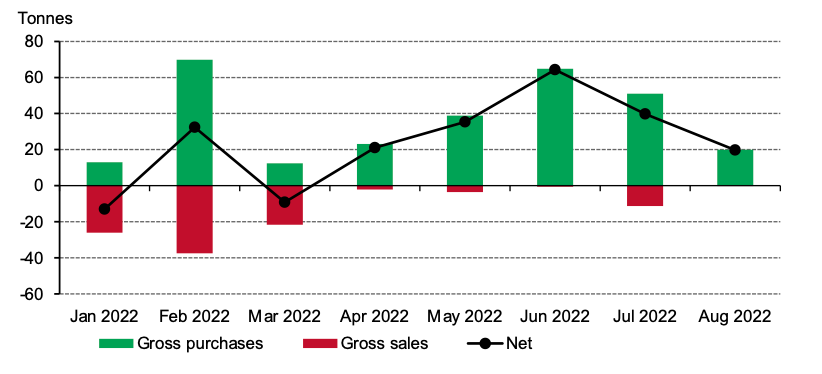
Central banks continue to buy gold
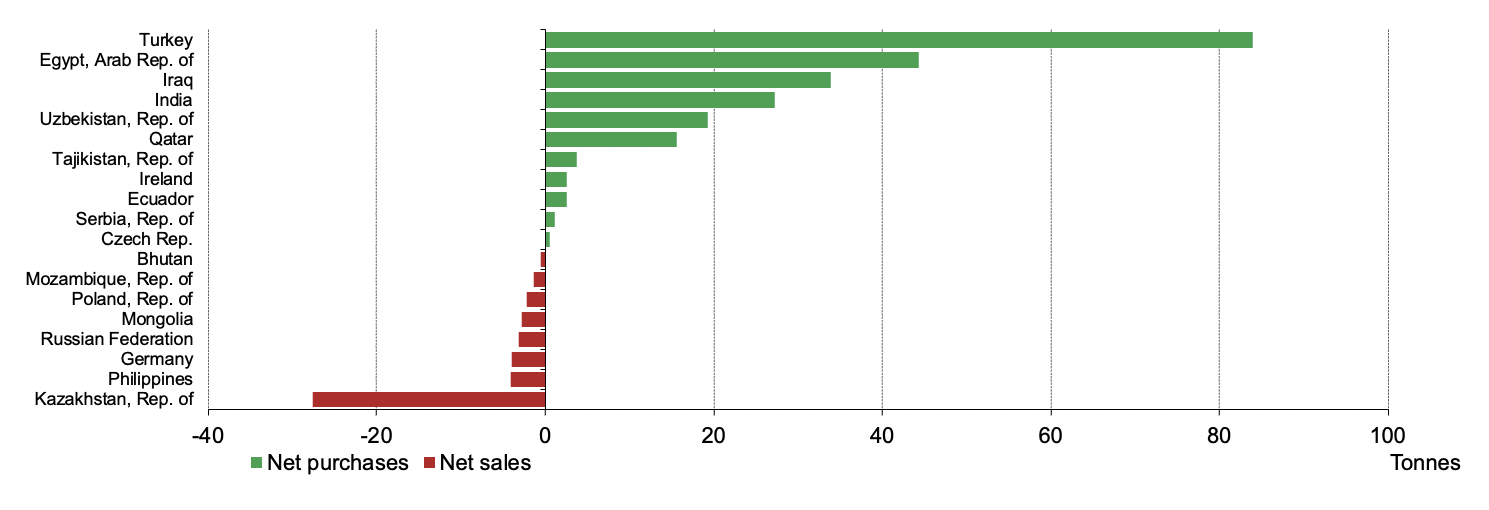
Turkey, Egypt and Iraq bought the most gold this year
The demand for gold in the form of ETFs and futures contracts has therefore decreased in recent months due to the rising dollar and rising interest rates, but many ordinary savers do not care about that. They do not yet benefit from higher savings rates, while the High inflation the purchasing power of savings. Statistics Netherlands (CBS) Reported In September, prices rose by 17% year-on-year, the highest level since the Second World War. Savers are currently seeing their purchasing power evaporate at an unprecedented rate.
For European savers, the value of the euro is also under severe pressure, so they are looking for alternatives. This is reflected in the demand for physical precious metals, as the sale of Gold bars, Gold Coins and Silver Coins has increased sharply recently. People who are worried about their savings or who don't think now is a good time to invest in stocks, real estate or cryptocurrencies see precious metals as an attractive alternative.
Due to the rise in interest rates, the valuations of many investments are under pressure. Stocks, real estate and precious metals all seem to be falling in price. And that in itself makes sense, because when interest rates rise, it becomes less attractive to borrow and to invest with leverage. As a result, the most speculative investments such as cryptocurrencies, technology stocks and emerging market stocks fell the fastest and hardest this year.
In this scenario, it seems attractive to park a little more capital on the sidelines and not be fully invested. Even with high inflation, this can be interesting, for example if shares, real estate and other investments fall in value faster than savings. Of all investments, gold performs relatively well under these circumstances, because the precious metal is highly liquid and has no counterparty risk.
And that is also reflected in the graph below of the World Gold Council, which compares the returns of different asset classes in the month of September. The price of gold fell, but much less than other investments such as government bonds, stocks and commodities. So it remains attractive to own precious metals.
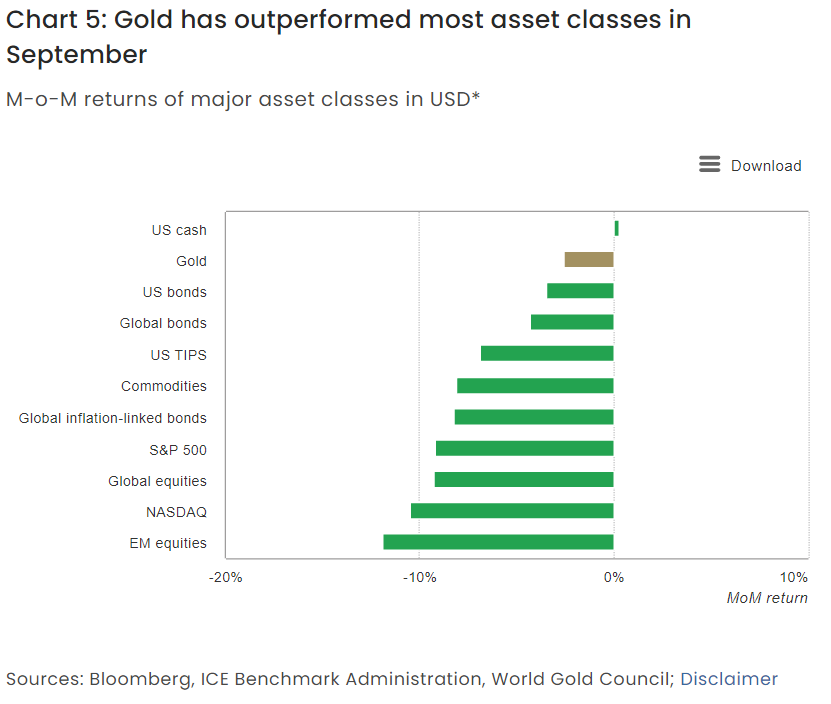
Gold outperformed other investments in September
 Have a look at us YouTube channel
On behalf of Holland Gold, Paul Buitink and Joris Beemsterboer interview various economists and experts in the field of macroeconomics. The aim of the podcast is to provide the viewer with a better picture and guidance in an increasingly rapidly changing macroeconomic and monetary landscape. Click here to subscribe.