English
EN


Low interest rates and rising inflation have led to a sharp increase in interest in gold among European savers and investors. This is what the World Gold Council in a new report. Savers see the precious metal as an alternative to the savings account, while investors buy gold to reduce the risk of their investment portfolio. Both groups are concerned about loss of purchasing power as a result of the ECB's accommodative monetary policy. For example, the demand for gold in the first half of this year was even higher than in the same period last year.
As a result of all the support measures, interest rates in the Eurozone have fallen to an all-time low. In addition, more and more government bonds now have a negative yield. As a result, Buy gold has become an attractive alternative. In 2020, the European market accounted for 249 metric tonnes of gold coins and gold bars, the highest volume since 2013. This year, the demand for the precious metal seems to be even greater, because in the first six months, Europeans already bought 146 tons of investment gold. As a result, Europe now accounts for a third of the global demand for investment gold.
If we look at the long-term development of the European gold market, we see that there has been much more demand for investment gold since the financial crisis of 2008. Prior to 2008, interest in investment gold was minimal in most European countries. It is striking that interest has remained at a much higher level after the financial crisis, even in years when the gold price has fallen.
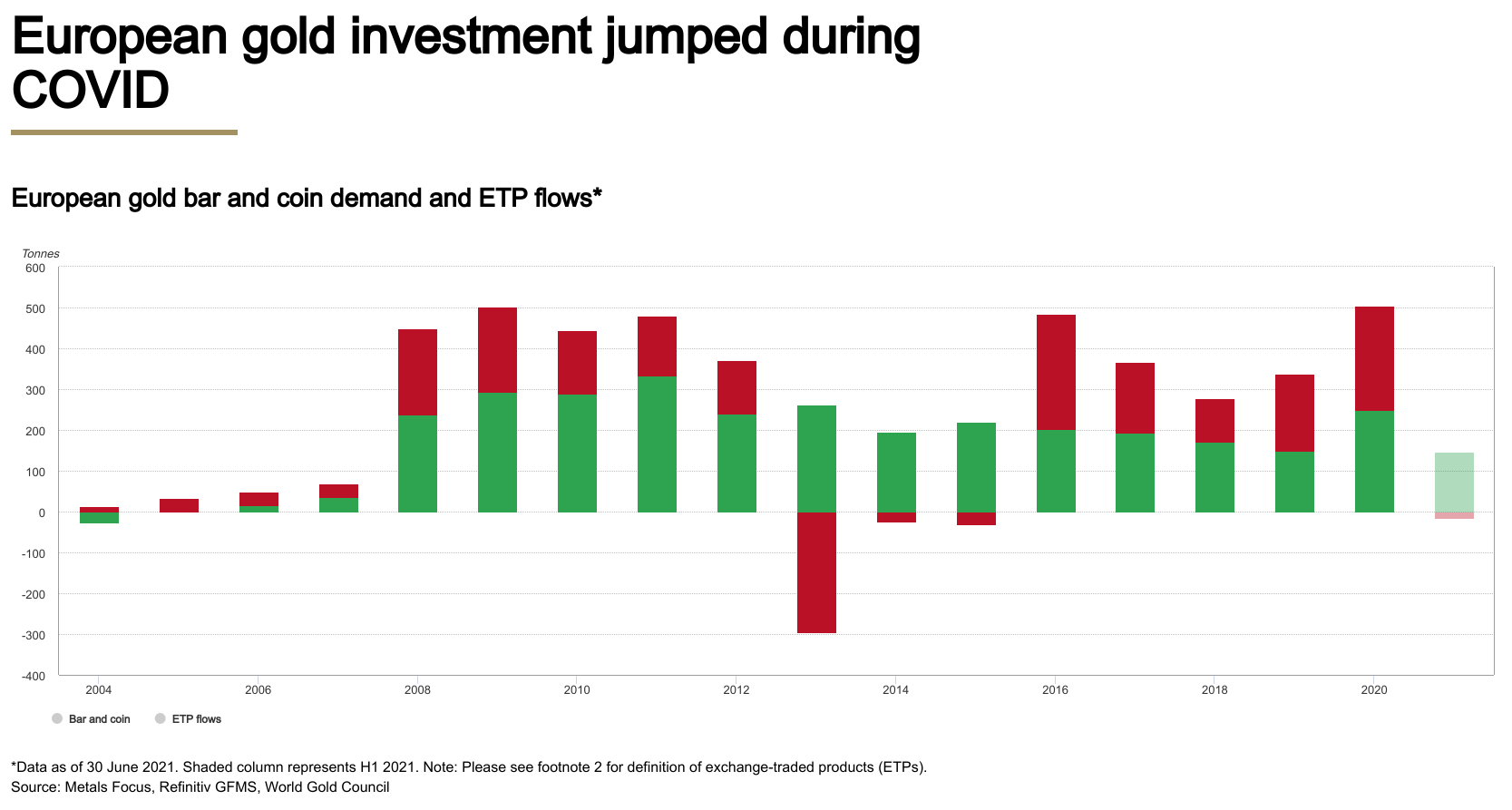
Demand for investment gold in Europe (Source: World Gold Council)
Gold does not earn interest or dividends. In the past, this was a disadvantage, but in a world with negative interest rates, it is actually an advantage. In addition, the precious metal usually benefits from rising inflation. Since 1971, the precious metal has yielded an average of about 7% per year in periods of less than 3% inflation. With an inflation rate of more than 3%, the average return of gold was a lot higher at about 15%.
We now seem to be heading for another period of high inflation, even though central banks claim not. In Germany, prices rose 3.1% year-on-year in July, the highest inflation rate since June 2008. In August, inflation in the eurozone reached its highest level in a decade at 3%.
Also striking is the strong correlation between the Gold price and the supply of government bonds with negative yields. Due to low interest rates and high prices, bonds are becoming less and less effective Hedge against a decline in stock prices. That is why more and more investors and pension funds are considering the precious metal as a form of diversification in the investment portfolio.
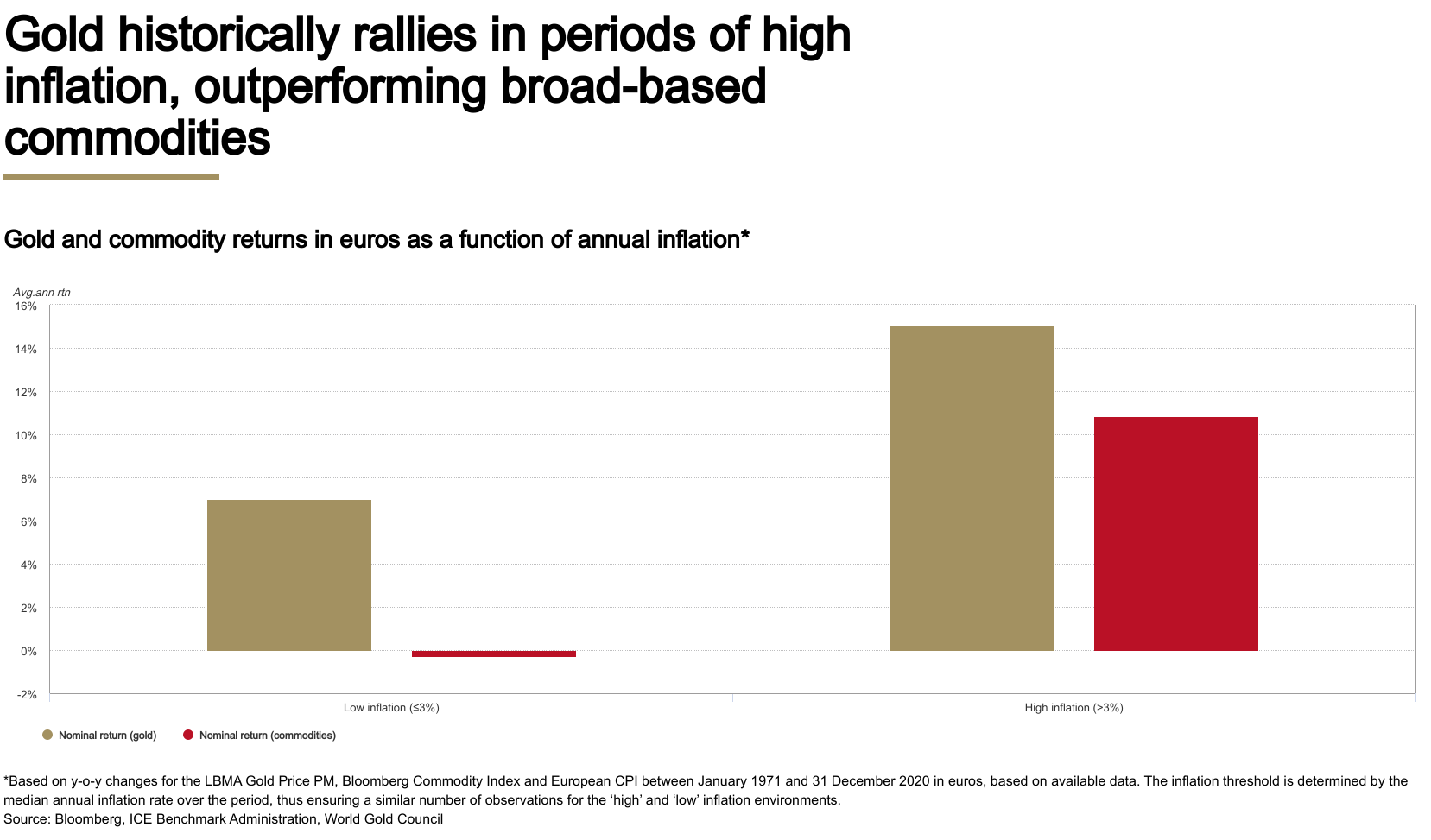
Gold performs especially well in times of high inflation (Source: World Gold Council)
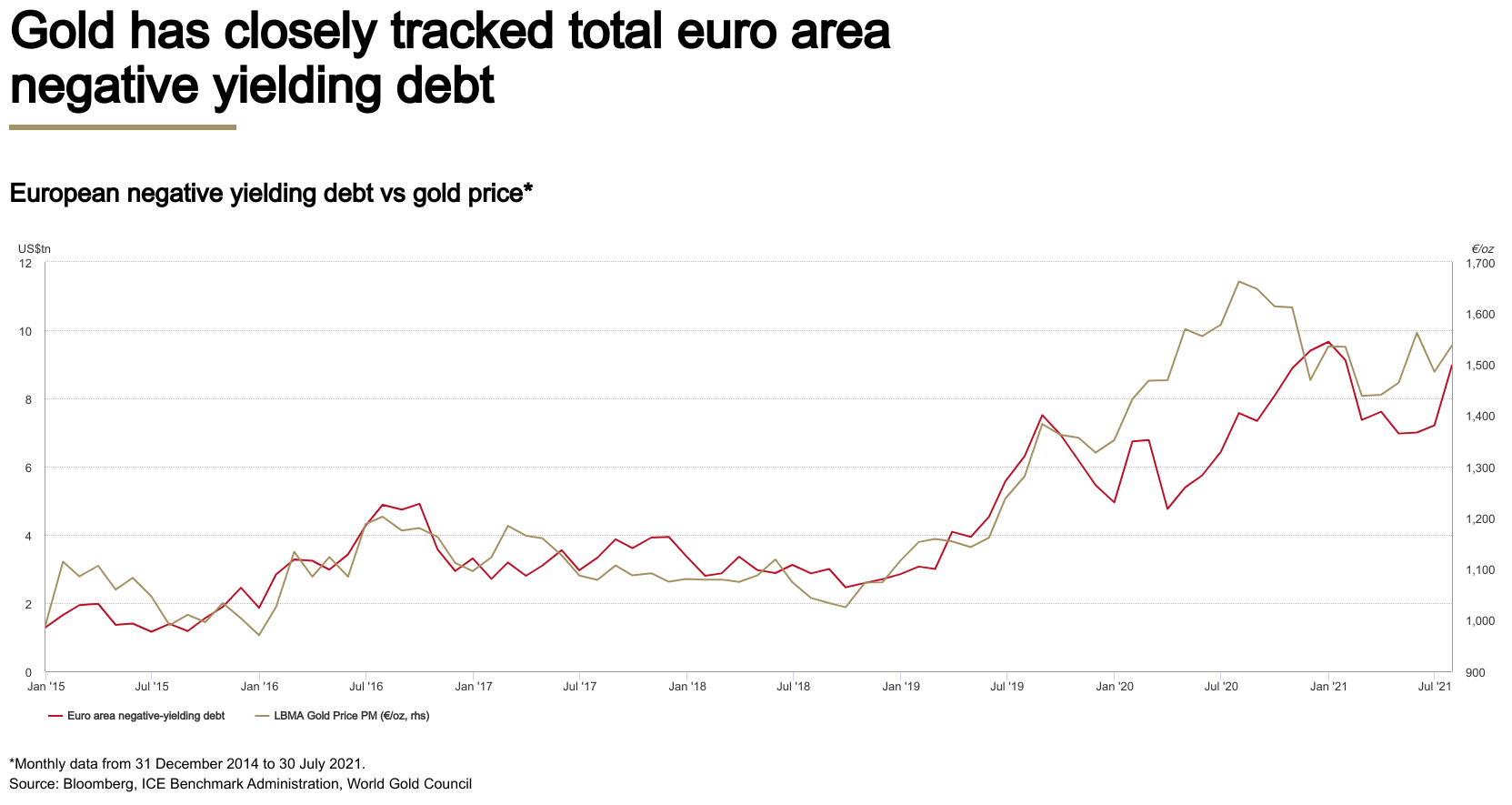
Gold price follows supply of government bonds with negative interest rates (Source: World Gold Council)
This contribution was made from Geotrendlines