English
EN


Over the past month, more than $400 billion worth of value has evaporated from virtual currencies, but according to a Goldman Sachs analyst, that's just the beginning. Steve Strongin, head of the department that deals with researching different investments, believes that most virtual currencies will not continue to exist in their current form. According to him, investors should be prepared for the fact that many virtual currencies will become worthless, because they will be replaced by a new generation in the future.
According to the Goldman Sachs analyst, the price development and the high volatility of the virtual currencies shows many characteristics of a bubble. He also notes that the more than a thousand different cryptocurrencies are all moving in the same direction, which is unusual for a market in which a few winners have to grab the largest market share.
"The high correlation between the different virtual currencies worries me. Because there is no intrinsic value, the coins that don't make it are likely to drop to zero. Will one of today's virtual currencies become a Google or an Amazon or will they end up as one of the many no longer functioning search engines?
The fact that we are in a speculative bubble does not mean that the current prices for some virtual currencies cannot rise anymore. But at the same time, it probably means that most – if not all – virtual currencies will never reach their recent peak again."
Strongin compares virtual currencies to the internet bubble of the late 1990s, when investors invested a lot of money in all kinds of companies with good ideas based on internet technology. That technology eventually became indispensable, but not before many of those internet companies went bankrupt. The Goldman Sachs analyst expects a similar development with regard to cryptocurrencies and the underlying blockchain technology.
He doesn't have high expectations of the current generation of virtual currencies, but he does have high expectations of the blockchain. According to him, this technology can be used in the future to record financial transactions, but in its current form it is not yet fast enough for most market transactions.
Of course, the world of virtual currencies does not stand still, as various techniques are being developed to address its biggest shortcomings. Last month, for example, the first tests were carried out with the Lightning network, which allows multiple transactions to be bundled. As a result, not all transactions need to be processed separately in the blockchain, allowing the network to process significantly more transactions.
There are also virtual currencies that work on the basis of a decentralized system, such as Ripple. Unlike many other coins, transactions within this system are processed by a number of central nodes, allowing it to operate much faster than a distributed blockchain. The disadvantage is that with this implementation you distance yourself more from the original idea of a fully decentralized payment system.
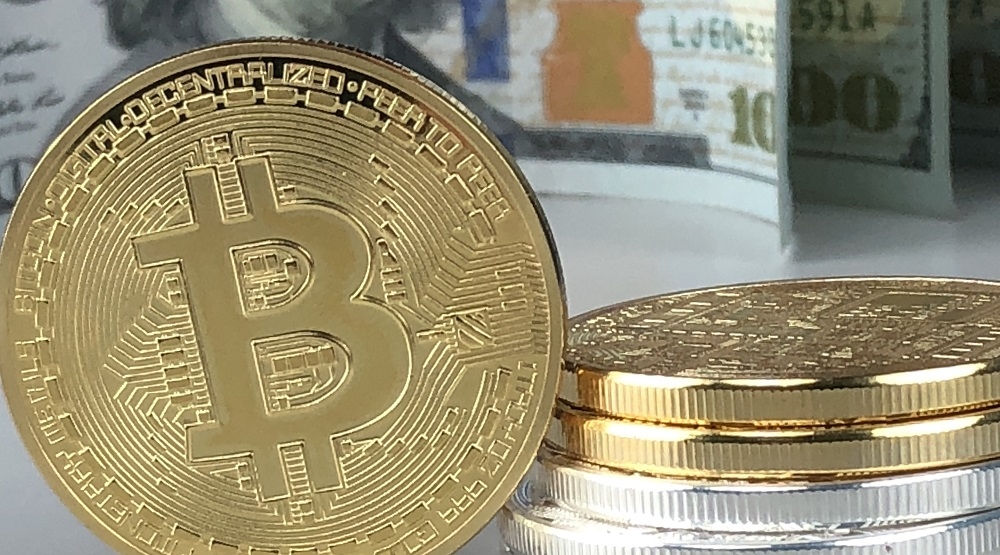
Goldman Sachs: 'Most virtual currencies will become worthless'
Tip: At Hollandgold it is now possible to Buy gold with Bitcoin. Click on the link for more information.