English
EN


The Federal Reserve has decided to keep the emergency window open for banks even longer. In a statement On the central bank's website, we read that the duration of the support program has been extended until November 4. Last month, the U.S. system of central banks decided to suspend liquidity support for the banking sector. lengthen until October 10. In addition to a so-called Overnight facility, banks can also continue to claim 14-day loans for the rest of the month. These will range in size from $35 to $45 billion.
Through Nov. 4, banks can offer $75 billion worth of government bonds and mortgages daily in exchange for liquidity. These are short-term loans, which banks can use to deal with any liquidity problems. These are so-called Repurchase agreements (repo), which means that the central bank puts these bonds back on the market after expiry. As long as the support program is active, these loans can be rolled over at any time and the bonds will in fact remain on the central bank's balance sheet.
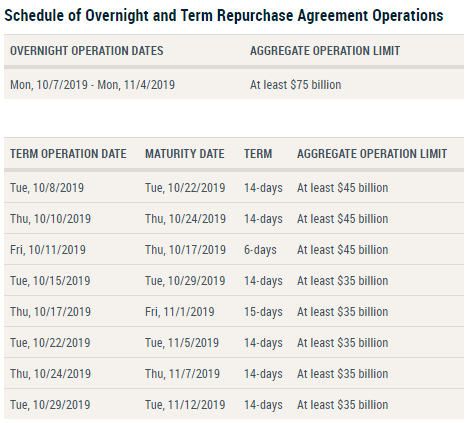
Federal Reserve extends bank support program until Nov. 4
In September, the U.S. central bank suddenly had to intervene, as liquidity in the banking sector was at risk of drying up. The interest rate that banks charged each other for short-term loans rose to 10% in a short period of time, much higher than the level that the Federal Reserve is trying to maintain. In order to get interest rates back within the bandwidth, the central bank decided to open the emergency window. This was the first time since the outbreak of the credit crisis in 2008.
Initially, the liquidity problem was not assessed too seriously. Banks temporarily had a greater need for liquidity, as companies withdrew money from their accounts to pay taxes. This phenomenon often causes tightness in the money market, but usually at the end of a quarter or year.
The fact that the central bank continues to provide liquidity support to banks suggests that there is a fundamental problem. With $75 billion in emergency liquidity on a daily basis and with a series of 14-day Repurchase agreements From $30 billion to $45 billion, the Federal Reserve has already injected a few hundred billion in liquidity support into the banking sector in less than a month.
In exchange for the emergency support, the Federal Reserve places government bonds and mortgage loans on its balance sheet. This has already undone part of the tapering of the past three years. This emergency move has helped the central bank regain control of interest rates, but it does call into question the health of the financial system.
This contribution comes from Geotrendlines