English
EN


The Federal Reserve is one step closer to monetary financing with its latest bond-buying program. In December, for example, the US central bank bought bonds that had been issued by the government just three days earlier. This makes the distinction between indirect and direct monetary financing of the government even more unclear. This is a dangerous development, because this form of debt financing via the printing press has caused hyperinflation on more than one occasion.
Publications of the U.S. Treasury and the Federal Reserve shows that the government offered a package of short-term government bonds on December 16, a large part of which was already on the central bank's balance sheet on December 19. The government auctioned $36 billion in government bonds with a maturity of six months. Of this, $23.7 billion ended up in the hands of the so-called Primary Dealers, big banks that are the first to buy the bonds. So far, nothing special, were it not for the fact that these bonds with identification number 912796SV2 were sent to the central bank a few days later. Offered.
Monetary financing, the direct purchase of new government bonds, is a cardinal sin in the world of central banks. That is why central banks opt for a more subtle method, in which they only buy debt securities that have been put into circulation earlier. They buy the debt securities on the secondary market, where other financial institutions also trade bonds. This also distorts price formation, but to a lesser extent than when a central bank buys debt directly.
The Fed is operating with its latest Buyback program Only in the secondary market, but the limit with direct monetary financing is very close in this way. Is it a coincidence that the central bank withdraws a government loan from the market within three days? Or does it say something about the liquidity position of Primary Dealers, the banks that buy the debt securities first? It is a worrying development.
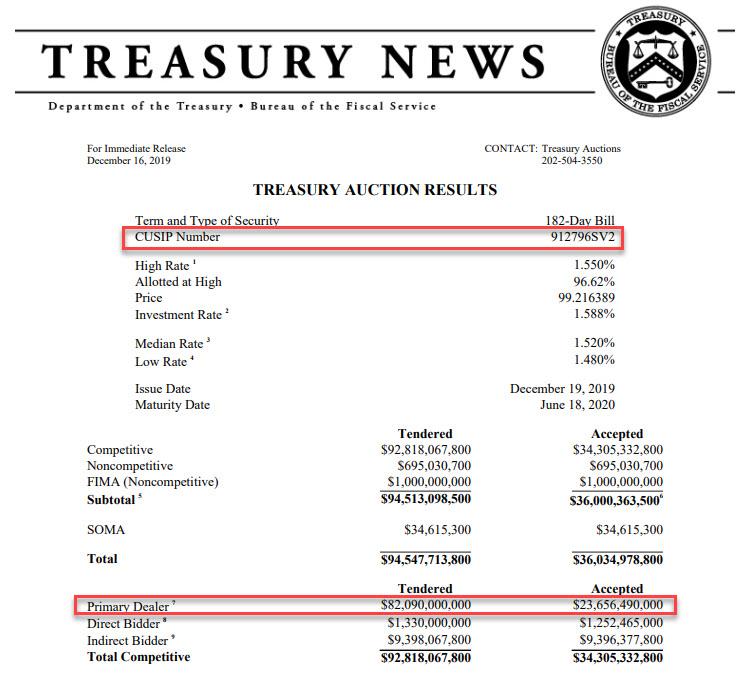
The U.S. government auctioned off a series of short-term government bonds on December 16... (Source: U.S. Treasury)
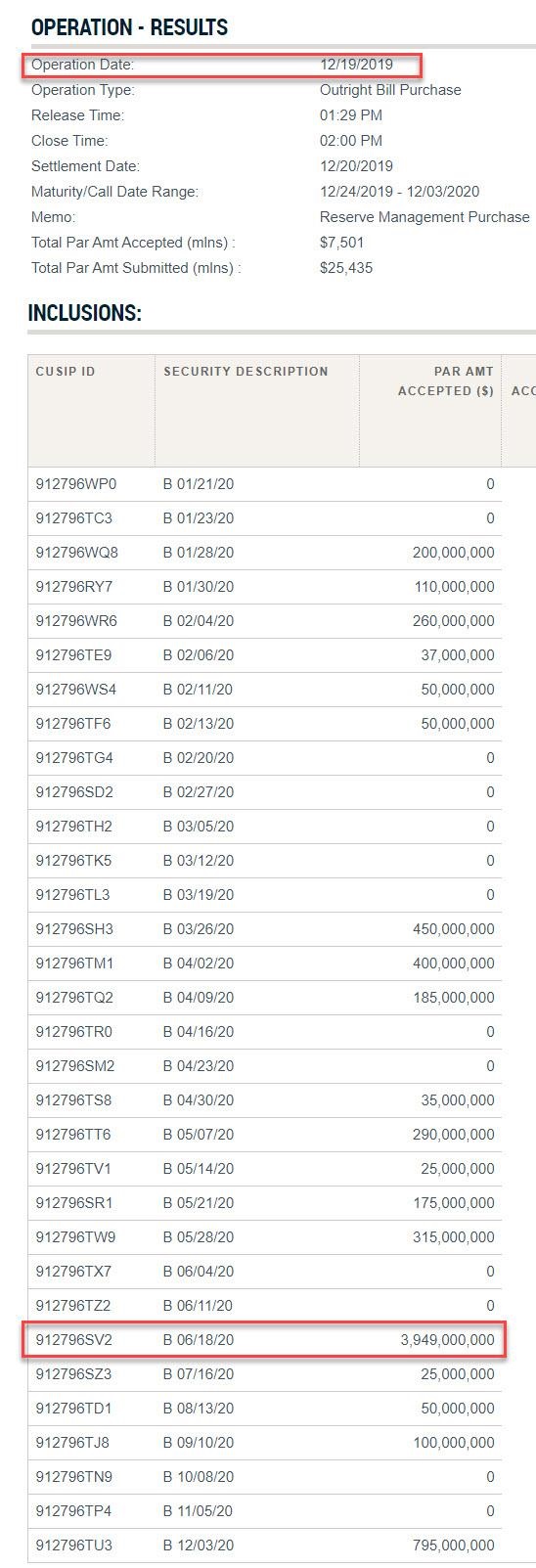
... which were already offered at the Fed's window a few days later (Source: Federal Reserve)
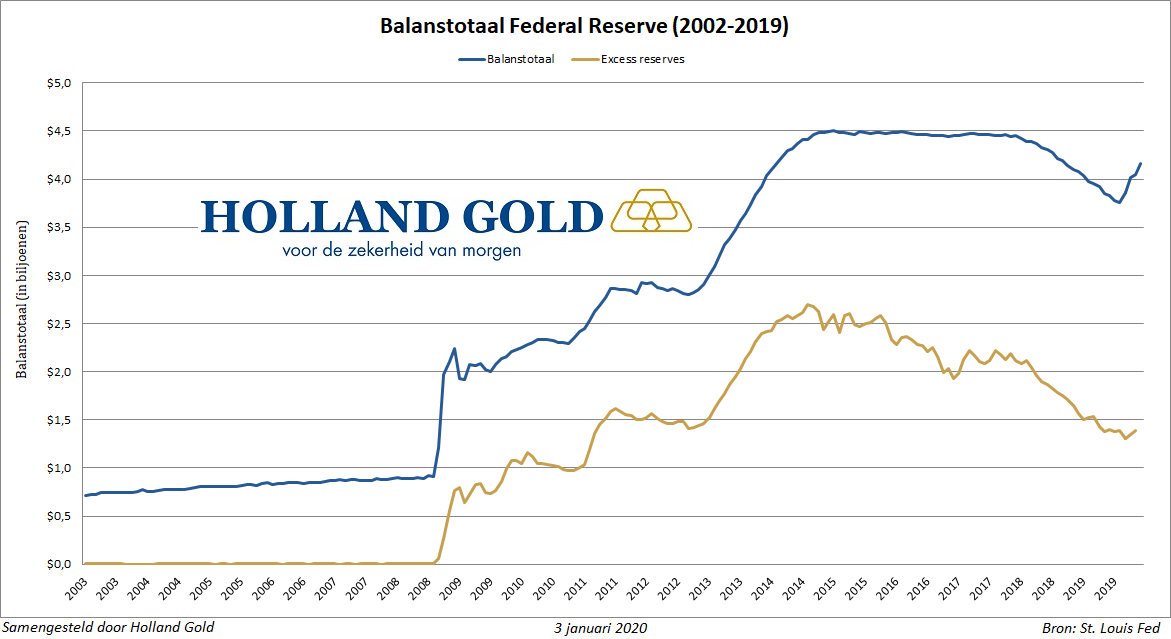
Federal Reserve's balance sheet total has risen sharply since September (Source: St. Louis Fed)
This contribution comes from Geotrendlines