English
EN


By: Frank Knopers
In ancient Egypt, gold was a divine metal. Think, for example, of the golden mask of Pharaoh Tutankhamun. Egyptians also used the precious metal as a means of payment for a long time, namely in the form of coins. Gold and silver coins were the only means of payment until 1898, when the era of paper money began. But that is not the end of the precious metal's role, as the country has significantly replenished its gold reserves this year.
Egypt's central bank has already started to buy gold cautiously in recent years. As a result, the gold stock grew from about 76 tons to 80 tons. But this year saw its biggest purchase in decades, as the central bank bought a total of 44 tonnes of gold in February and March. That's an increase of more than 50%, as the graph below shows. As a result of this purchase and an increase in the Gold price the share of gold in Egypt's total reserves has almost doubled since the beginning of this year to 20%. 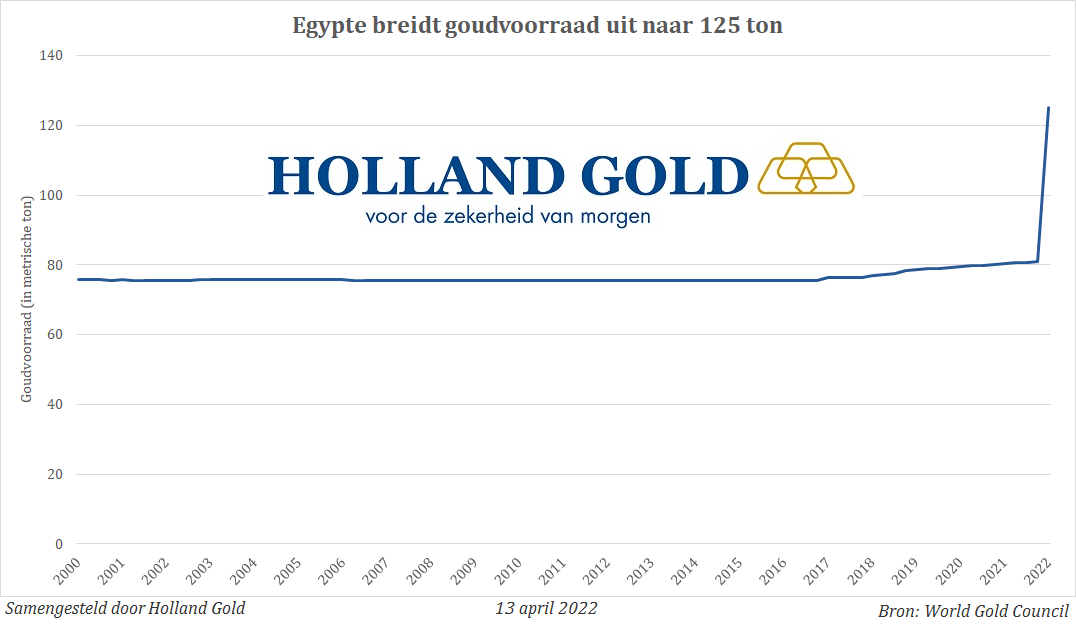
Egypt adds 44 tonnes of gold to reserves
More and more countries are expanding their gold reserves or bringing them back to their own countries. The precious metal has no counterparty risk and is a safe haven in times of geopolitical and economic uncertainty. In an era of high inflation and economic warfare, it is important for all economies to keep some gold on hand.
Countries that bought a lot of gold last year were Thailand (+90 tonnes), Hungary (+63 tonnes), Brazil (62 tonnes) and Singapore (+26 tonnes). With the purchase of 44 tonnes, Egypt also joins the list of countries that are adding gold to their reserves on a large scale. It is a global trend, in which more and more countries are participating. Last year, a World Gold Council survey of central banks found that half of them expect central banks' total gold reserves to increase. That survey also found that 21% of central banks plan to buy more gold. Are central banks preparing for a monetary reset?
This contribution comes from Geotrendlines
 Have a look at us YouTube channel
On behalf of Holland Gold, Paul Buitink and Joris Beemsterboer interview various economists and experts in the field of macroeconomics. The aim of the podcast is to provide the viewer with a better picture and guidance in an increasingly rapidly changing macroeconomic and monetary landscape. Click here to subscribe.