English
EN


The ECB will keep interest rates at this extremely low level for a very long time, as a result of the told ECB President Mario Draghi this week ahead of a G20 meeting in Washington. In doing so, he ignores Germany's desire to accelerate the tapering of monetary stimulus. Draghi added that interest rates will remain low long after the tapering of the QE program.
The ECB's official interest rate decision will not take place for another two weeks, but with these statements, the chance of a rate hike seems minimal. However, it is possible that the central bank will take a new step on October 26 to taper the €60 billion per month stimulus program.
Since the spring of 2015, the central bank has been buying tens of billions worth of bonds every month to keep interest rates low. Initially, it was only government bonds, but now the central bank also buys debt securities from various large European companies.
Since the outbreak of the financial crisis, the ECB, like many other central banks, has opened the money tap wide. But now that the economy is picking up again, the call to phase out the stimulus policy is increasing.
According to critics of the ECB's policy, the wide availability of credit and extremely low interest rates are leading to new bubbles in bonds, equities and real estate, among other things. Earlier this week, the president of the German central bank, Jens Weidmann, expressed his concerns about the ECB's monetary policy. In an interview with the German newspaper Wirtschaftswoche, he said the following:
"Extremely low interest rates should not last too long. In an upward economic cycle, the monetary money tap should be turned off quickly and consistently."
Opponents of the ECB's accommodative monetary policy warn of the danger of rapidly rising inflation. For the time being, this danger is not apparent from the official inflation figures, but from stock prices and house prices in large parts of the Eurozone. To prevent these kinds of bubbles, critics say the central bank should now, like the Federal Reserve, slowly turn off the money tap.
In recent years, central bank policies have proved to be very decisive for the Gold price. Precious metals prices seem to have been under pressure in recent months, as investors expect the Federal Reserve to deliver another interest rate hike later this year.
With persistently low interest rates in the eurozone, it is becoming more interesting for savers to consider alternatives to the savings account. Buying gold is a way to diversify your investment portfolio and to build in a hedge against increased geopolitical risks.
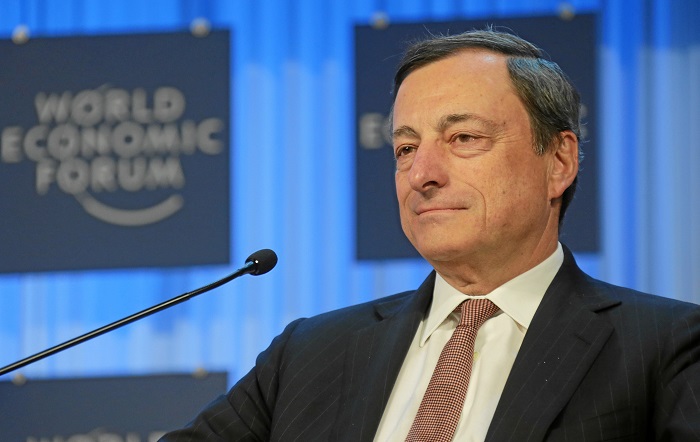
Draghi: "Interest rates will remain low for a very long time"