English
EN


Central banks have the proverbial money tap wide again opened. The ECB started buying government bonds again in November, while the Federal Reserve had to intervene in September to ensure liquidity in the money market. Meanwhile, the Bank of Japan continues to expand its balance sheet to include bonds and equities. The balance sheet total of these three central banks will therefore increase sharply in the coming months. According to Bloomberg, even at the fastest pace since the end of 2017.
The market expects central banks to taper these support measures in the course of next year. The ECB will continue to buy €20 billion a month in bonds for the time being, while the Federal Reserve wants to gradually reduce its new asset purchase program to $15 billion a month. Despite this, the three largest central banks are stimulating for $50 billion per month well into 2020, as the chart below shows.
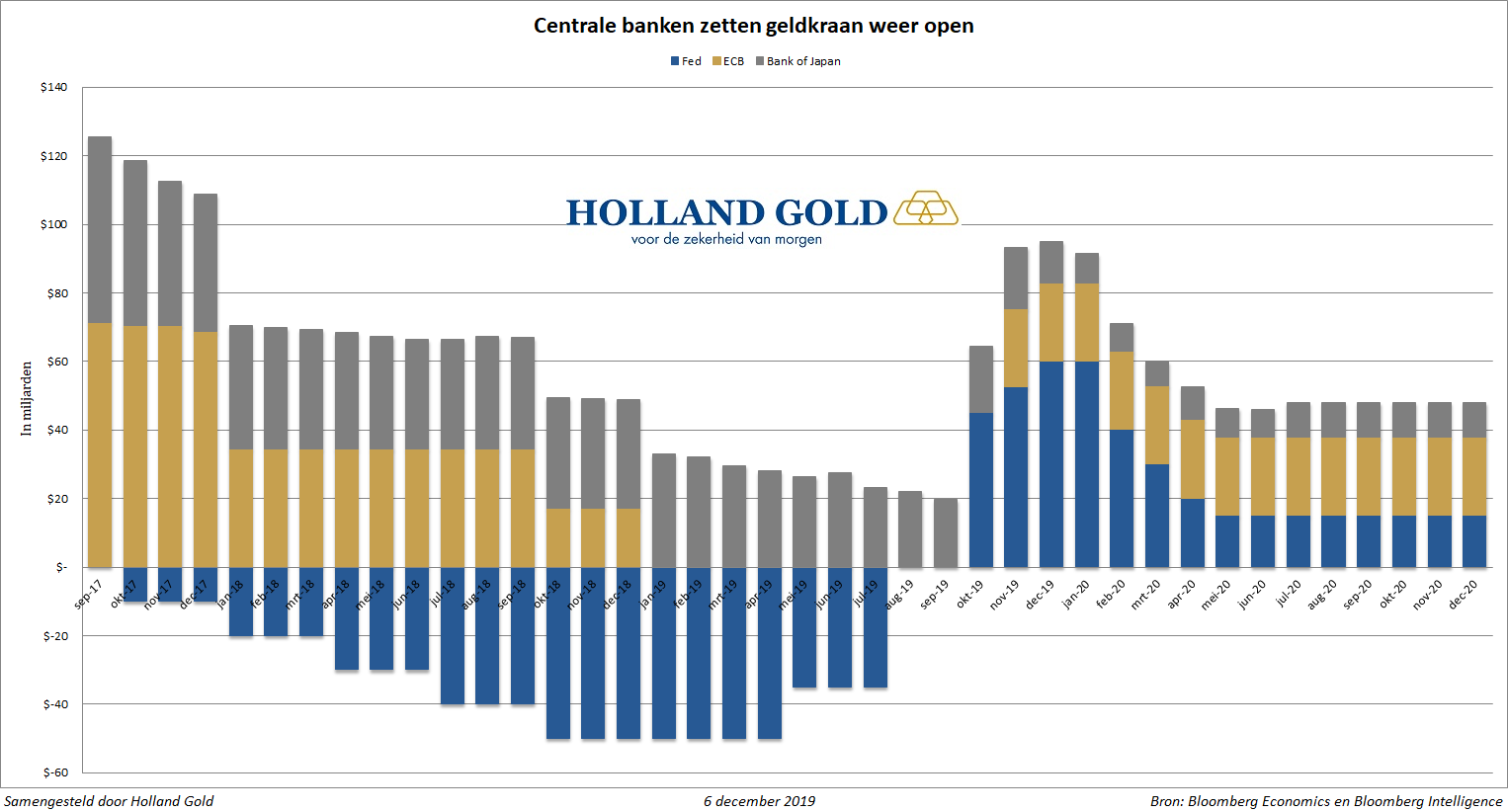
Central banks open the money tap wide again
Until a few months ago, investors thought central banks would stop stimulating. The ECB had already stopped buying government bonds at the end of last year, while the Federal Reserve was increasingly withdrawing liquidity from the market. That suddenly changed in September with the announcement of a new stimulus programme by the ECB. Also, both the ECB and the Fed cut interest rates.
The next shock came on September 17. Liquidity in the money market dried up, with the result that the interbank rate in the US suddenly rose to 10%. To prevent an acute liquidity crisis, the US central bank intervened by bring liquidity to the market. Repo operations brought $340 billion in liquidity to the market in just three months. As a result, the Fed's balance sheet total has returned to the level of the beginning of this year.
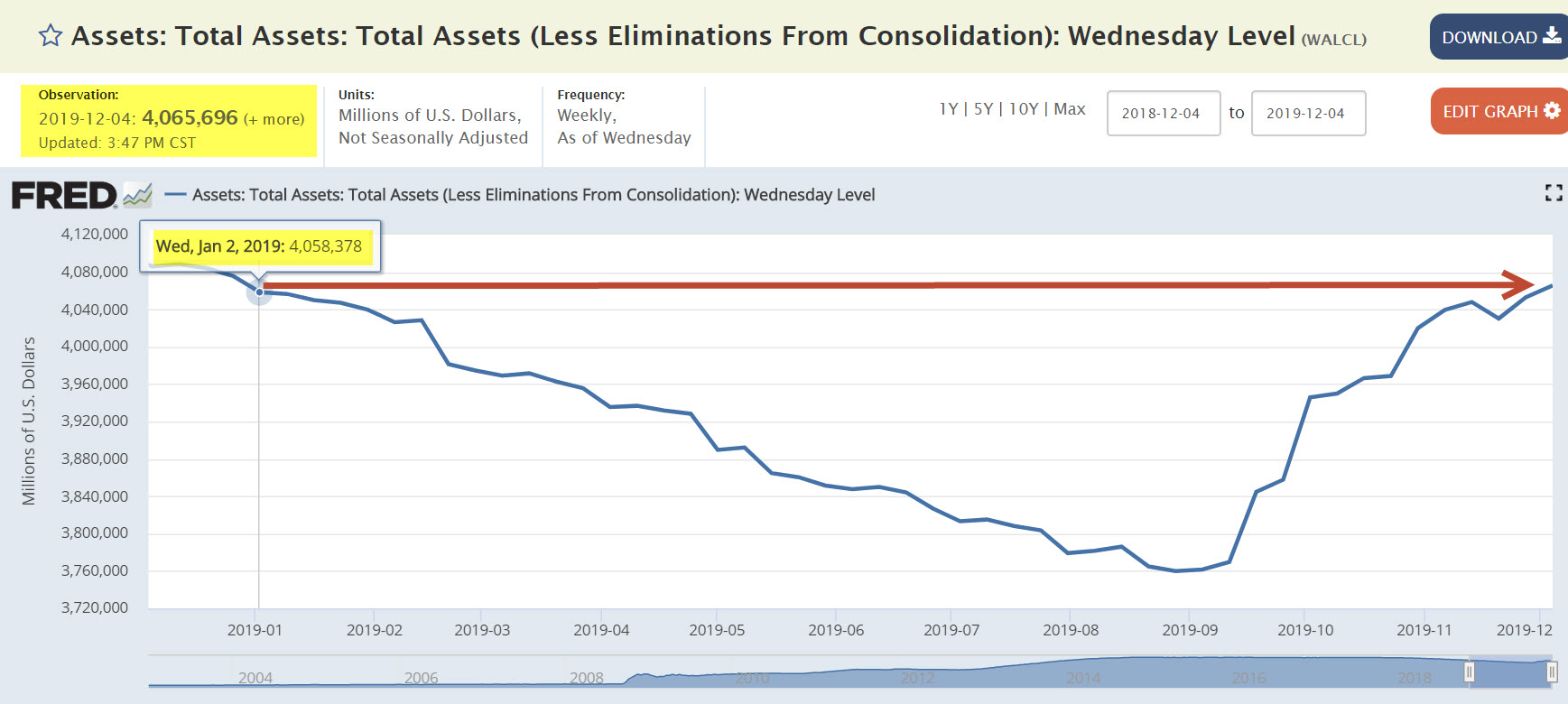
Federal Reserve balance sheet total (Source: St. Louis Fed)
In addition to providing emergency liquidity through repo operations, the Fed also issued a new Buyback program. The central bank wants to buy bonds at least until the second quarter of next year, to ensure sufficient reserves in the banking system. In addition, the aid operations were Extended and expanded. The graph below shows how much liquidity has already been brought into the money market via repo.
The Fed emphasizes that these interventions are not a form of 'quantitative easing' be. Unlike previous asset purchase programmes, this one is not aimed at stimulating the economy. Instead, the central bank addresses liquidity problems in the interbank money market. The question is whether investors also make this distinction. They see the balance sheet total rising and think that this will also give a boost to the stock market.
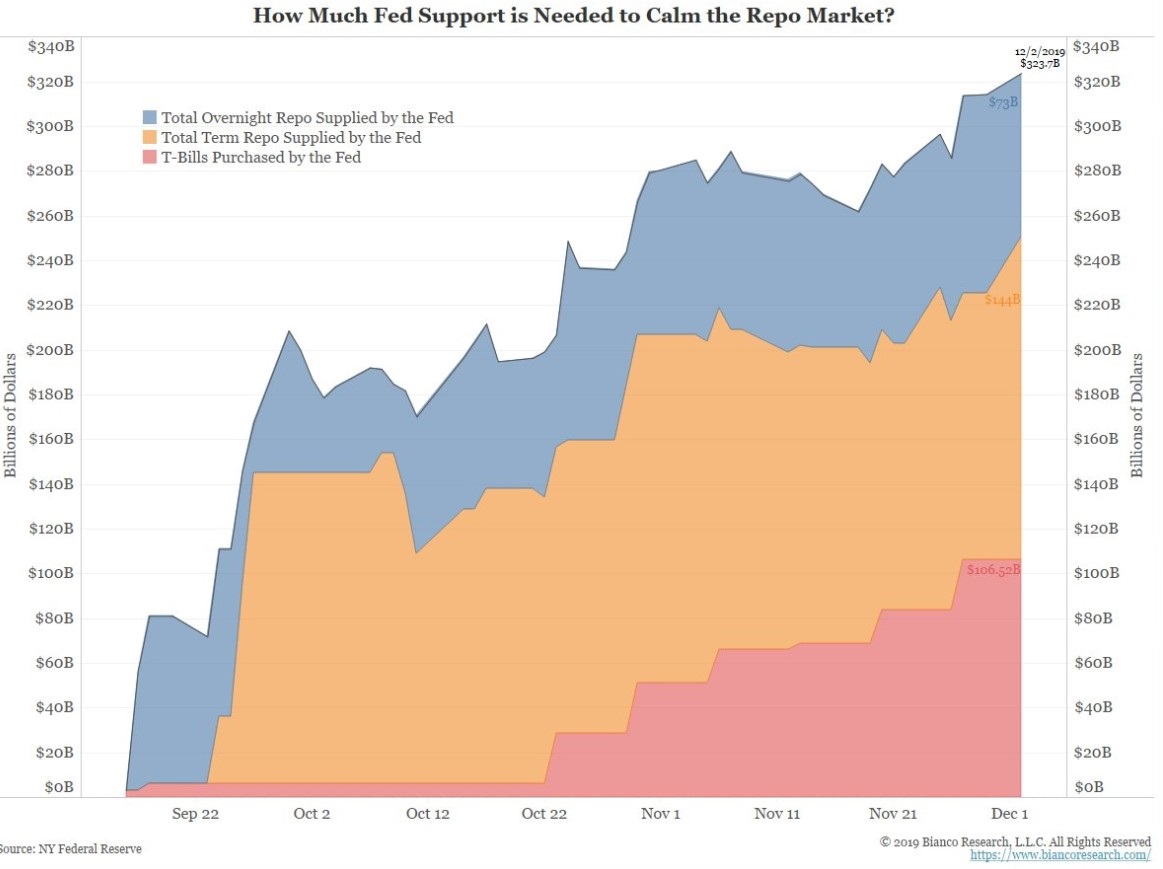
Fed has already put more than $300 billion in liquidity into the market (Source: Bianco Research)
This contribution was made from Geotrendlines