English
EN


Central banks again added gold to their reserves in February added, despite Turkey's sale of gold. The World Gold Council recorded purchases by India (11.2 tonnes), Uzbekistan (7.2 tonnes), Kazakhstan (1.6 tonnes) and Colombia (0.5 tonnes), while Turkey sold some bullion (11.7 tonnes). This means that, on balance, central banks' gold holdings rose by 8.8 tonnes in February. A month earlier, central banks were still selling gold.
Several central banks have been adding gold to their reserves in recent years. For example, India active in the gold market again since 2009, while Uzbekistan and Kazakhstan have been buying gold for much longer. Over the past decade, Eurasian countries in particular have added precious metals to their reserves, because they had relatively few gold reserves. Russia and China have been the biggest buyers of the precious metal over the past decade. Other countries on the Eurasian continent have also replenished their gold reserves since 2009, as the overview below shows.
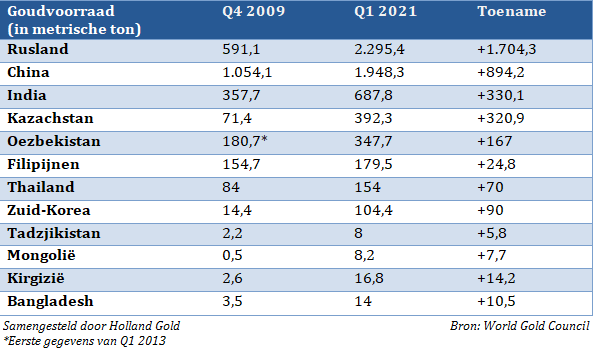
Eurasian countries have bought a lot of gold in the last decade
Central banks see the precious metal as a valuable reserve, because it has no credit risk or counterparty risk. Unlike currency reserves, gold can be traded at any time, as it is not easy to block through sanctions. The precious metal also forms a solid basis with which to build a new monetary system. Since the 2008 financial crisis, European central banks have stopped Selling gold, while emerging economies replenished their gold reserves.
More recently, we have also seen renewed interest in gold in Europe. For example, Austria, Poland and Hungary returned part of their gold reserves to their own countries, while the latter two also added a lot of precious metal to their reserves. Also Serbia has been buying gold in recent years, while in Slovakia calls to repatriate the gold stockpile. Czech Republic decided last year to buy gold again for the first time in more than twenty years. Due to geopolitical tensions and concerns about the stability of the monetary system, more central banks are seeking refuge in the precious metal.
Since the corona crisis, however, central banks have been buying less gold on balance. The central banks of Russia and China have stopped buying precious metals for some time, even though they have been the biggest buyers over the past decade. At the same time, due to the corona crisis, more countries are having to sell gold to maintain their currency reserves. Countries use their foreign exchange reserves to defend the value of their currency and pay for the import of goods.
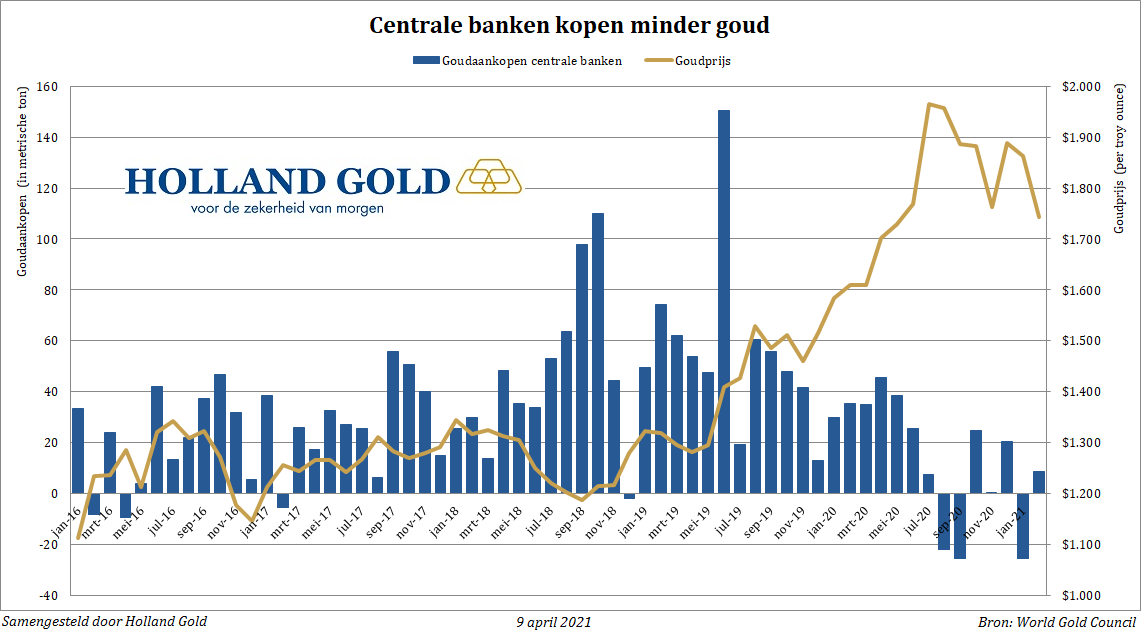
Central banks have been buying less gold in recent months
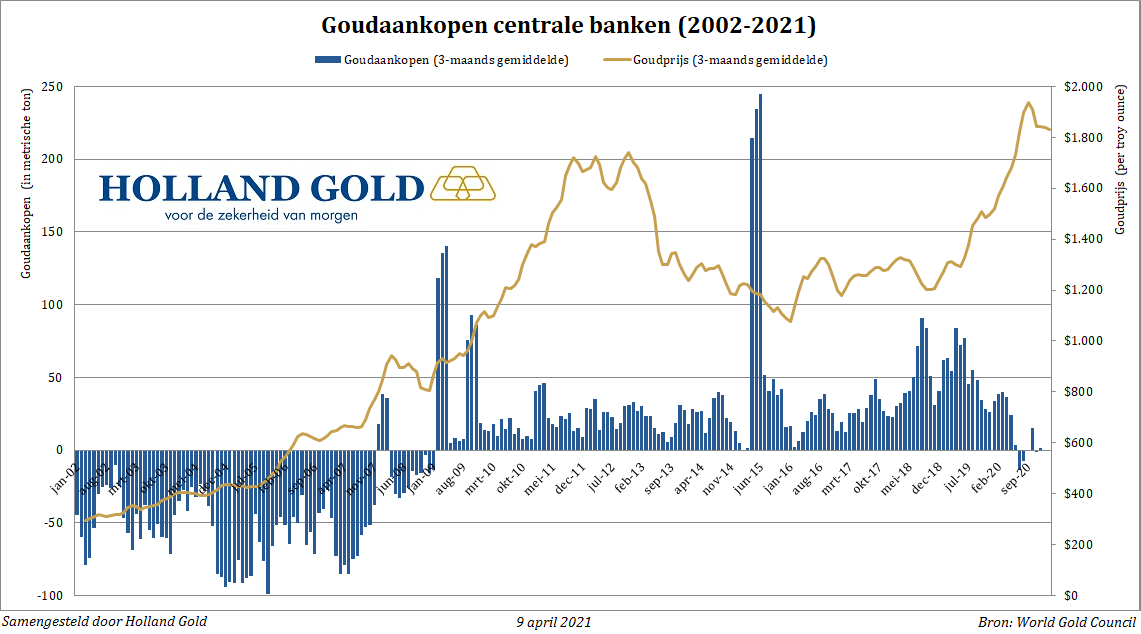
Until the financial crisis, central banks sold gold, since then they have been buying more
This contribution was made from Geotrendlines