English
EN


Central banks added 39.8 tonnes of gold to their reserves in May added, according to new figures from the IMF. That's similar to gold purchases in recent months, but less than the purchases of the past two years. Since the beginning of this year, central banks worldwide have bought a net 181 tonnes of gold, about 30% less than in the same period last year. It is also striking that the number of central banks buying gold has fallen in recent months, contrary to the outcome of an earlier poll by the World Gold Council.
Turkey added 36.8 tonnes to its reserves in May, making it the largest buyer. Uzbekistan increased its gold reserve by 6.8 tonnes to a total of 342.8 tonnes, coming in second place. Russia bought only half a ton of gold, while other major buyers such as China and Kazakhstan did not make any purchases in May. Mongolia's central bank sold 3.3 tonnes of gold, making it the only significant seller during this period.
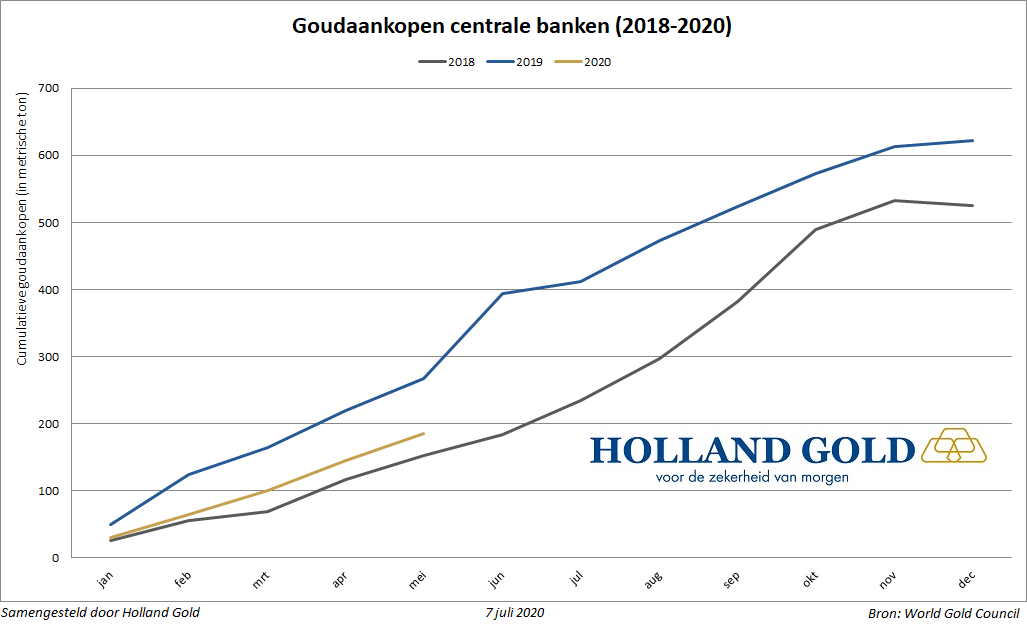
Central banks continue to buy a lot of gold, but less than last year
From a Survey of the World Gold Council among central banks found that 20% of them plan to buy gold in the next twelve months. The extremely low interest rates on government bonds and the desire to diversify their reserves are the main arguments for this. The survey showed that more central banks are recognizing the added value of gold, also because it has no counterparty risk.
The World Gold Council writes the following in an update:
"As we have said before, we expect central banks to still be net buyers this year, but their level of purchases will be lower than the record levels of 2019 and 2018. So far, net purchases have indeed been lower, but we have seen several central banks allocate more reserves to gold in 2020. Since the beginning of this year, five central banks have increased their gold reserves by a tonne or more."
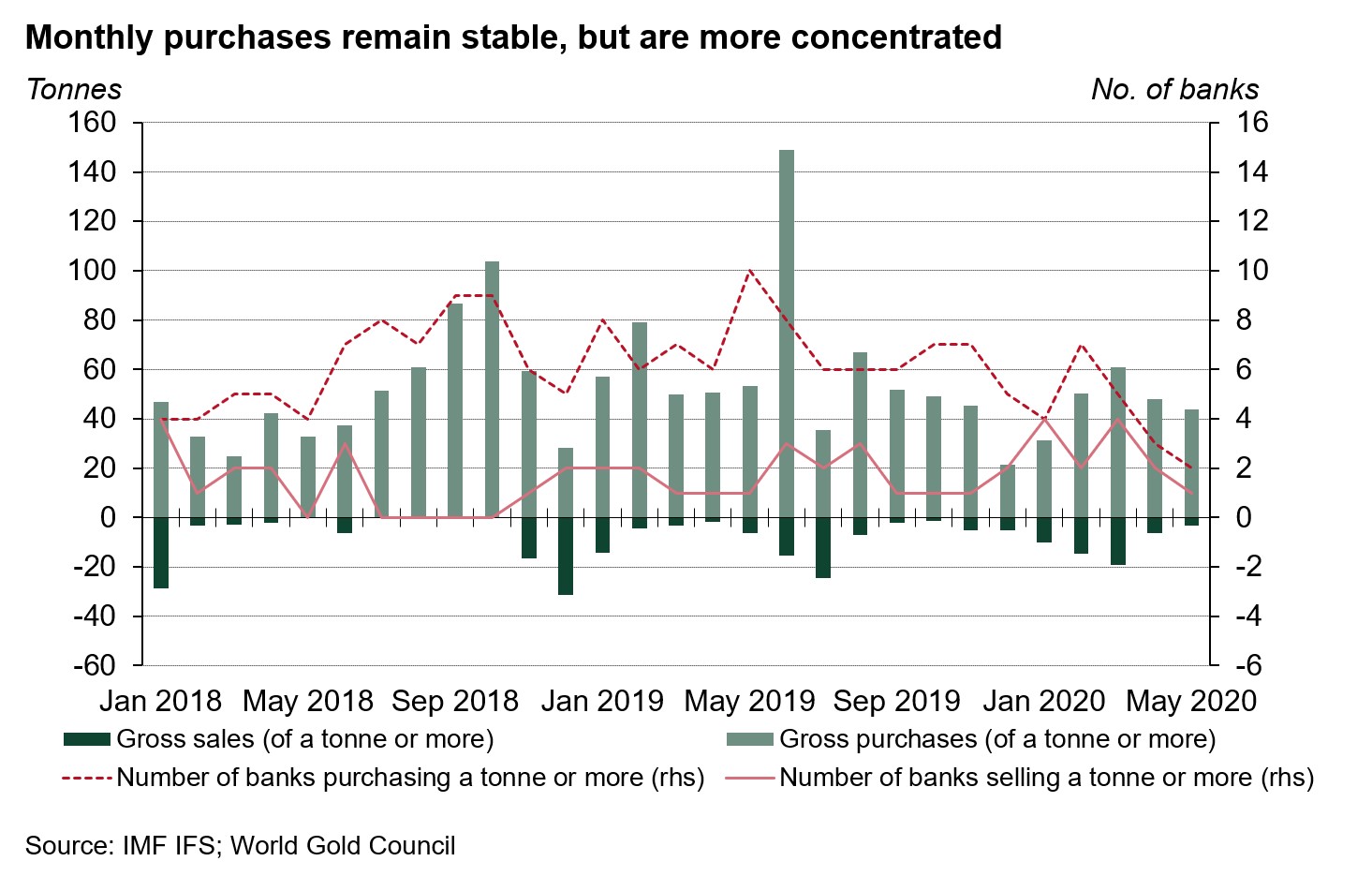
Fewer central banks are buying gold (Source: World Gold Council)
This contribution was made from Geotrendlines