9.3
8.521 reviews

English
EN


More central banks are planning to buy gold this year. A new survey by the World Gold Council Among central banks, it appears that 20% of them are considering adding precious metal to their reserves in the next twelve months. That's much more than a year ago, when only 8% planned to expand gold stockpiles. This increase is striking, given that central banks have already bought a record amount of gold over the past two years.
The survey shows that most central banks that want to buy gold do so because of negative interest rates on government bonds. As a result, it is less attractive to hold foreign exchange reserves. Interest rates are expected to remain low in the coming years, as central banks support the bond market with billions. This has a downward effect on the interest rate on government bonds.
It is also worth noting that more central banks are recognizing the added value of gold as a form of diversification. For example, 79% of respondents indicate that the return of gold in times of crisis is an important reason to hold gold. By comparison, last year this was only 59% of all central banks surveyed. The percentage of central banks that see the precious metal as an effective form of diversification also increased, from 50% last year to 64% this year.
Another reason why central banks Buy gold is that the precious metal has no counterparty risk. Last year, 59% of central banks indicated that this is important, this year that share is much higher at 74%. For 63% of central banks, the lack of political risk is a major reason to hold gold, the same percentage as last year.
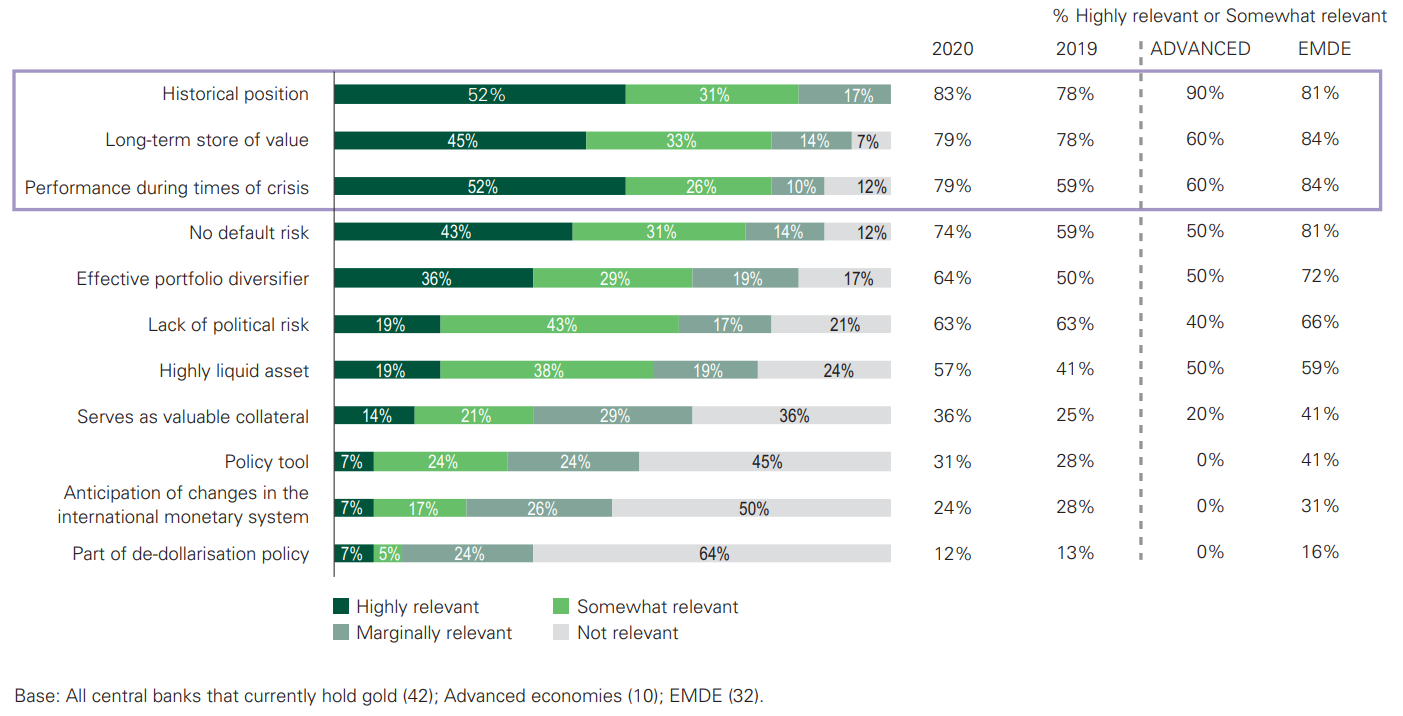
Why do central banks hold gold stocks? (Source: World Gold Council)
Central banks have been Net Buyers of Gold. It is no secret that they are doing so in preparation for an extreme scenario, in which government bonds no longer offer security. The Dutch Central Bank says on its website that gold is Trust Anchor because it always retains value. If the whole system collapses, the gold supply will provide collateral to start over, according to the central bank. That is also the reason why emerging economies in particular are buying gold. Their gold reserves are still relatively low compared to those of many Western countries.
It is also striking that central banks are improving the quality of their gold stocks by melting down old coins and bars into gold bars with the highest purity. The so-called Good Delivery gold bars of 400 troy ounces (about 12.5 kilograms) are the most popular. This format is the standard for central banks and is therefore easy to trade on the international market.
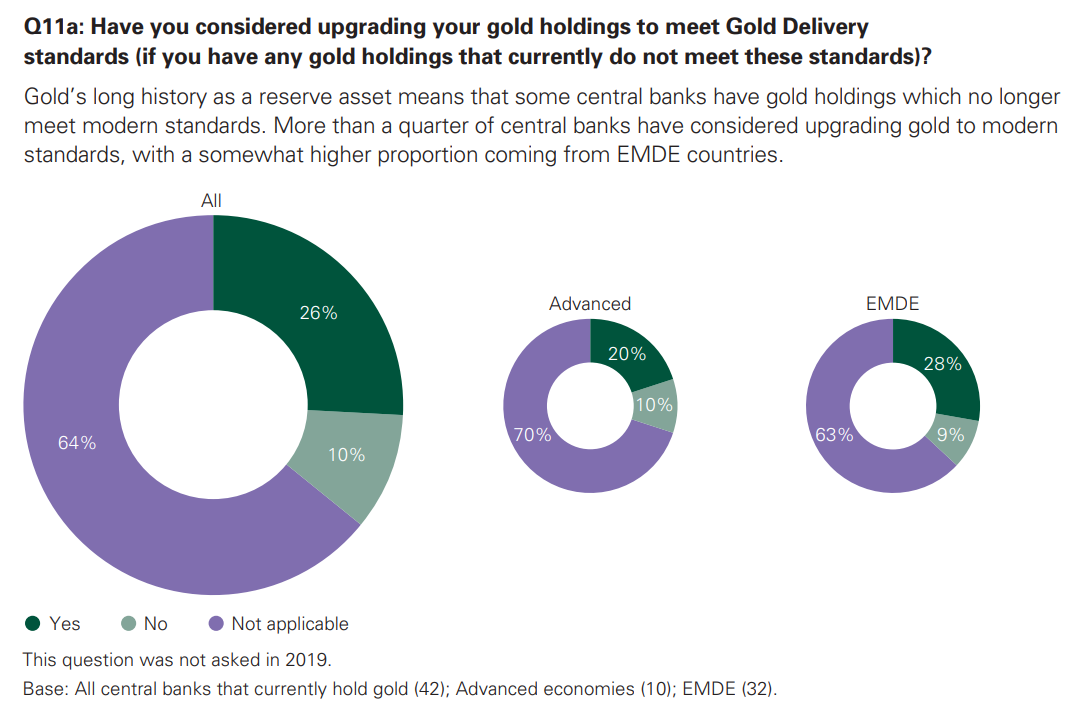
A quarter of central banks are considering clearing gold stocks (Source: World Gold Council)
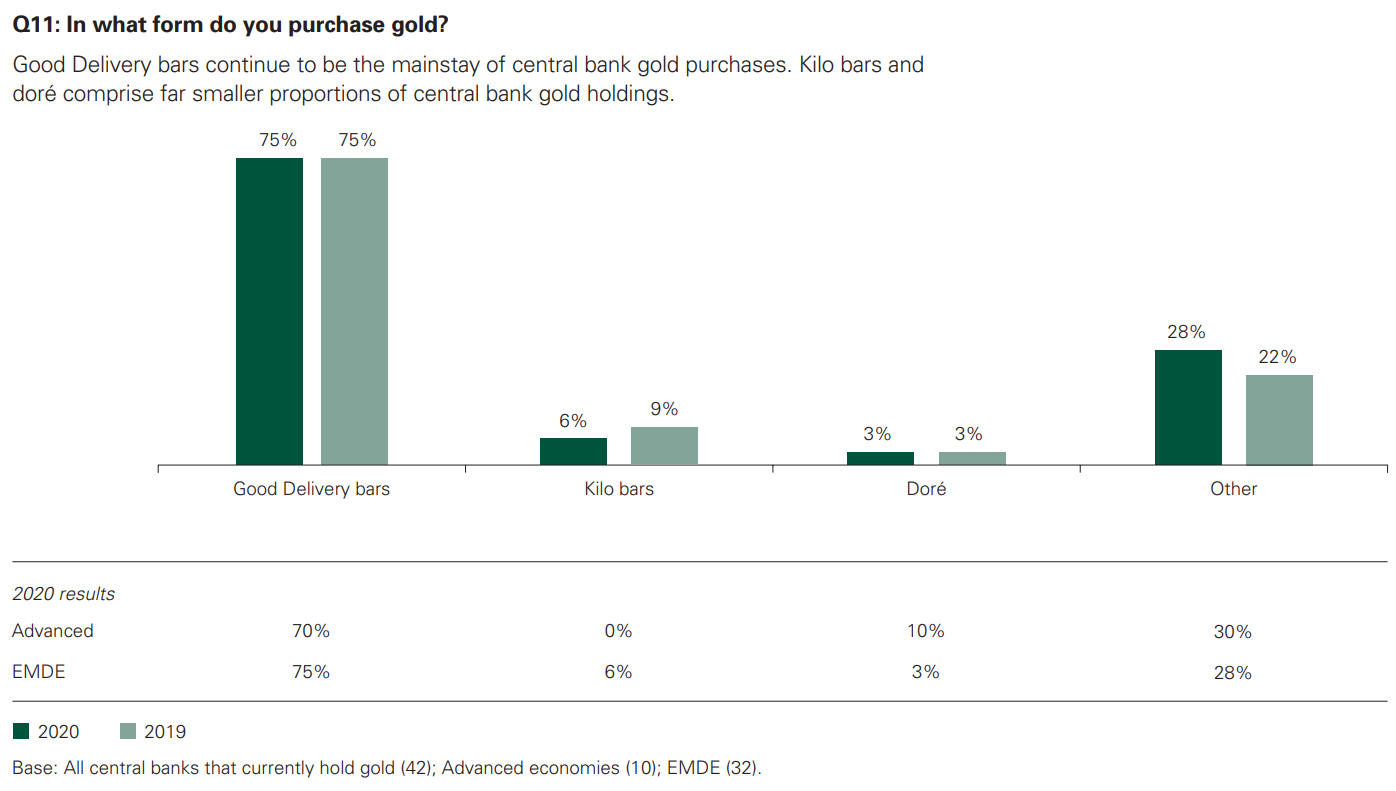
Central banks mainly buy Good Delivery gold bars of 400 troy ounces (Source: World Gold Council)
This contribution was made from Geotrendlines


