English
EN


By:Frank Knopers
Central banks added gold to their reserves again in May. They bought 35 tonnes of gold net, according to new figures from the World Gold Council. It was the second month in a row in which central banks replenished their stocks. The largest buyers were Turkey (13 tonnes), Uzbekistan (9 tonnes), Kazakhstan (6 tonnes), Qatar (5 tonnes) and India (4 tonnes). Germany withdrew two tons of gold from its stock to mint collectible coins.
Due to the corona crisis, many central banks stopped Buy gold, especially in emerging economies. Their revenues declined, leaving fewer reserves to expand gold reserves. But as geopolitical turmoil mounts, we see central banks returning to gold. Countries such as Kazakhstan and Uzbekistan, which had to sell precious metals at the beginning of this year, are now returning to the market as buyers.
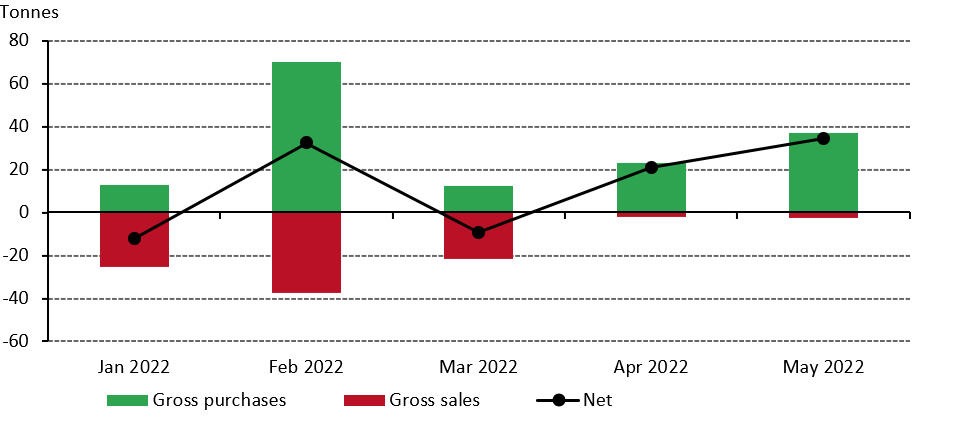
Central banks are buying more gold again (Source: World Gold Council)
In the last ten years, Russia and China have been the most active in the gold market. They bought hundreds of tons of gold to diversify their reserves. And that turned out to be a good idea, because part of the Russian central bank's currency reserves were frozen this year due to Western sanctions. Gold has no counterparty risk and is traditionally a safe haven in uncertain times. Not only for individuals, but also for central banks.
Since the beginning of this year, the central banks of Turkey (56 tonnes), Egypt (44 tonnes) and Iraq (34 tonnes) have been the most active on the gold market. India, Ireland and Ecuador complete the list of buyers. The list of sellers includes many countries that previously added a lot of precious metal to their reserves. Think of Poland, Russia and the aforementioned Uzbekistan and Kazakhstan. These countries have sold gold this year, possibly to free up some cash or to take advantage of the high Gold price.
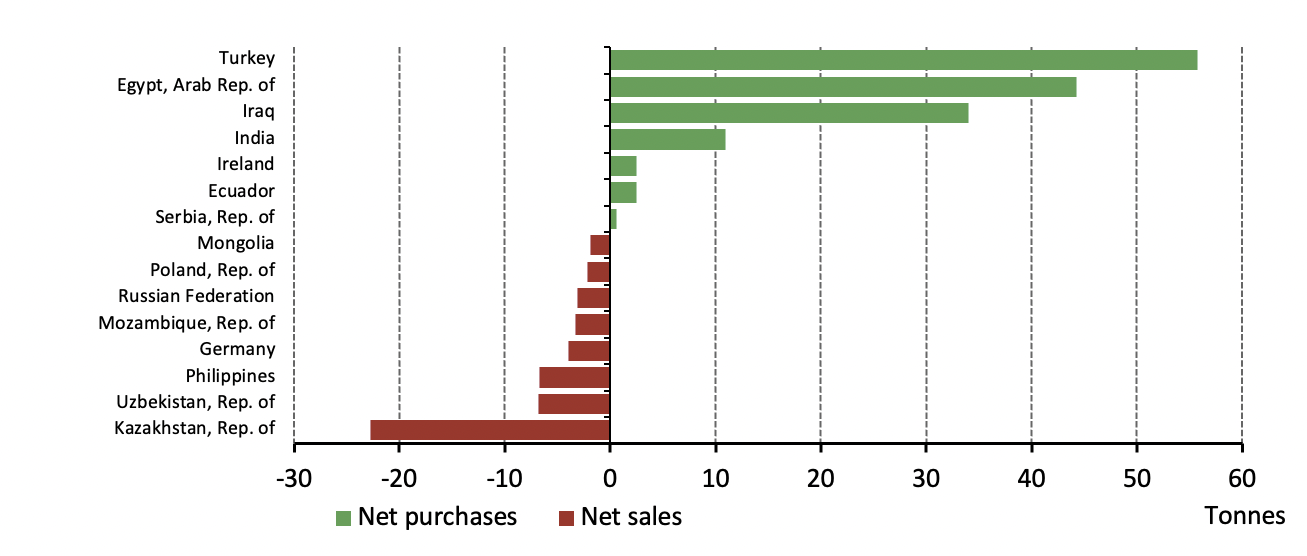
Turkey, Egypt and Iraq in particular bought a lot of gold this year (Source: World Gold Council)
In recent years, we have written a lot about gold purchases from Russia. The country now has a gold reserve of about 2,300 tonnes, which is more than 20% of its reserves. But due to the war in Ukraine Considering the country will no longer publish figures on the size of its reserves. A new bill passed by the State Duma at the end of June states that it will no longer report figures on gold and currency reserves to the IMF.
This contribution comes from Geotrendlines
 Have a look at us YouTube channel
On behalf of Holland Gold, Paul Buitink and Joris Beemsterboer interview various economists and experts in the field of macroeconomics. The aim of the podcast is to provide the viewer with a better picture and guidance in an increasingly rapidly changing macroeconomic and monetary landscape. Click here to subscribe.