9.3
8.887 reviews

English
EN


Central banks bought less gold in January than last year's average, according to New figures of the World Gold Council. In total, they bought 21.5 tonnes of gold in the first month of the new year, a decrease of 57% compared to January last year. It is also more than half the monthly average of 52.3 tonnes for the whole of 2019.
The largest buyers were Turkey and Russia with 16.2 and 8.1 tonnes respectively. Kazakhstan and Mongolia both added one ton of gold to their reserves. On the sell side, there was also little activity to report. The only substantial sales came from Uzbekistan and Qatar, which sold 2.2 and 1.6 tonnes of gold, respectively.
According to the World Gold Council, it is still too early to speak of a change in trend. Central banks continue to Buy gold, but since August, monthly gold purchases have been steadily decreasing. This trend is somewhat distorted by a large-scale gold purchase by Poland in the first half of 2019, but even without this purchase there is a slight downward trend. We cannot yet draw any conclusions from this, because central banks take a long-term view and manage assets in a different way than an investment fund.
In 2018, central banks bought a Record amount of gold and almost managed to equal that record last year. Many new central banks entered the market to buy bullion. They then bought almost 20% of the gold supply. Juan Carlos Artigas of the World Gold Council's Research Department expected that this trend will continue this year. He recently said the following:
"This trend has been going on for a decade. We are seeing more awareness of the role that gold can play in foreign reserves. Central banks often cite safety and diversification as reasons to buy gold. In some ways, gold is a form of wealth that protects long-term reserves."
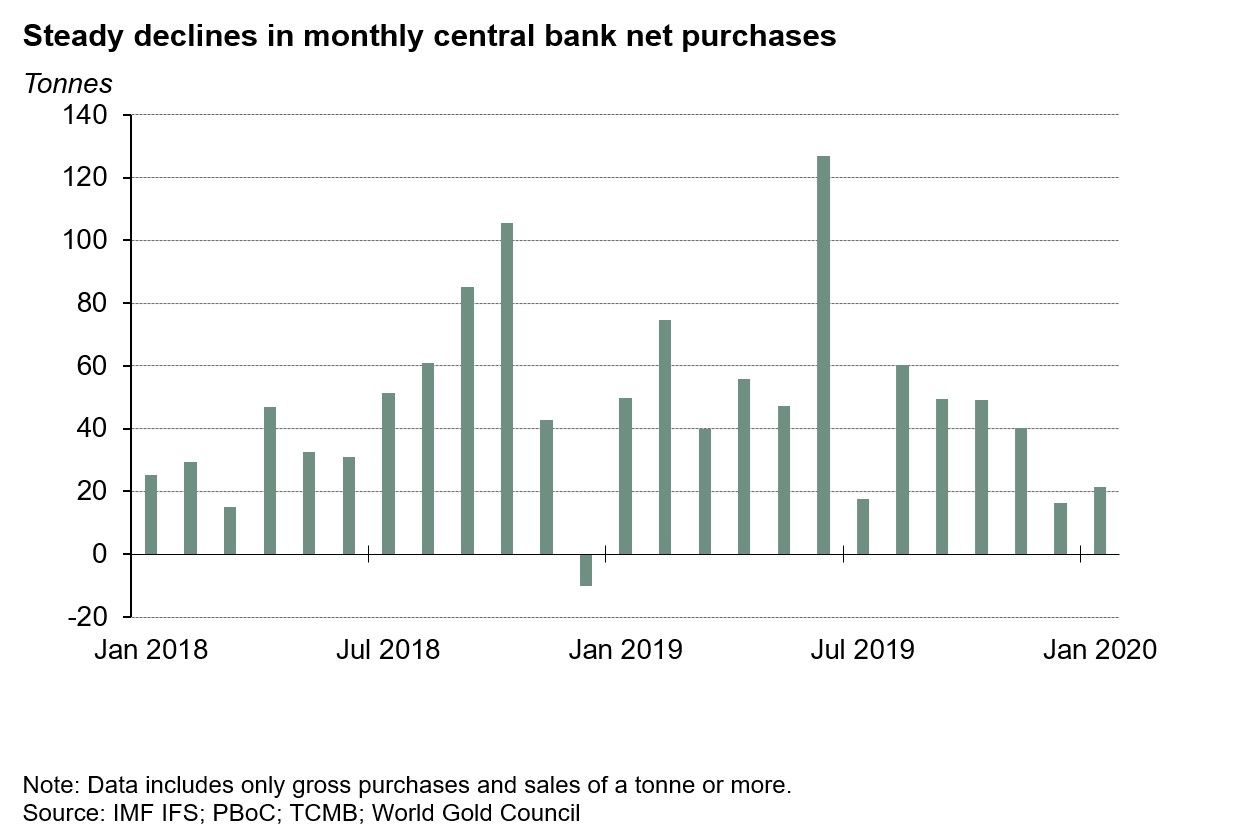
Central banks bought less gold in January than last year (Source: World Gold Council)
This contribution was made from Geotrendlines


