English
EN


Central banks have maintained their position as net gold buyers, adding a significant 55 tonnes to their reserves in July. While there was a small dip in monthly growth, mainly caused by a delayed registration of a 30-tonne purchase by the Central Bank of Libya in June, the long-term trend of growing gold reserves remains stable.
Two key points stood out in July's activities: first, relatively few banks adjusted their gold stocks; And second, those who did have made significant transactions.
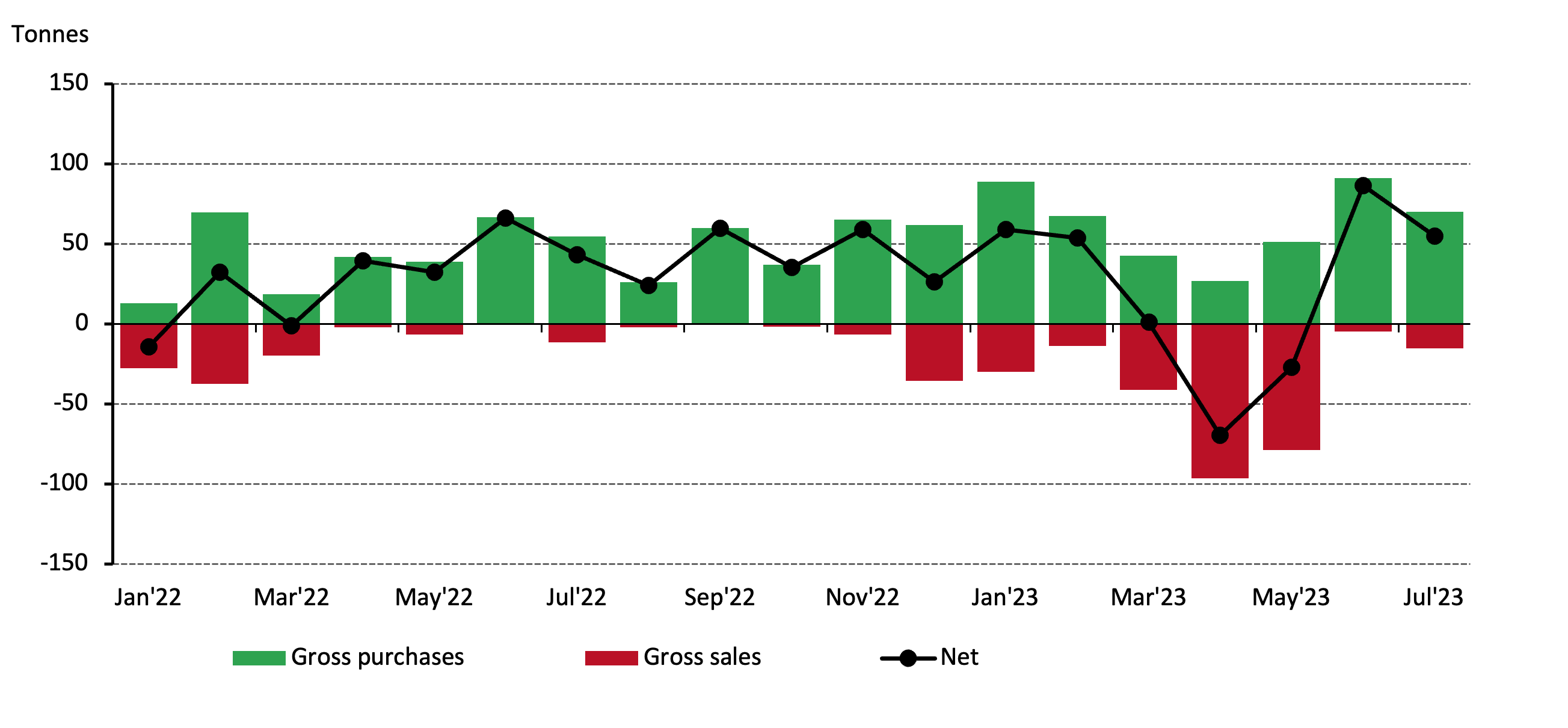
Central banks remained net buyers in July (Source: IMF)
The People's Bank of China (PBoC) once again took the top spot as the largest buyer, adding 23 tonnes during the month, solidifying its position as the biggest buyer of the year with a total of 126 tonnes. Since the bank began regularly reporting gold purchases in November, the PBoC has bought 188 tonnes, raising its total reserves to 2,136 tonnes.
The National Bank of Poland was also a prominent buyer, adding 22 tonnes of gold to its reserves in July. As a result of this purchase, Poland's total gold reserves have risen to 299 tonnes. July was the fourth month in a row in which Poland purchased net gold. During these four months, Poland added a total of 71 tonnes of gold to its reserves. The country is only 29 tonnes away from achieving its goal of increasing gold reserves by 100 tonnes.
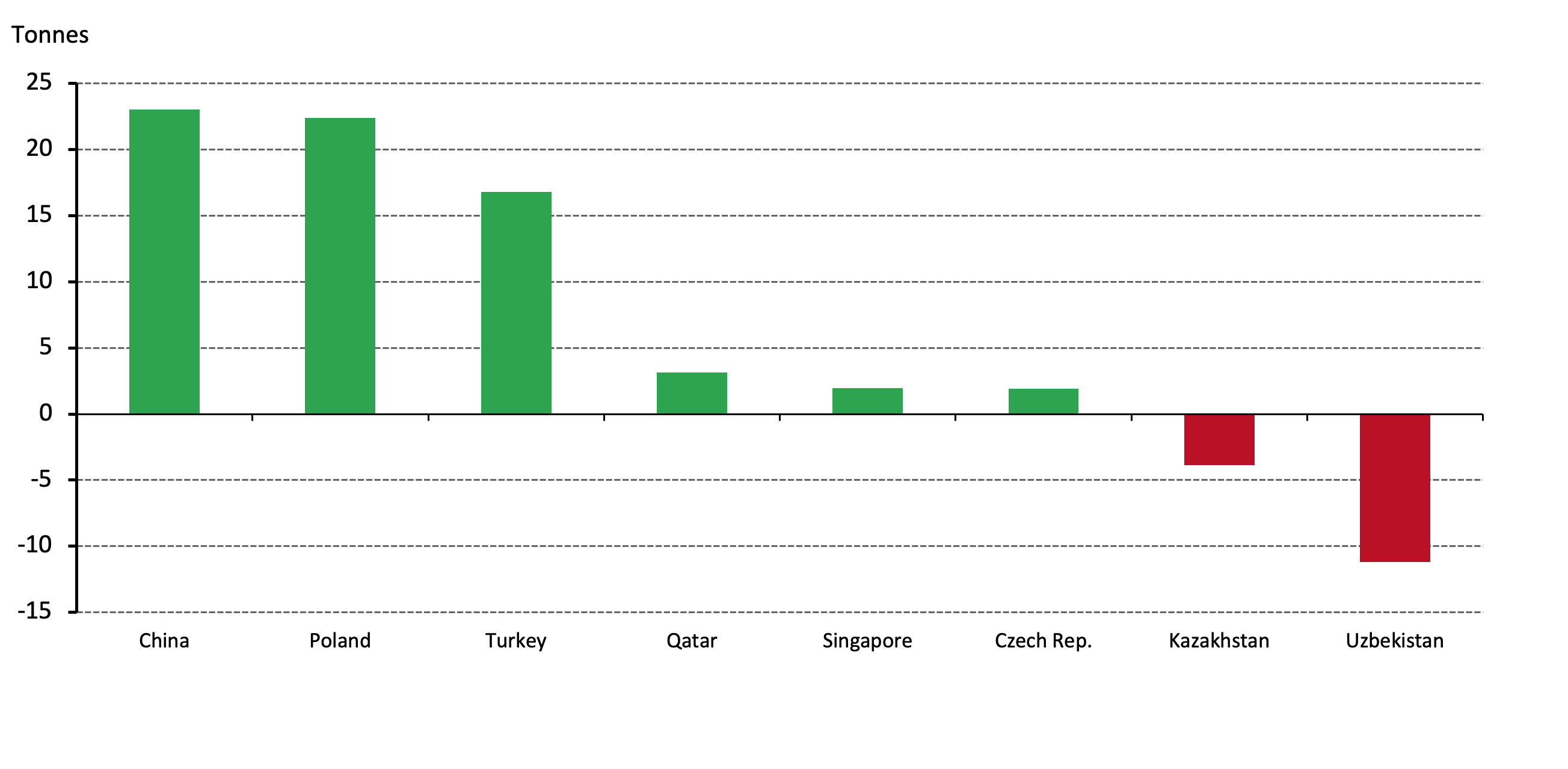 Purchases and sales were limited in July, but volumes were significant (Source: IMF)
The Central Bank of Turkey resumed its gold purchases and bought an additional 17 tonnes in July. In June, the bank had already switched to net purchases with an addition of 11 tonnes. Despite these recent purchases, Turkey remains a net seller on an annual basis, mainly due to significant sales between March and May. Qatar has also expanded its gold reserves with a purchase of 3 tonnes. Singapore and the Czech Republic have also increased their reserves, with a purchase of 2 tonnes of gold each.
In early August, Russia announced that it plans to resume purchases of foreign currency and gold, although the specific details about timing and size are still unclear. In July, there were fewer gold-selling central banks than gold-buying central banks, but sales volumes were nevertheless significant. The Central Bank of Uzbekistan sold 11 tonnes of gold. The National Bank of Kazakhstan sold 4 tonnes and Kazakhstan has openly communicated its intention to further reduce gold reserves by the end of the year.
After heavy selling, mainly from Turkey, monthly net purchases re-established in June and July. The strength of central bank demand for gold is undeniable and is a sector that needs to be watched closely.
Do you want toBuy gold by means of Gold bars or Gold Coins? We are happy to help you with your order.
 Have a look at us YouTube channel
On behalf of Holland Gold, Paul Buitink and Joris Beemsterboer interview various economists and experts in the field of macroeconomics. The aim of the podcast is to provide the viewer with a better picture and guidance in an increasingly rapidly changing macroeconomic and monetary landscape. Click here to subscribe.
Source: World Gold Council
Author: Krishan Gopaul