English
EN


Central banks have long held gold reserves to protect their assets in times of crisis. This is because the precious metal not only offers protection against currency risk, it also has a negative correlation with other financial assets. For example, the price of gold rises in times of crisis, when stock prices fall and the oil price falls. The central banks of Russia and Switzerland demonstrate how the gold supply can absorb losses.
The Latest figures of the Russian central bank show that Russia has benefited greatly from the rise in the price of gold. In the past twelve months, the central bank has been able to increase its gold holdings by about 5%, while the market value of gold has increased by 40% over the same period. This has given a strong boost to the overall reserves. The increase in the value of gold, at $36 billion, was almost as large as the $38.85 billion increase in foreign exchange reserves over the same period.
Russia now holds more than 20% of its reserves in gold. This means that the country is better prepared for a crisis than in 2008, when it held barely 3% of its reserves in gold. In April, the total gold stock rose to 2,298.6 tonnes, good for a market value of $126 billion. Foreign currencies still account for the largest share of total reserves, at $440 billion. These are mostly euros, U.S. dollars, and Chinese yuan.
Russia has not only bought gold in recent years, the country has also been better prepared for a low oil price. The fall in oil prices in 2008 and 2014 was accompanied by a sharp decline in foreign exchange reserves, but this is not the case now. Despite the corona crisis and the fall in oil prices, reserves are still holding up. This is partly due to the increase in the Gold price.
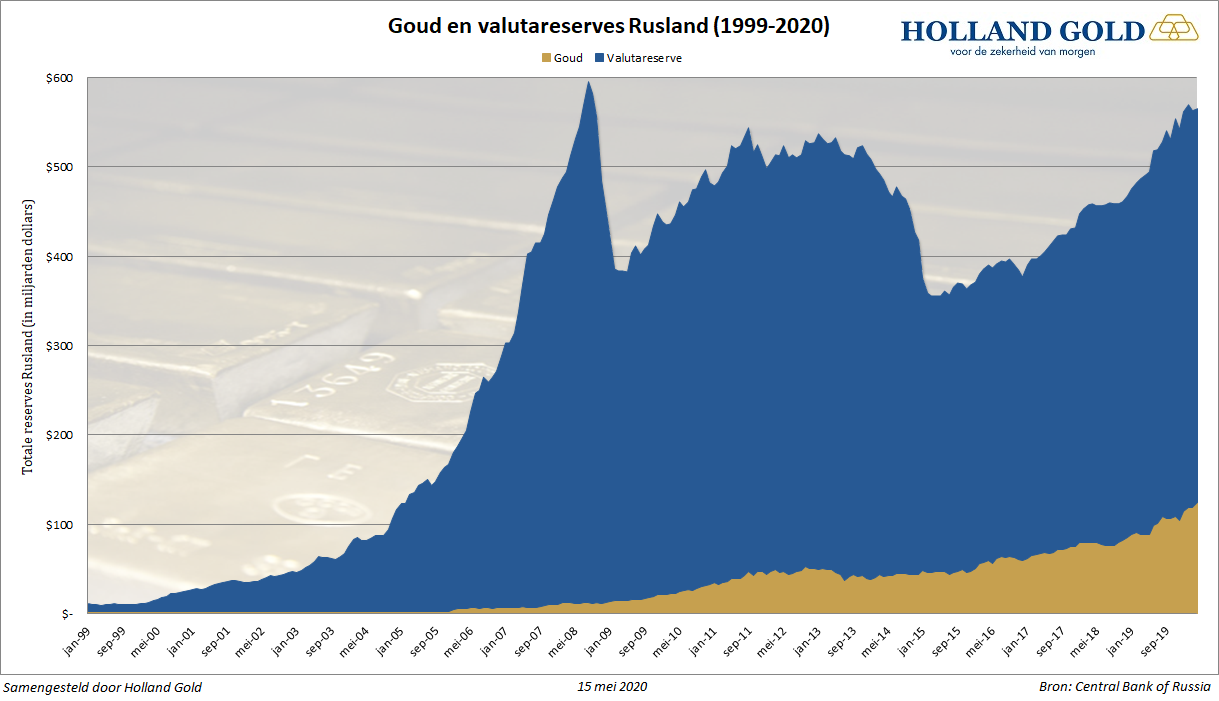
Unlike in 2008 and 2014, Russia is not eating into its reserves this time
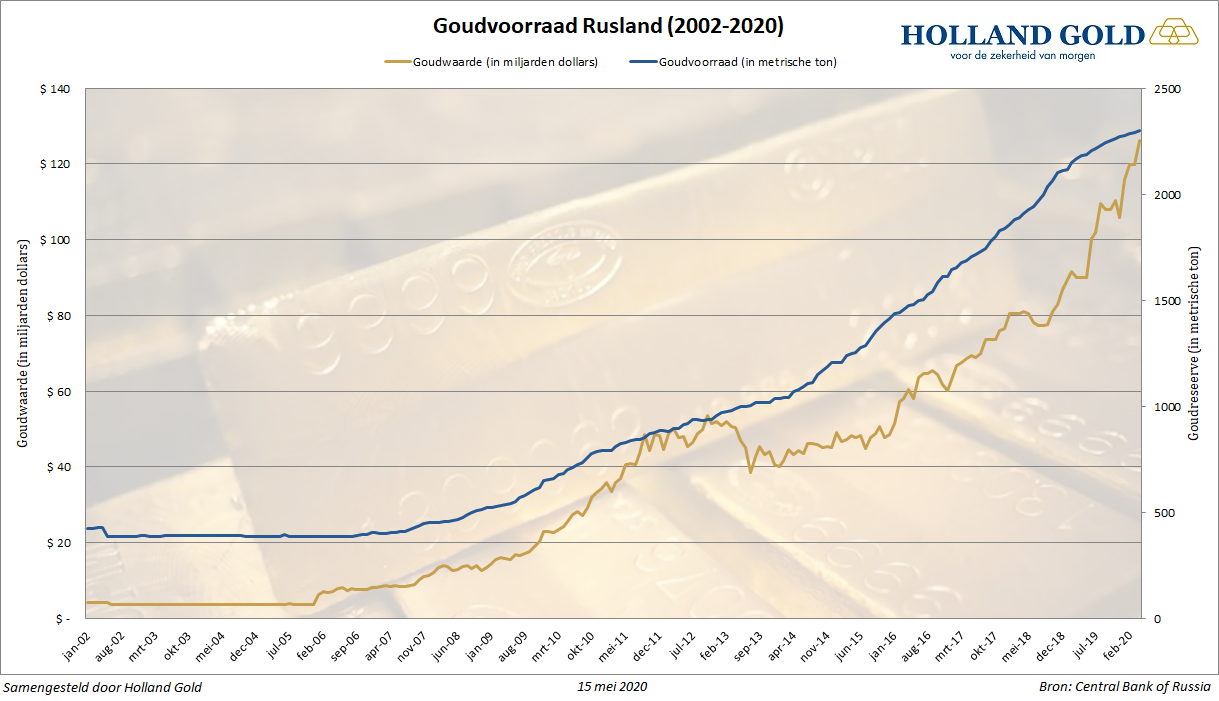
This graph shows the effect of the increase in the value of the gold stock
Switzerland's central bank also managed to absorb part of the losses of the first quarter with its gold reserves of more than 1,000 tonnes. As you may already know, this central bank has been buying up shares on a large scale in recent years in order to depress the value of its own currency. At the end of 2019, the central bank had an equity portfolio of almost $100 billion, consisting of predominantly U.S. equities.
As you know, stock prices fell sharply in the first quarter, causing the central bank to record a loss of CHF 38.2 billion Reported. The loss on investments and foreign exchange reserves was as much as CHF 41.2 billion. The net loss was slightly lower due to a CHF 2.8 billion increase in the value of the gold reserves. The central bank valued its gold holdings - which remained the same in size - at CHF 49,923 per kilogram at the end of the first quarter.
The increase in the value of gold compensated for only a small part of the losses on the equity portfolio. Despite this, it shows how central banks can use their gold reserves to absorb losses. Western countries already have a lot of gold, but many emerging countries still have some catching up to do. That is why it is mainly these countries that have been Buy gold.
Also Read:

Swiss central bank suffered losses on its Investments...
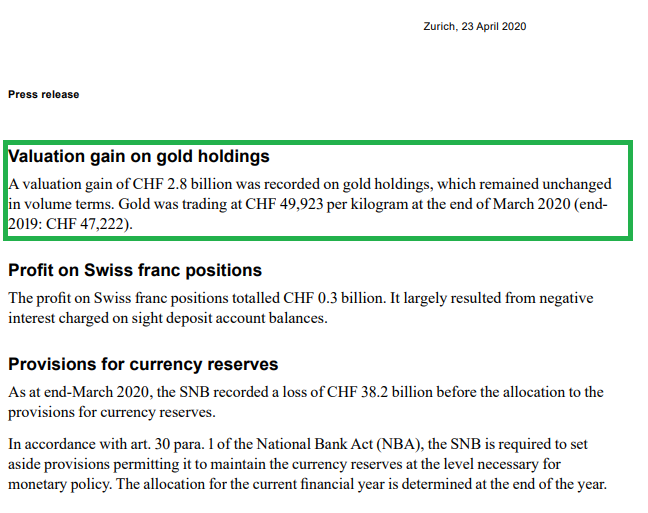
... while the value of the gold stock increased
This contribution was made from Geotrendlines