English
EN


The price of Bitcoin has fallen further this week and was even below the price on Friday $50,000. With that, the virtual currency dipped below the 100-day average for the first time since September last year. Last week, Bitcoin hit a record of more than $64,500, but concerns about tighter regulation in the U.S. already weighed on the price last Sunday down. Since then, the valuations of all virtual currencies have been under pressure. On Thursday, prices fell even further after the U.S. government proposed a hefty increase in wealth tax.
Bitcoin has had a very volatile first quarter, with the price only seeming to go up. Many other cryptocurrencies fared even better, such as the second largest cryptocurrency Ethereum. While the price of Bitcoin doubled this year, Ethereum became worth three times as much. This upward trend was driven by increased interest. Not only from private individuals, but also from institutional parties. For example, Tesla added $1.5 billion in Bitcoin to its reserves, while Mastercard announced that it wants to support payments in virtual currencies.
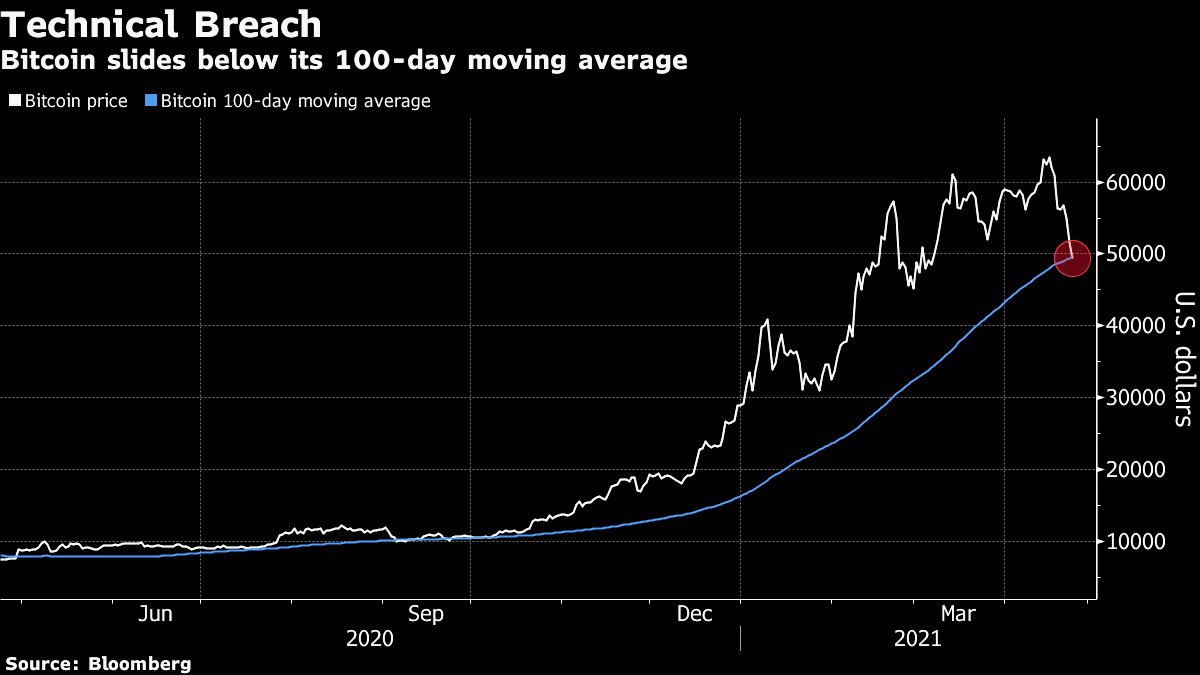
Price Bitcoin is below 100-day moving average again
In recent days, however, the price of Bitcoin has been under pressure. On Sunday, there were already rumors about stricter regulation of cryptocurrencies in the US, but now there is also an increase in the so-called Capital Gains Tax above the market. This is a form of wealth tax that Americans pay once they sell an investment for a profit. President Biden wants this tax on high-net-worth individuals almost double up to 39.6% to pay for its costly fiscal support programs. After the $1.9 trillion stimulus program, Biden wants to pump another $2 trillion into the economy, including for investments in infrastructure and employment.
The prospect of a hefty increase in wealth taxes is reason enough for some Americans to cash in on some of their profits in cryptocurrencies. In the space of a year, the value of Bitcoin and many other virtual currencies has gone upside down several times. So there is something to be said for investors taking some profit now, by selling part of their portfolio before this tax increase is introduced.
The U.S. Internal Revenue Service also wants to profit from the rising prices of cryptocurrencies. Since 2019, Americans have been required to declare whether they have received, sold or sent virtual coins when filling out their tax returns. It is not surprising that governments want to tighten their grip on cryptocurrencies. Just like precious metals, virtual currencies are also an instrument for holding wealth outside the financial system. Also, both can be stored and exchanged without the intervention of banks. That is why governments are taking more and more measures to regulate or even restrict the cryptocurrency market. For example, Turkey's central bank decided to suspend the trading of virtual currencies forbid.
Precious metals could benefit from tighter regulation on cryptocurrencies. In fact, buying gold is encouraged in the Eurozone, as it is completely exempt from VAT. Central banks worldwide also hold gold reserves, which they can use in an extreme scenario to reset the monetary system. Consider, for example, a revaluation of gold. In that respect, virtual currencies, over which central banks can hardly exert any influence, are different from gold.
This contribution was made from Geotrendlines