English
EN


Due to the rise in home prices, more and more Americans are withdrawing part of the equity of their homes, writes Bloomberg. They use that money not only for investments in housing, but also for paying off debts and all kinds of consumer spending. Figures from the Federal Housing Finance Agency show that not since 2008 has so much money been borrowed for this purpose compared to the equity of the house.
This development is very reminiscent of the situation just before the outbreak of the financial crisis. Even then, surplus value was 'cashed in' on a large scale and used for investments in one's own home and for all kinds of expensive consumer spending such as holidays and cars. The figures show that households in the United States are now doing exactly the same thing, now that house prices are rising again and consumer confidence is high again.
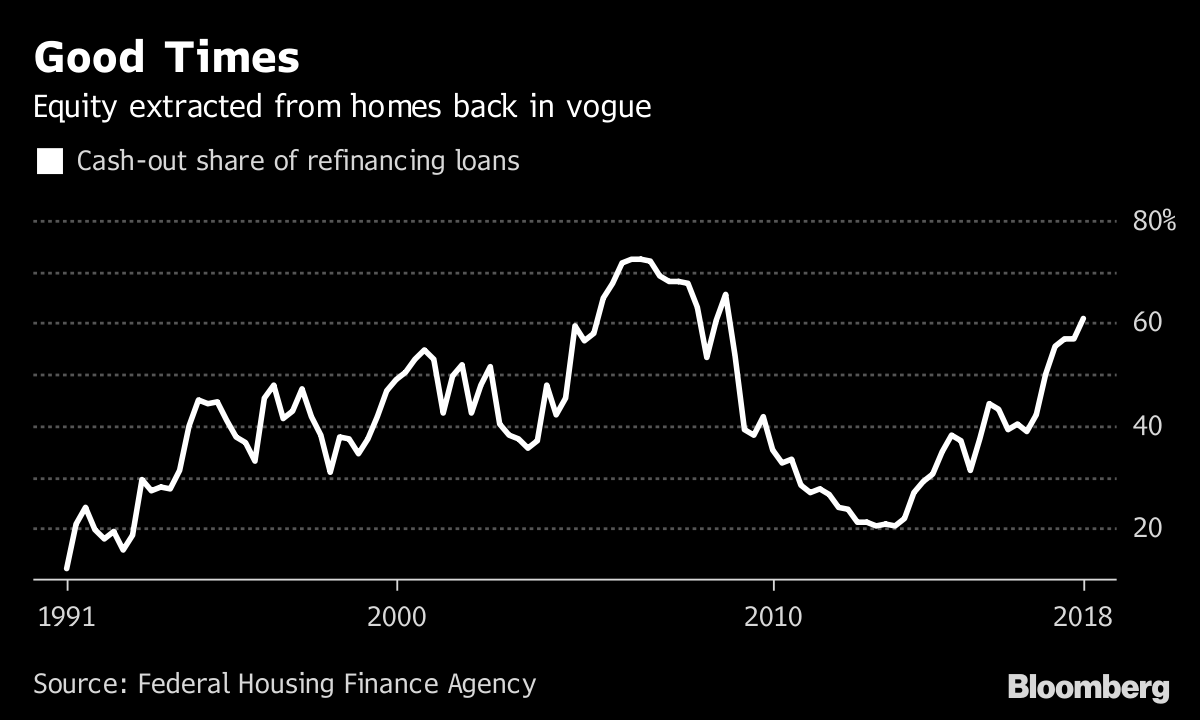
Americans are spending more equity on real estate (Source: Bloomberg)
Just as in the Netherlands, a situation has arisen in the United States in which house prices are rising much faster than the underlying mortgage debt. As a result, the surplus value increases and we feel richer, which makes it easier for us to spend money. Even if we don't actually have that and borrow that based on the expectation that house prices will remain stable or rise further.
Rising house prices led to real estate speculation in the run-up to the 2008 crisis, which formed the basis for the financial crisis. Banks were able to bundle bad mortgages and resell them, passing on their risk to investors and pension funds, which gave them an interest in providing more mortgages.
The following graph shows that house prices in the United States have been rising faster than mortgage debt since the second quarter of 2011 and that there is now about $400 billion in fictitious equity in the form of equity.
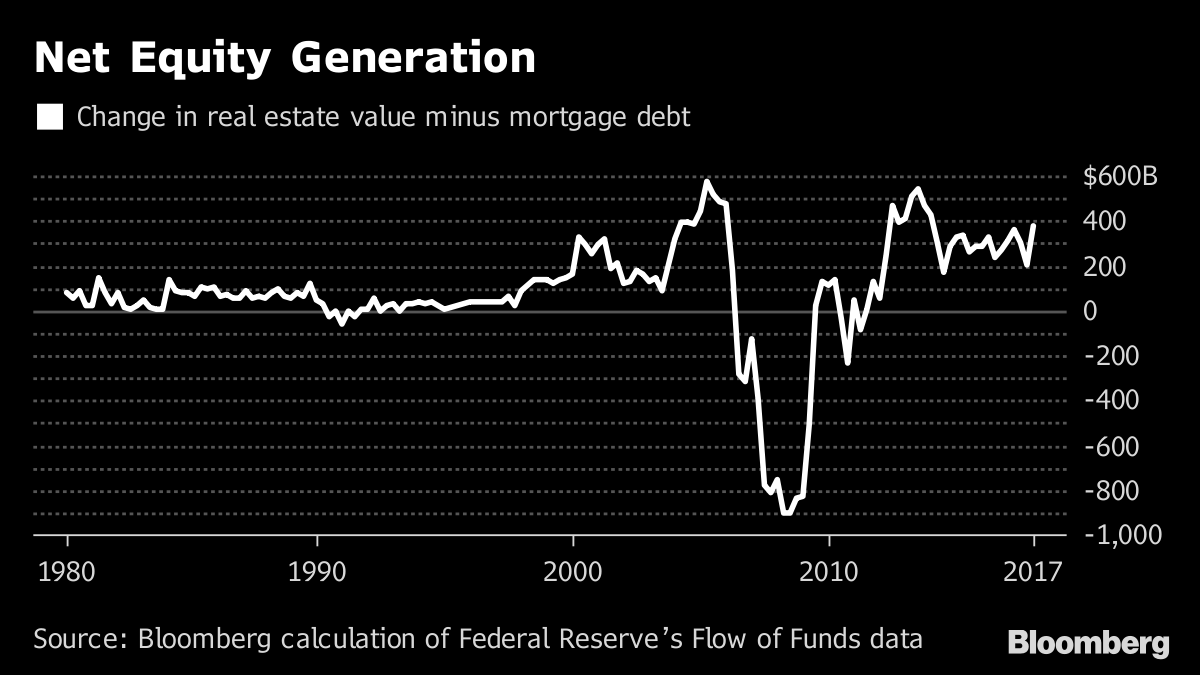
Equity on the housing market is on the rise again