English
EN


The Swiss central bank now has more than $82 billion in shares on its balance sheet. The central bank still thinks its own currency is too expensive and therefore runs the proverbial money printing press at full speed. In the past financial year, the Swiss National Bank (SNB) pumped in total 67 billion Swiss francs in the economy, money with which it buys bonds and shares on a large scale in the rest of Europe and in the United States.
It is mainly the American technology companies that are popular with the Swiss central bank, as the top 10 largest equity positions are dominated by names such as Apple, Google, Microsoft, Amazon and Facebook. Figures The SEC also shows that the central bank also has a significant position in companies such as Johnson & Johnson, Exxon Mobil, AT&T, General Electric and Proctor & Gamble.
SNB has TOO MUCH cash. They just don't know what to do with it. Translated: every Swiss resident has 2 Apple shares pic.twitter.com/XWvU07xFyJ
— Russian Market (@russian_market) June 11, 2017
The central bank's total equity portfolio has a value of almost $10,000 per capita in terms of the 8.3 million inhabitants of Switzerland. For every Swiss person, the central bank has the equivalent of $350 worth of Apple shares in its portfolio, which is more than two stocks. That's all money that the central bank created out of thin air, because people still have faith in the value of the money.
Since the beginning of the financial crisis, the central bank's balance sheet total has exploded to more than 700 billion. As if that were not enough, the central bank also earns from the negative interest rates, which banks have to pay to park reserves with the SNB. Last year, this amounted to 1.5 billion Swiss francs.
Constantly printing money is not without its dangers, but as long as the economy is growing and stock prices are rising, no one really seems to care. But why would you, as a saver, want Swiss francs, a currency that the central bank prints billions of dollars from every month? As a saver, you can be sure that you will get your money back, But what the purchasing power of that money will be in the future remains a big question mark.
An alternative safe haven is gold, a precious metal that cannot be printed. It is not for nothing that central banks still keep this reserve in reserve in case things really go wrong. After all, over the centuries, numerous money systems have collapsed, while the value of gold has never gone to zero.
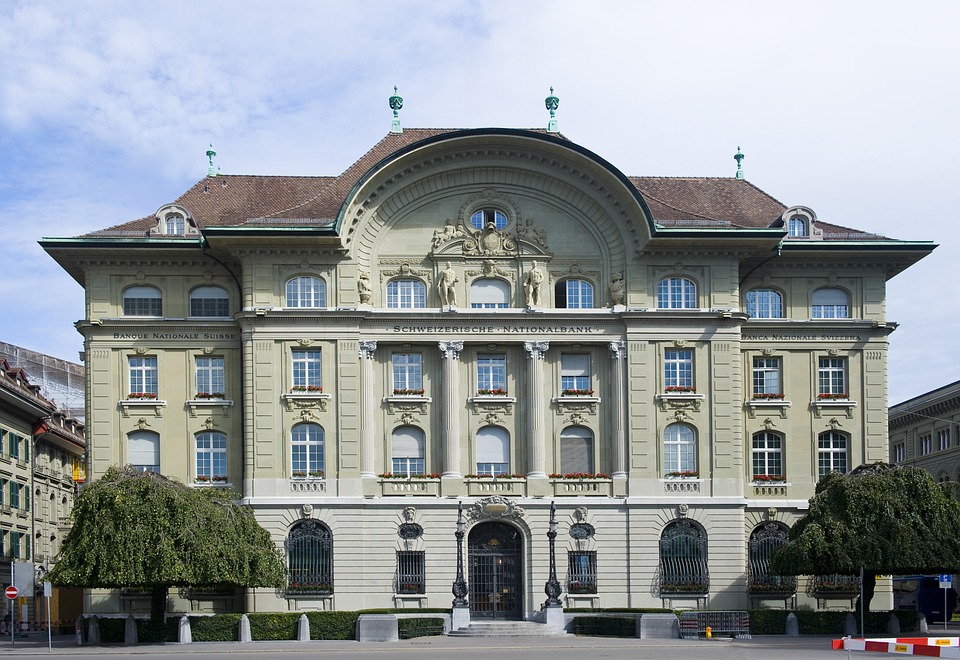
Swiss central bank owns $82 billion in stocks