English
EN


The Swiss central bank made good money in the third quarter from negative interest rates and the rising gold price. That's what she writes in her latest Quarterly report. Due to a higher gold price, the value of the gold stock increased by 109.5 million Swiss francs. Negative deposit rates, which banks pay on their excess reserves, earned the central bank about 250 million francs.
Despite these windfalls, the central bank suffered losses, as the value of foreign currency assets fell. The Swiss franc also appreciated against other currencies that the central bank has on its balance sheet. As a result, the central bank suffered a net loss of almost 2 billion Swiss francs in the third quarter.

Swiss central bank profit and loss account (Source: SNB)
The Swiss central bank has intervened at various times since the outbreak of the financial crisis in 2008 to stabilize the value of the currency. The Swiss franc is known as a safe haven in times of crisis, with the result that the currency has become increasingly expensive. To prevent the currency from becoming too expensive, the central bank has marketed its own currency on a large scale and exchanged it for foreign currencies, such as euros and US dollars. For example, the balance sheet total rose from less than 200 billion Swiss francs in 2008 to more than 1 trillion francs today.
To put these figures in perspective, in 2001, Switzerland's gold holdings represented about 30% of the central bank's total balance sheet. Now it is only 5%, despite the sharp increase in Gold price over the past twenty years. Now, the reserves consist mainly of foreign currencies, which have been obtained through various purchase programs. Until 2012, these foreign exchange reserves consisted mainly of government bonds, but since then the central bank has also added more and more equities and corporate bonds to its balance sheet. So the central bank has become more like a hedge fund, with Billion-dollar positions in the largest S&P 500 companies. The graphs below show this well.
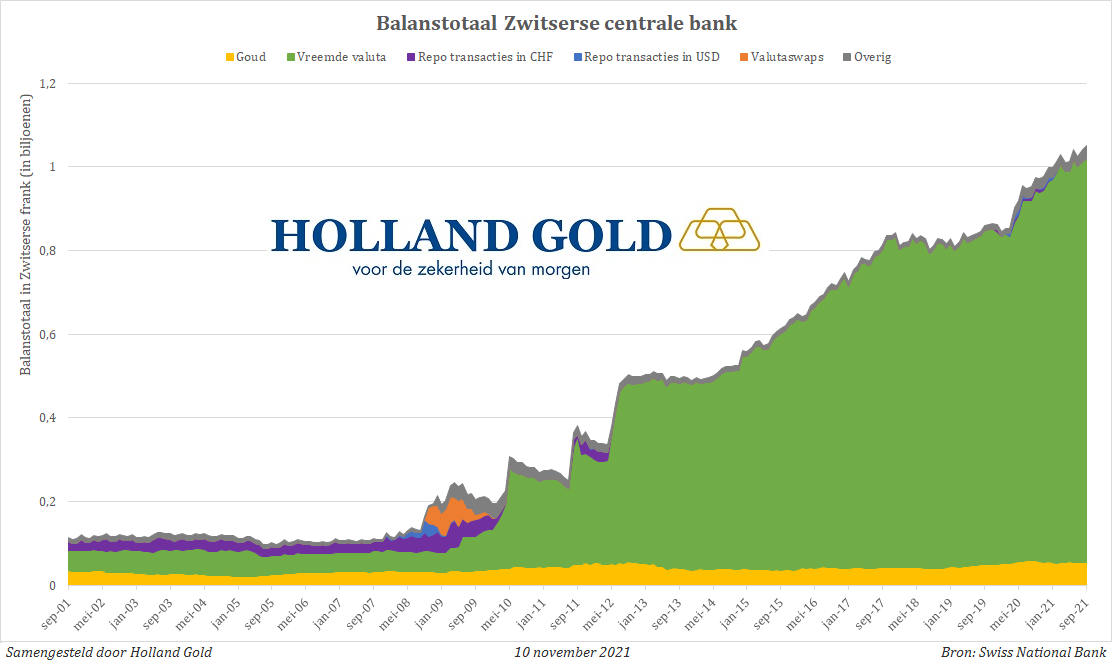
The Swiss central bank's balance sheet total has exploded
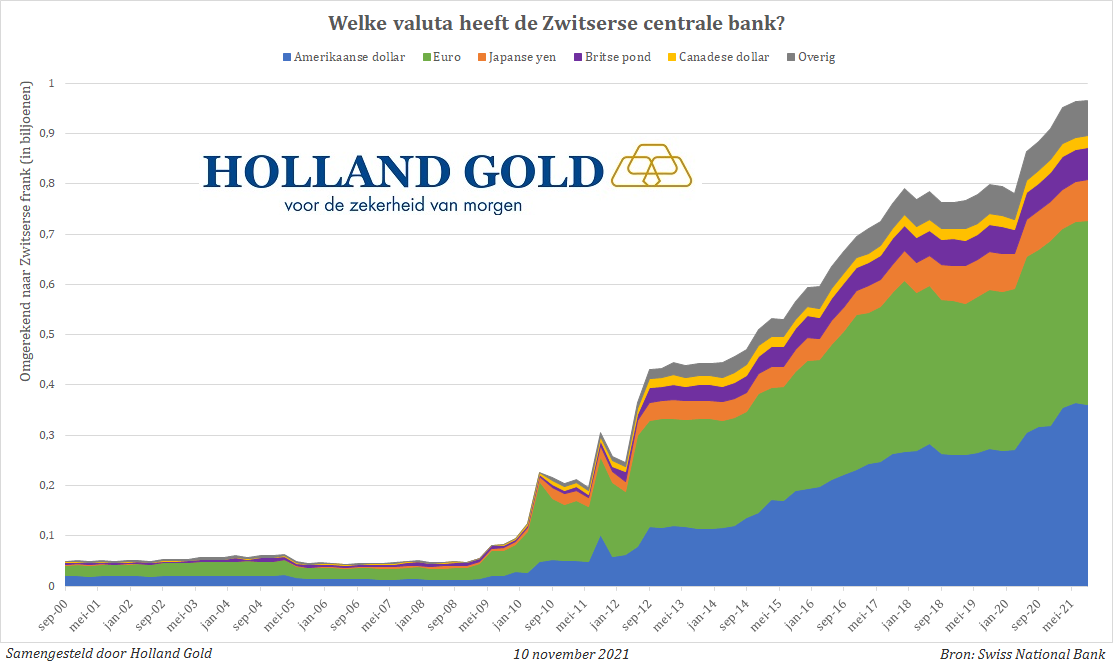
The currency reserves consist mainly of euros and dollars
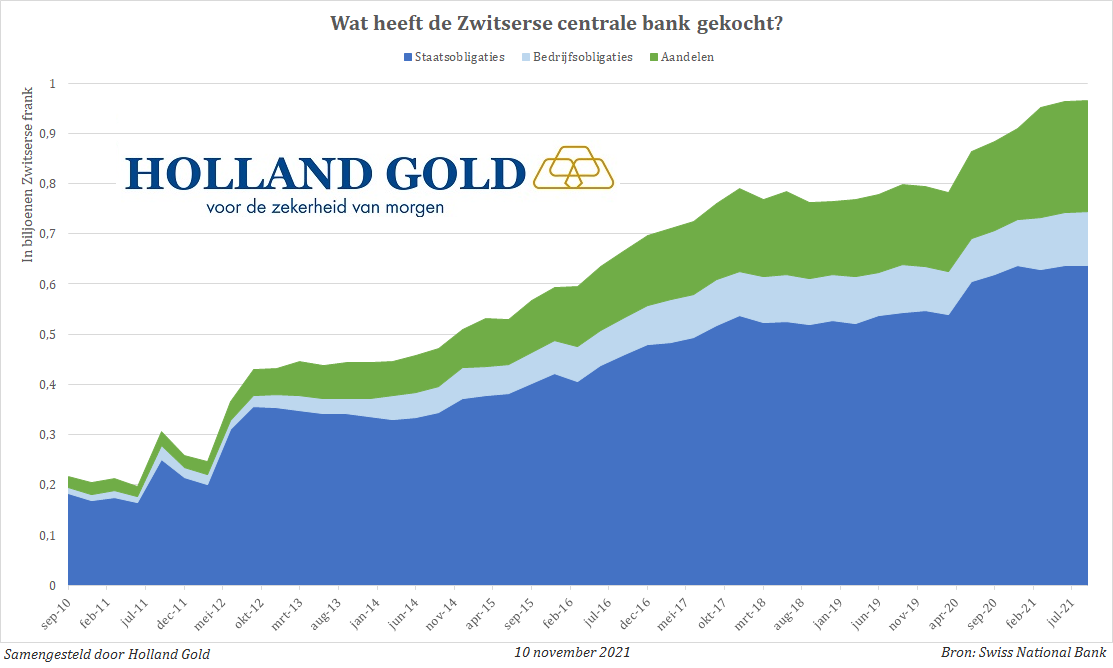
Since 2012, the central bank has also been buying more and more shares and corporate bonds
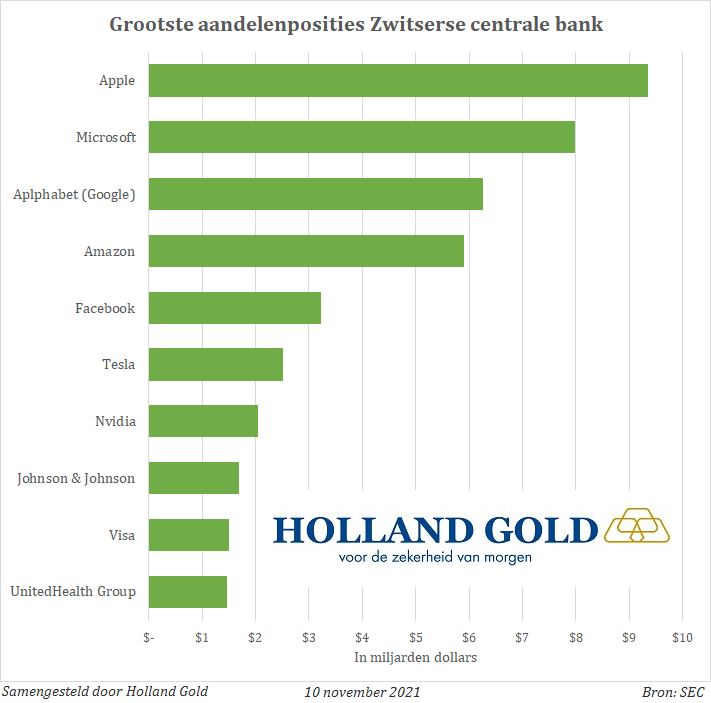
Swiss central bank is a major shareholder in the popular American tech companies
The Swiss central bank is property of the various Swiss regions (the so-called cantons) and of shareholders. The shares of the central bank are traded freely on the stock exchange, which means that anyone can own a small part of the central bank. The share price suddenly started to rise sharply from 2017, when more investors discovered that they could invest in the central bank. It is not common for central banks to issue stocks. The madness surrounding the share reached its peak in the spring of 2018, when the share price rose to over 8,000 francs. At the time of writing, the price is around 5,000 francs per share.
This contribution was made from Geotrendlines