English
EN


This article has been automatically translated from Dutch. Click here to see the orginal article including all links to sources.
The Dutch and European industries are imploding at a rapid pace: companies are leaving, jobs are disappearing, and investments are being canceled. While our own politicians seem preoccupied with side issues, Trump appeared more concerned about it in his major UN speech than Europe’s leaders themselves. Read on quickly!
Once again this week, troubling reports emerged about Dutch and European industry. The list of departing companies, closed factories, and canceled investments keeps getting longer. After UPM and Shell, BP has now also pulled the plug on its plans for a biofuels plant in Rotterdam. As always, the high costs in the Netherlands are the main issue.
“I’ve lost count by now. Once again the toxic cocktail of EU regulation, the Dutch CO₂ surcharge, lack of infrastructure, and the permit circus is doing its work,” said energy expert Martien Visser on X. The project is being halted despite the British energy company having already invested millions in preparing the complex. Around a hundred jobs will be lost.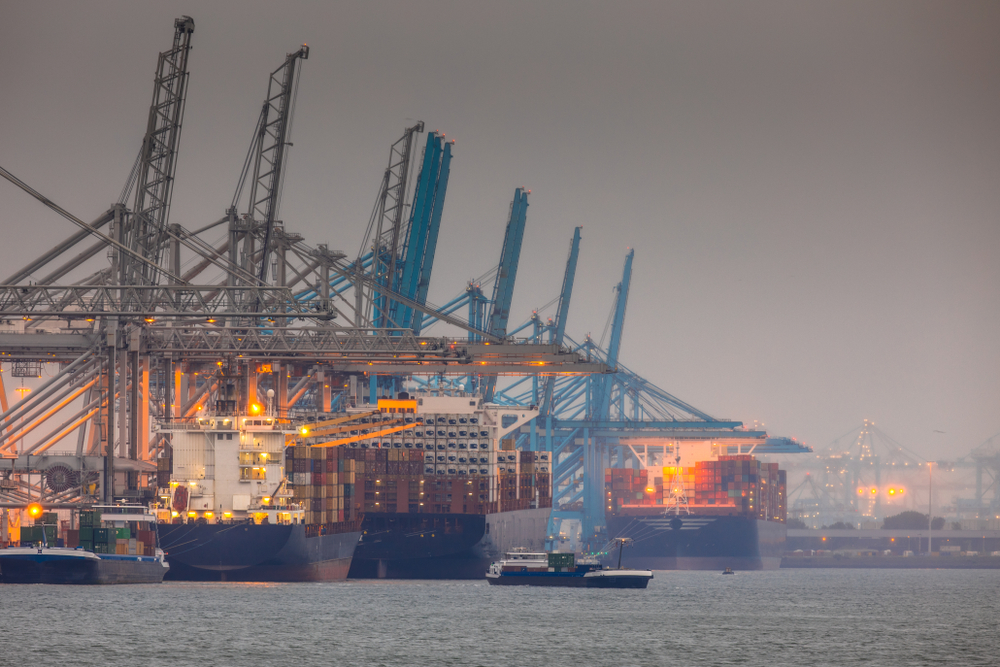
Port of Rotterdam (source: Shutterstock)
Rotterdam alderman Simons and provincial executive Weverling of South Holland warned that the exodus of investments and businesses in the Port of Rotterdam is continuing at an increasingly worrying pace. “The deindustrialization of the Netherlands is accelerating at an alarming rate, with far-reaching consequences for our future prosperity and earning power,” Simons told AD.
Weverling pointed to high electricity costs, grid congestion, and complex regulation as the root of the problem. He sees the Port of Rotterdam slowly turning into a backdrop of faded glory, an open-air museum of what once was. Both officials are calling on the government and parliament to intervene swiftly.
But Dutch politics this week was mainly focused on other, less fundamental matters, as FD also noted. We previously discussed this problem in our podcast with Andreas Kinneging. Moreover, the issue of declining competitiveness and imploding industry is not only present in the Netherlands but across the entire EU. Elsewhere in the eurozone, the news was just as grim.
Car manufacturer Stellantis, known for brands like Peugeot, Citroën, Opel, and Fiat, will temporarily halt production at six European plants in October, Les Échos reported. These factories are located in France, Germany, Italy, Poland, and Spain. Together, the stoppages amount to 62 days of production downtime—a clear sign that Stellantis is struggling in Europe. We already wrote earlier that the European auto industry is under pressure from climate policies, competition, and import tariffs.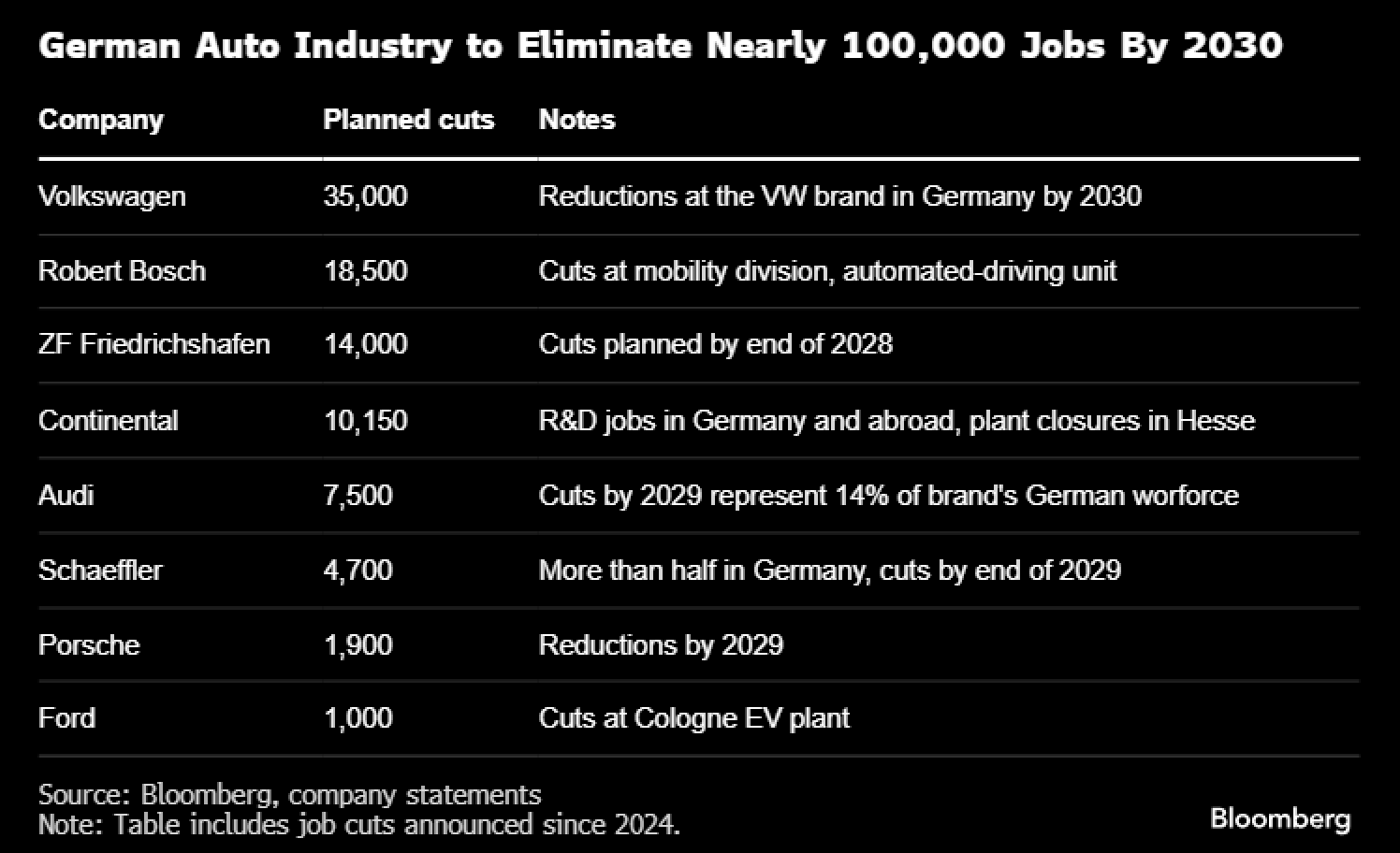
The German auto industry expects to cut nearly 100,000 jobs by 2030 (source: Holger Zschaepitz)
German supplier Bosch, which produces many parts for the auto industry, announced this week that it will cut another 13,000 jobs. In 2024, 9,000 jobs were already eliminated. Over the past two years, the sector has lost around 55,000 jobs, and tens of thousands more will vanish by 2030. The German auto industry employs over 700,000 people in total. Volkswagen is also reducing volumes and has temporarily halted production at two German EV plants due to weak demand.
According to a group of German economists, the government is failing to push through reforms to end stagnation. The expected small growth (0.2 percent) of the German economy is solely thanks to the growing budget deficit, with which the government is funding defense, climate policies, and infrastructure investments. This concerns a €500 billion fund. Without suspending the debt brake and stretching budgetary rules, Germany would now have had to make severe cuts. Germany has already disguised a recession earlier—read more here.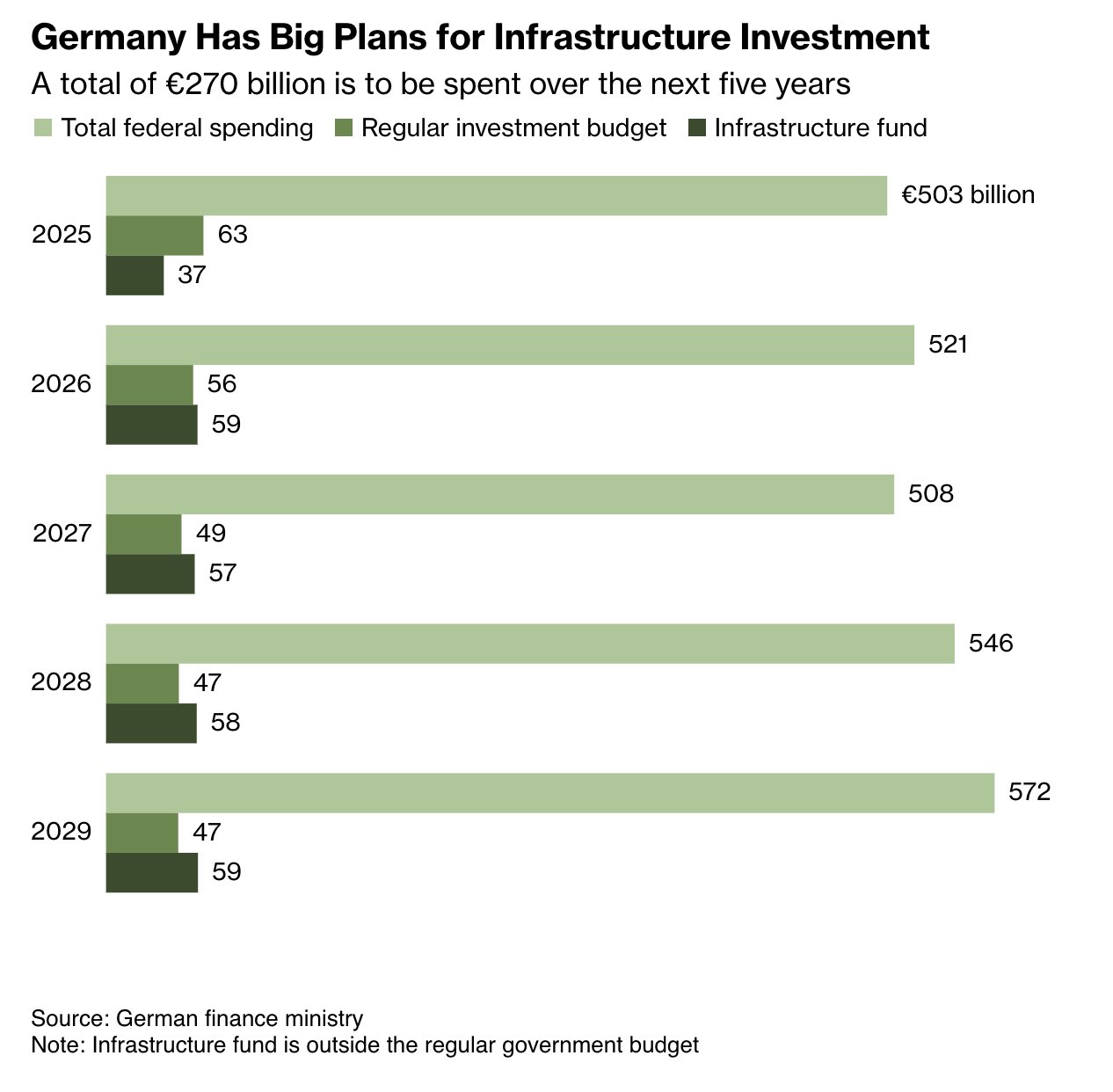
German investments (source: Holger Zschaepitz)
On this €500 billion fund, well-known financial journalist Holger Zschäpitz wrote: “The government is playing accounting tricks with the budget. Planned investments are being moved out of the core budget to make room for social ‘electoral giveaways’ and then shifted into the debt-financed €500 billion investment fund. On top of that, spending items such as emergency loans to health insurers are being reclassified as ‘investments.’”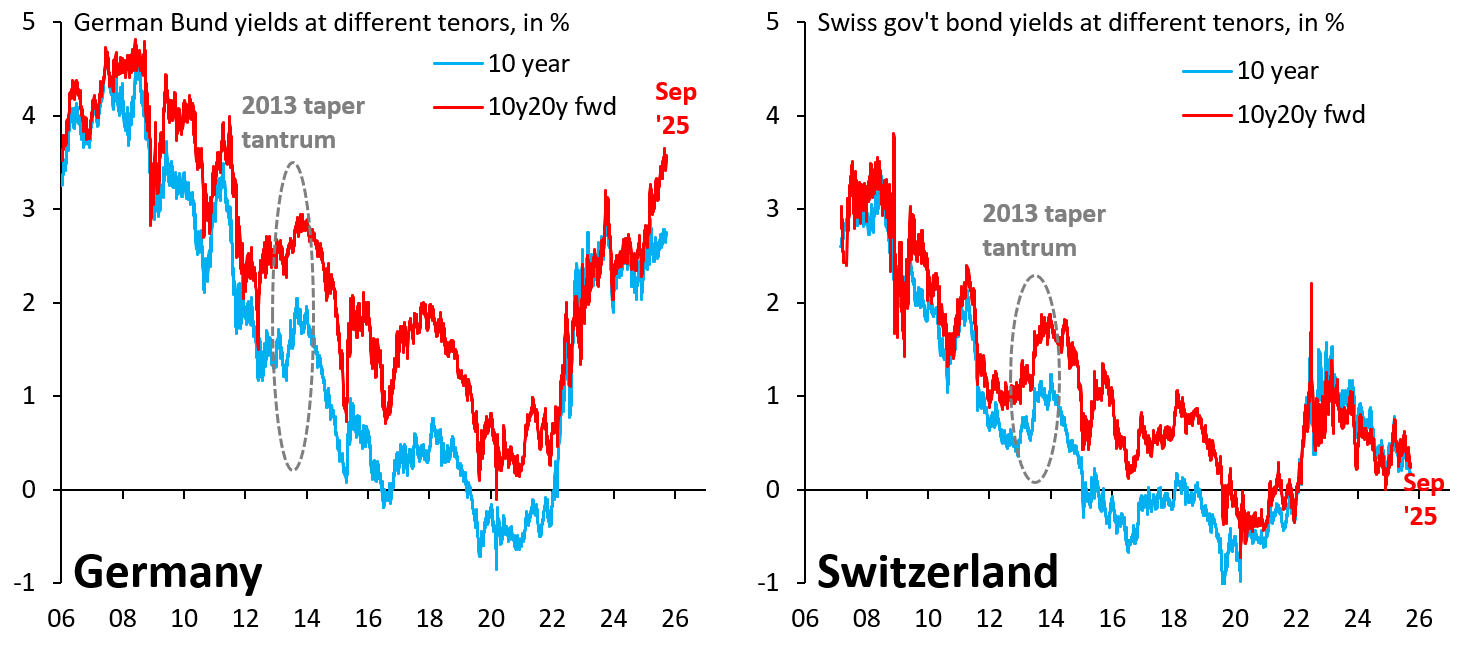
Long-term yields on German and Swiss bonds (source: Robin Brooks)
The IMF also published an article this week on the importance of strong fiscal rules. Germany is now losing its status as a safe haven. This is reflected in the growing gap in yields between German and Swiss government bonds. Switzerland seems to be the only Western European country whose industry is still performing well—though some suggest that may also change.
Unsurprisingly, Europe’s political leaders were an easy target for Trump in his UN speech this week. Le Monde headlined: “Trump makes U-turn on Ukraine and lectures Europeans at the UN.” The BBC wrote: “How Trump lashed out at Europe in his UN speech.”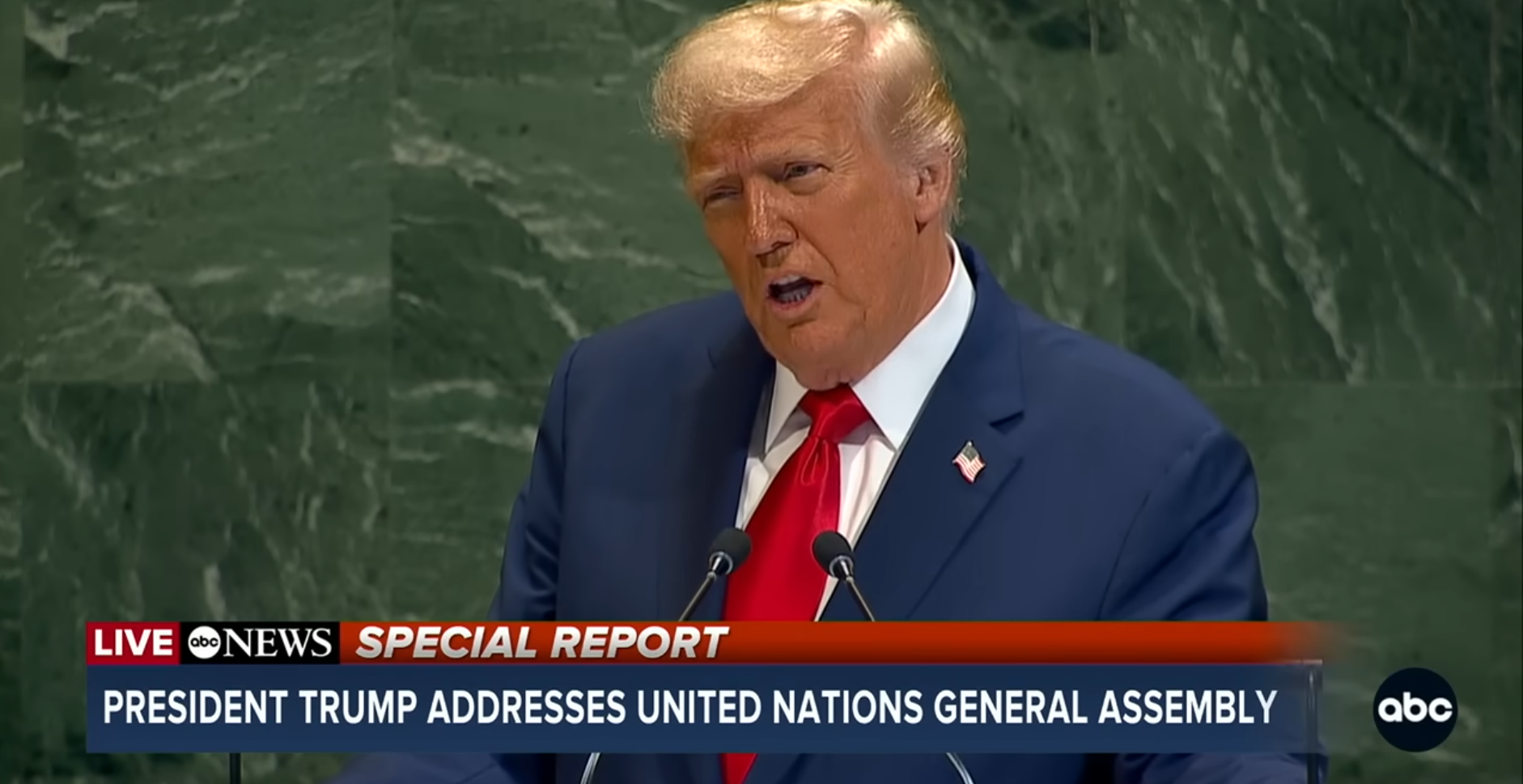
Trump during his speech (source: ABC / UN)
The U.S. president called European leaders’ energy policy suicidal, saying:
“If you don’t get away from the green energy scam, your country is going to fail. If you don’t stop admitting people you’ve never seen before, with whom you have nothing in common, your country is going to fail… You are destroying your heritage.”
Trump described renewable energy, such as wind turbines, as “a joke”: in his words, they don’t work well and are far too expensive. He added that the green agenda is a disaster for Europe: “All green is all bankrupt.” He also called the carbon footprint a “hoax.”
“At extreme costs and expense, Europe reduced its own CO₂ footprint by 37 percent… It cost you a lot of jobs, a lot of factories closed, but you reduced that footprint by 37 percent. However… it has been totally wiped out by a global increase of 54 percent, and then some,” Trump said. He added that China now emits more CO₂ than all the developed nations in the world combined.
“The entire globalist concept of asking successful, industrialized nations to inflict pain on themselves and radically disrupt their entire societies must be rejected completely and totally.”
Trump explained why he withdrew from the climate accord and, in his speech, seemed more concerned about Europe’s future than our own European leaders. If you have an hour to spare, you can listen back to his full speech here.