English
EN


Global demand for silver reached a record level of 1.24 billion troy ounces in 2022. This is caused by an increase in demand from various sectors, namely industry (5%), investments in physical silver (22%), jewellery (29%) and silverware (80%). It is the second year in a row that the silver market shows a structural deficit, as total demand exceeded the supply of silver mines and recycling last year. On balance, the deficit amounted to 237.7 million troy ounces last year. What do these new figures say about the silver market?
These new figures come from the Silver Institute, an organization that annually publishes figures on the global silver market. These figures provide insight into the total demand for silver, both from the industry and from the angle of investors. Last year, both market segments showed growth. The industry used more silver for the production of solar panels and electric cars. For example, demand for the precious metal for solar panels increased by 27.5%, from 110 million troy ounces in 2021 to 140.3 million troy ounces in 2022.
Demand for investment silver rose from 274 million troy ounces in 2021 to 332.9 million troy ounces in 2022, according to the Silver Institute. Investors worldwide bought more silver bars and coins last year due to rising geopolitical tensions and skyrocketing inflation. In the United States, this sometimes led to higher premiums and scarce supply, which in turn slowed down the increase in demand. The demand for Silver Coins in Europe did not rise, which is due to a sudden increase in VAT on investment coins in Germany, according to the Silver Institute.
The demand for silver in the form of jewellery also increased. The Indian market was catching up after relatively poor sales figures in the corona years of 2020 and 2021, as demand doubled in 2022 compared to a year earlier. In Europe, jewellers also sold more silver jewellery last year than in the previous year.
The production of silver mines and the secondary supply of silver through recycling remained virtually unchanged in 2022 compared to the previous year. That partly explained why the shortage in the silver market had become so large last year. The supply did not grow in line with the demand.
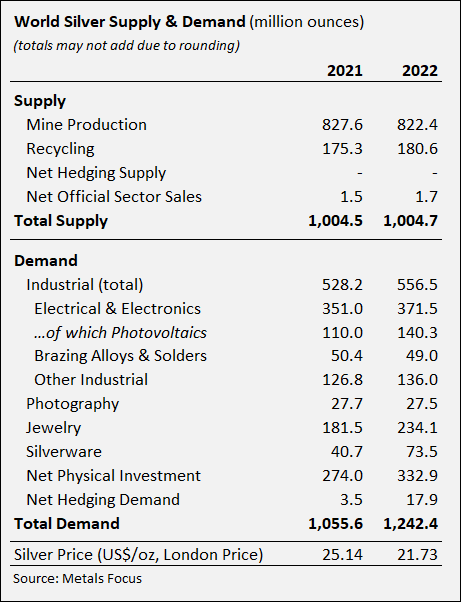
The silver market in numbers (Source: Silver Institute)
The fact that the Silver Institute reports a shortage in the silver market for 2022 means that the demand that year exceeded the new supply. So it doesn't mean that silver is running out or has become scarcer. On the contrary, the part that silver mines extract from the ground every year can be added to the total above-ground reserves of silver. Whether that's in the form of coins, bars or jewelry, it makes little difference. Silver that is used for electronic devices or solar panels, for example, can also be recycled in the end, provided that the Silver price is high enough to make it profitable.
A shortage of silver in 2022 therefore means that silver has been extracted from the already present above-ground reserves to be able to meet demand. This has a price-pushing effect, which is also reflected in the increase in silver prices in 2022. But there is no question of a fundamental shortage of silver, because a significant part of the above-ground supply is now in the hands of investors. Whether these stocks will return to the market depends on what investors will do in the event of a rise in the price of silver. Profit-taking can put pressure on the price, but if investors are on balance more Buy silver that will drive the price up further.
The outlook for 2023 looks favorable with a predicted increase in demand for silver in industry, for jewelry, and for physical investment, while silver mining production will show only a slight increase. This will result in an estimated deficit of 142.1 million troy ounces in 2023. That would be the second largest deficit in more than two decades.
 Have a look at us YouTube channel
On behalf of Holland Gold, Paul Buitink and Joris Beemsterboer interview various economists and experts in the field of macroeconomics. The aim of the podcast is to provide the viewer with a better picture and guidance in an increasingly rapidly changing macroeconomic and monetary landscape. Click here to subscribe.