English
EN


By: Frank Knopers
The demand for investment gold in Europe has continued to increase in recent years and was also substantial in the second quarter. This is what the World Gold Council in its latest quarterly report on the global gold market. After the corona crisis with negative interest rates, high inflation and geopolitical uncertainty are now causing a flight to precious metals. Although the second quarter was less exuberant than the first quarter, European investors in particular continued to Buy gold. Central banks also continue to add precious metals to their reserves, a trend that is becoming more widespread.
What is striking is that investors preferred to buy gold in the form of physical coins and bars in the second quarter. Stocks of European gold ETFs remained stable, while U.S. funds recorded outflows of 42 tonnes in the second quarter. In the United States, interest in the precious metal declined due to a decline in the Gold price and a stronger dollar. The U.S. central bank also started raising interest rates earlier, which curbed demand for the precious metal in the U.S. However, if we look at the total of the first two quarters, we see a sharp increase in gold investments through ETFs. U.S. funds saw their stock of gold under management increase by 129 tonnes, European funds by 119 tonnes.
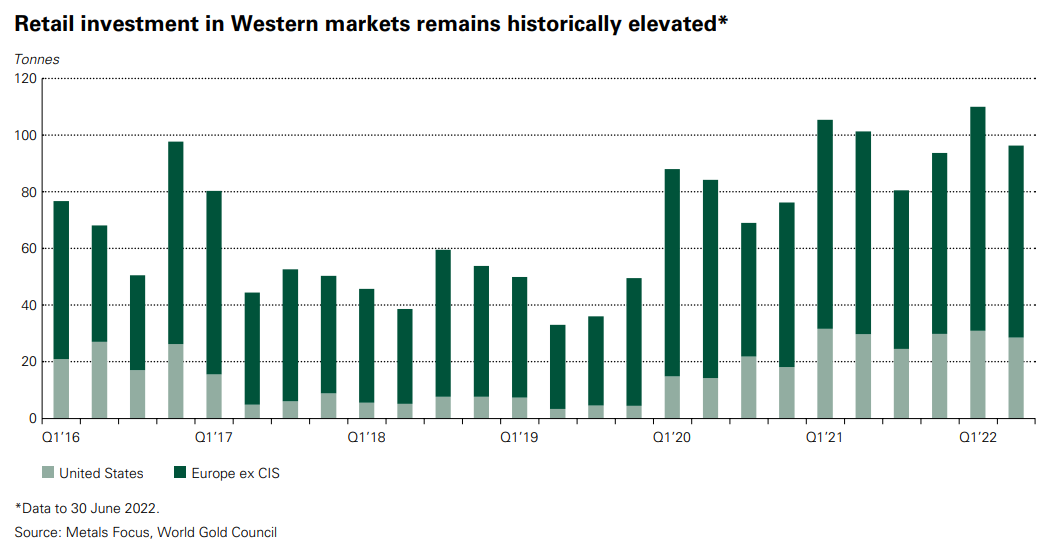
Demand for investment gold is increasing mainly in Europe (Source: World Gold Council)
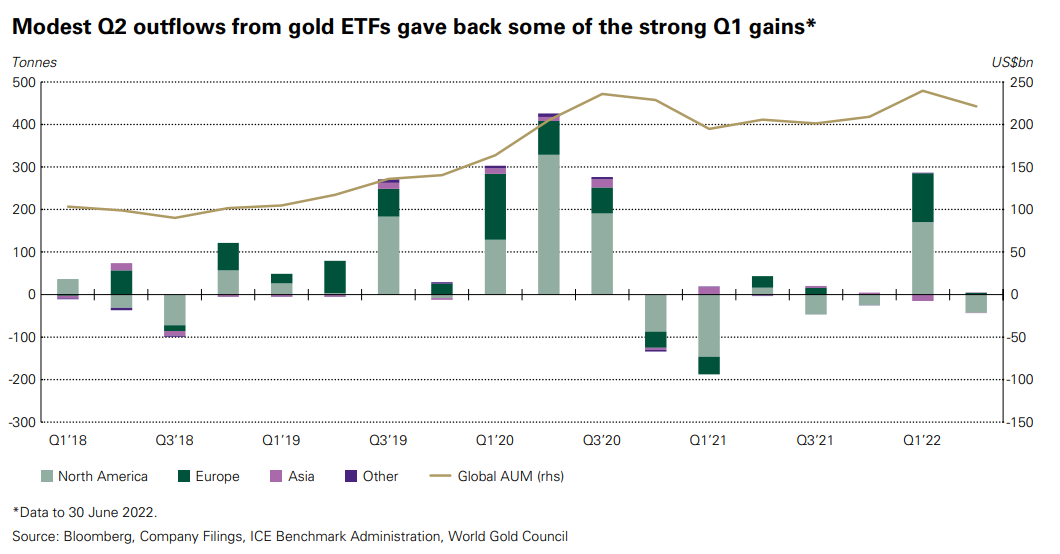
Gold ETFs recorded gold outflows in the second quarter, demand in Europe remained stable (Source: World Gold Council)
Central banks bought more gold again in the second quarter, although this was mainly due to a one-off large purchase by the central bank of Iraq. In total, central banks added 180 tonnes of gold to their reserves in the second quarter, double the increase of 90 tonnes in the first quarter of this year. So far this year, central banks have bought 270 tonnes of gold, a figure that is in line with the average over the past five years.
Behind this stable trend, we have seen a number of shifts in the market over the years. Countries like Russia and China dominated gold purchases until a few years ago, but are now quite inactive. Instead, we are seeing gold purchases from an ever-increasing variety of countries.
The largest purchases in the first half of this year were made by Turkey (63 tonnes), Egypt (44 tonnes), Iraq (34 tonnes) and India (15 tonnes). In addition, there were some smaller purchases by other countries, such as Argentina, Ireland and Ecuador, this year. The World Gold Council writes that both Ecuador and Bolivia want to buy gold from domestic mining production, because they see the precious metal as a strategic asset. We can also expect more gold purchases from the Czech central bank in the near future, where a new governor has taken office who wants to buy more gold.
The central bank of Russia announced earlier this year that it wants to further expand its gold reserves. At the beginning of July, the Russian Duma approved a proposal to keep the size of the gold reserves secret from now on. If Russian President Vladimir Putin signs this proposal, Russia will no longer provide new figures on its gold reserves to the IMF. 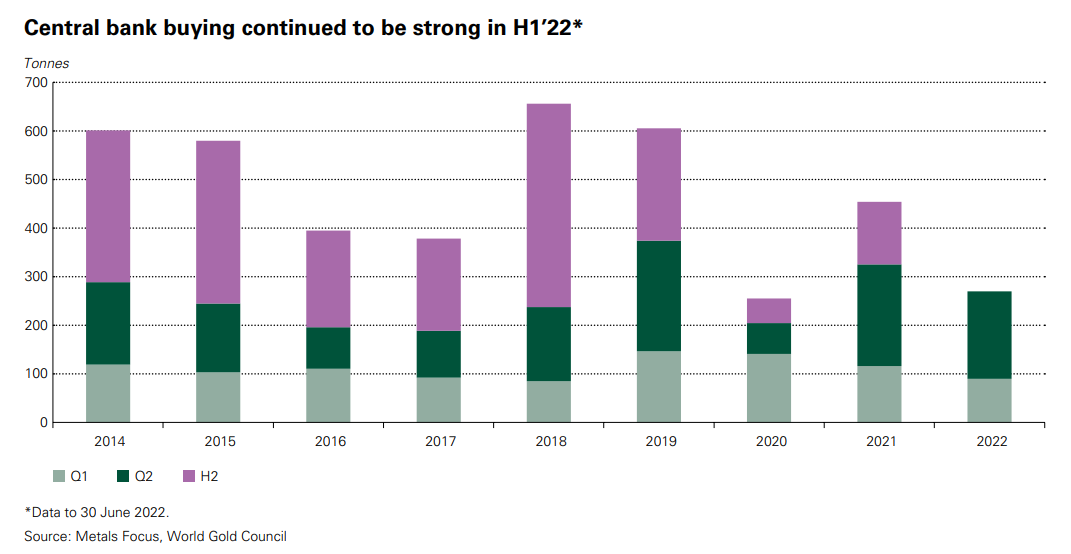
Central banks' gold purchases are in line with 5-year average (Source: World Gold Council)
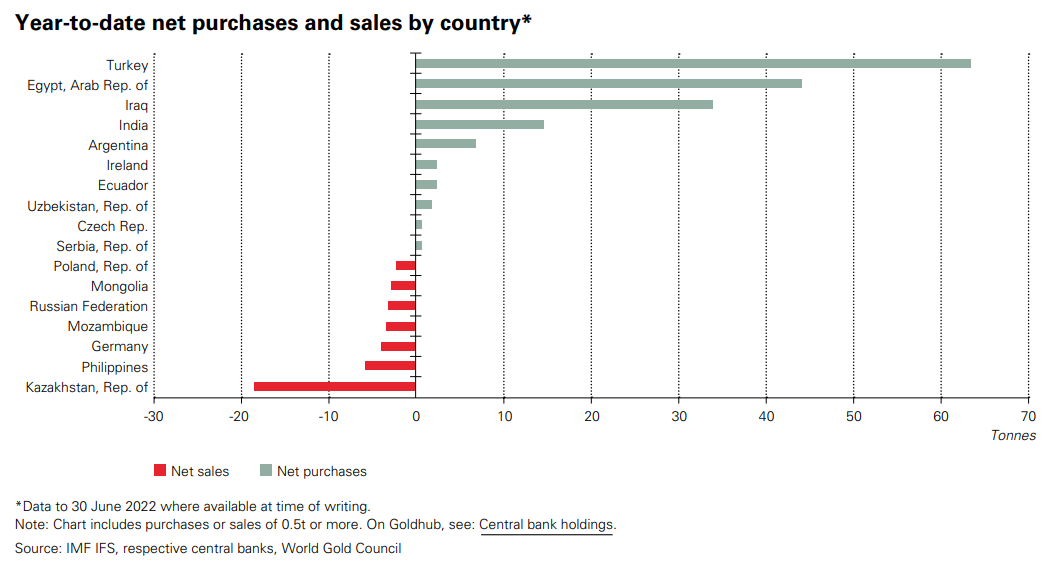
Change in gold stocks of central banks since the beginning of this year (Source: World Gold Council)
In recent years, it has become increasingly difficult for gold mines to further increase production. In the first half of this year, production still rose by 3% compared to a year ago, but the trend of recent years shows that there is not much room for improvement. Gold mining is becoming more and more expensive, because the easily extractable gold reserves have already been excavated. Much more investment is needed in exploration and development to significantly and structurally increase production. Profit margins for the sector are still attractive, but have not been able to materialise in recent months. a decrease see. Higher production costs pushed down mines' profit margins. The supply of scrap gold also decreased in anticipation of higher prices. 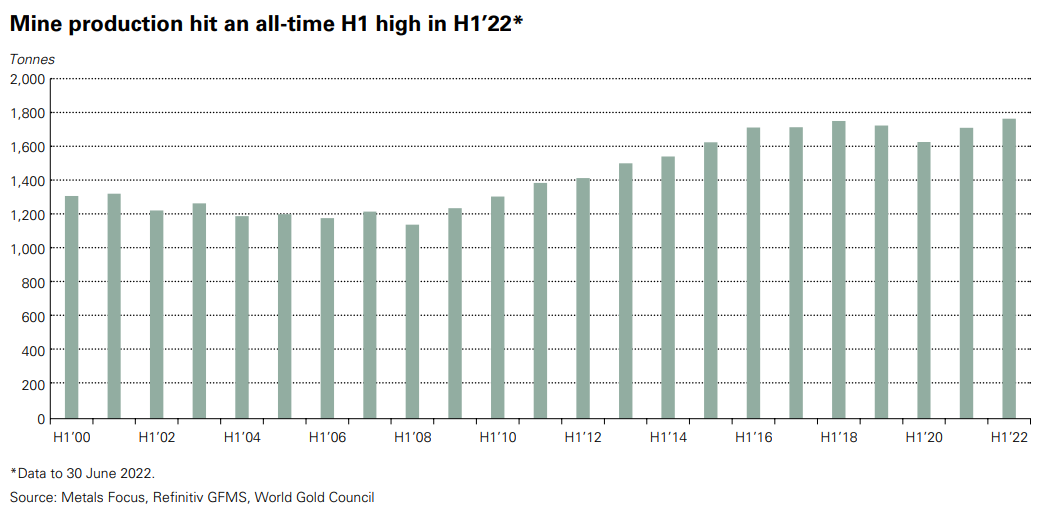
Production of gold mines marginally increases (Source: World Gold Council)
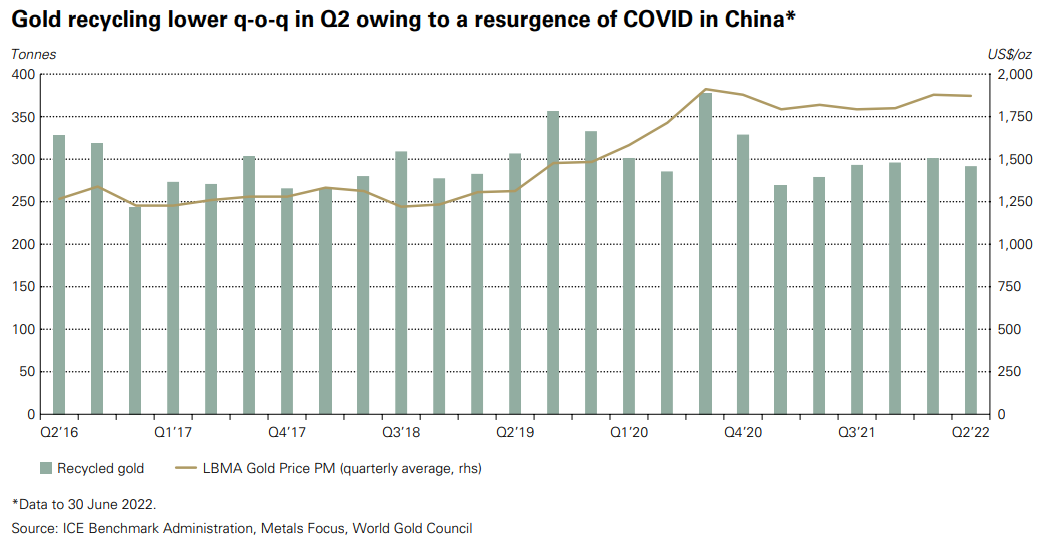
Supply of scrap gold stabilizes (Source: World Gold Council)
 Have a look at us YouTube channel
On behalf of Holland Gold, Paul Buitink and Joris Beemsterboer interview various economists and experts in the field of macroeconomics. The aim of the podcast is to provide the viewer with a better picture and guidance in an increasingly rapidly changing macroeconomic and monetary landscape. Click here to subscribe.